
What specific maintenance tasks do expert technicians carry out during a Stannah stairlift service, and how do they contribute to its optimal performance?
During a Stannah stairlift service, expert technicians inspect and test the carriage, track, seat, controls, safety sensors, charging system and batteries, while cleaning and lubricating components where appropriate. These checks identify wear, electrical or safety issues early and help the lift operate smoothly, safely and reliably.
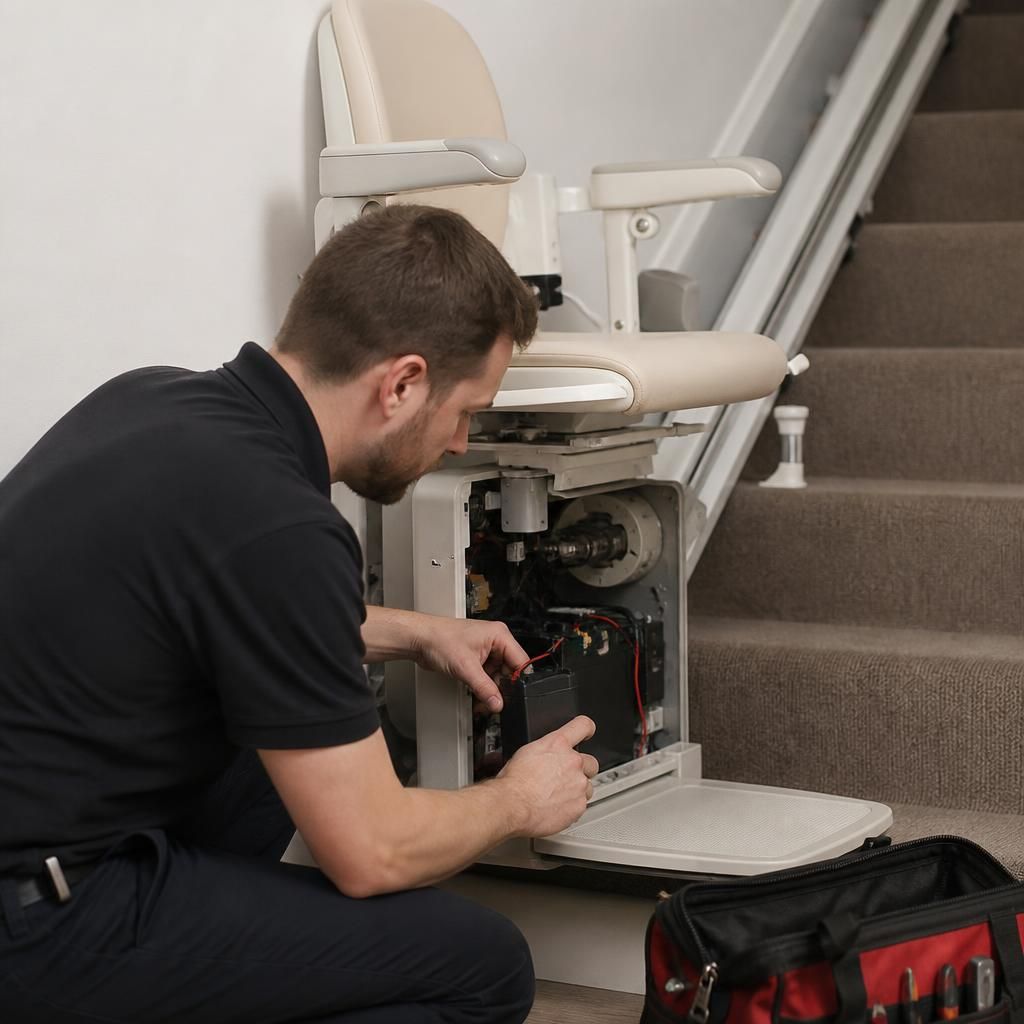
During a Stannah stairlift service, an expert technician carries out a structured inspection, functional test, clean, adjustment and safety check of the complete lift. This normally covers the carriage and drive system, rail, seat, armrests, controls, safety sensors, batteries, charging points, wiring and protective covers. The purpose is to identify wear or faults early, restore correct operation and confirm that the stairlift remains safe and reliable in its installed environment.
Initial condition and operational assessment
The service begins with a discussion of any changes noticed since the previous visit, such as unusual noises, hesitation, reduced travel distance, intermittent stopping or difficulty charging. The technician then operates the stairlift through its full travel, observing how it starts, accelerates, runs, slows and stops. They check for vibration, juddering, unusual sounds and movement that could indicate wear, misalignment or a drive-system issue.
This initial assessment helps the technician relate the physical inspection to the way the stairlift is being used. It can also reveal an intermittent fault that may not be obvious when the lift is stationary.
Rail and carriage inspection
The rail is checked for secure fixing, damage, obstruction and signs that the carriage is not travelling correctly. On a curved installation, particular attention is paid to bends, joints and transitions, where accurate alignment is important. On any installation, the technician checks that the carriage engages properly with the rail and that the drive mechanism is making consistent contact.
The carriage, drive components and accessible mechanical parts are inspected for looseness, contamination and excessive wear. Where appropriate, the technician cleans and lubricates specified moving parts using suitable products and in the correct quantity. Lubrication is not applied indiscriminately: excess or unsuitable lubricant can attract dirt or affect components that are designed to operate dry. Correct adjustment and lubrication reduce friction, noise and unnecessary load on the motor and drive system.
Seat, swivel and safety equipment checks
The seat is examined for secure attachment and stable movement. The technician checks the swivel mechanism, seat belt, armrests, footrest and any powered or manual folding features fitted to the model. They verify that the seat locks correctly in the travel position and, where applicable, that it rotates and locks safely at the top or bottom landing.
The footrest and its edges are inspected because contact with an obstruction can affect safe travel. The technician also checks the operation of safety edges or switches associated with the footrest, carriage and other protective areas. These devices are designed to stop the stairlift if an object or person is detected in its path. Testing them confirms that the lift responds promptly and does not continue travelling when a safety circuit has been activated.
Controls, switches and remote operation
Hand controls, armrest controls, directional switches and remote controls are tested for response and correct direction. The technician checks that buttons are not sticking, that control panels are secure and that the stairlift stops when the control is released, where the model is designed to operate in that way.
Call and send controls are also tested at the relevant landings. This confirms that the stairlift responds consistently from both ends of the rail and helps identify weak batteries, damaged buttons, signal problems or a fault with the control circuit.
Safety sensors and electrical connections
The technician tests the safety sensors and switches that prevent movement when the seat, footrest or another protective component is not in the correct position. They inspect accessible wiring, plugs, terminals and connectors for looseness, damage, corrosion or signs of overheating. Covers and protective guards are checked to ensure they are properly fitted.
Electrical tests are carried out in line with the requirements of the specific Stannah model. The technician may use diagnostic equipment to investigate stored fault information or confirm that the control system is receiving the correct signals. These checks help distinguish a mechanical problem from a power, wiring or control fault and reduce the risk of repeated stoppages.
Batteries and charging system
Battery condition is a central part of a stairlift service. The technician checks the batteries, battery connections and charging points for secure contact, contamination, damage and signs of deterioration. They confirm that the stairlift charges correctly when parked at its charging position or positions and assess whether the batteries are holding an appropriate charge.
Rechargeable batteries gradually lose capacity with age and use. A lift may still run during a service while having insufficient reserve for dependable everyday operation. Checking the charging system and battery performance can therefore identify a developing problem before it results in the stairlift stopping away from a charging point. If replacement is required, the technician should explain the reason and fit compatible batteries rather than treating battery replacement as an automatic part of every service.
Cleaning and removal of obstructions
Dust, hair and other household debris can collect around the rail, carriage, footrest and moving mechanisms. The technician removes suitable surface contamination and checks for anything that could interfere with travel, sensors or charging contacts. They also inspect the staircase environment for changes such as loose flooring, stored items or furniture that could obstruct the stairlift.
Cleaning supports smooth operation, but it does not replace inspection or adjustment. Components that remain dirty after cleaning, or that show wear, still need to be assessed and may require repair.
Adjustment, testing and service records
Where the inspection identifies minor issues that can be safely corrected during the appointment, the technician may tighten fixings, adjust components, improve contact at charging points or make other model-appropriate settings. Any work must preserve the manufacturer’s safety requirements and should not bypass a safety device.
After servicing, the stairlift is operated repeatedly through its intended route. The technician confirms smooth travel, reliable stopping, correct landing operation, effective safety-device response, secure seating and successful charging. They record the condition of the lift, work completed, parts fitted and any recommendations for further repair or monitoring.
These tasks contribute to optimal performance in different ways: mechanical inspection and lubrication help maintain smooth travel; electrical and battery checks support dependable starting and charging; sensor and control tests protect the user; and full-route testing confirms that the individual components work together. A service cannot prevent every fault, particularly where a part has reached the end of its service life, but it gives a qualified technician the opportunity to identify deterioration early and keep the stairlift operating within safe working requirements.
Battery and charging checks are a key part of a stairlift service because a lift can appear to work normally while its batteries are losing capacity. The technician examines the batteries, connections and charging contacts for damage, contamination or poor contact, then confirms that the lift charges correctly in its designated parking position.
They also assess whether the batteries are holding sufficient charge for dependable daily use. Identifying deterioration early can prevent reduced travel, unreliable starting or the stairlift stopping away from a charging point. If replacement is needed, the technician should explain the reason and fit compatible batteries rather than replacing them automatically.
Arrange your stairlift service with Independent Stairlifts
If your Stannah stairlift is due for a service, contact Independent Stairlifts to arrange a professional inspection and maintenance visit. Our team can discuss your requirements and help keep your stairlift operating safely and reliably.