
What signs indicate that my Stannah stairlift needs servicing sooner than scheduled?
Your Stannah stairlift may need servicing sooner than scheduled if it develops unusual noises, jerky movement, reduced speed, difficulty starting or stopping, repeated fault alerts, or problems charging. Stop using it if it becomes unsafe or unreliable, and contact a qualified stairlift technician for advice and an inspection.
Your Stannah stairlift may need servicing sooner than scheduled if it becomes noisy, jerky, slower than usual, unreliable when starting or stopping, difficult to charge, or displays repeated fault alerts. Changes affecting the seat, armrests, footrest, safety belt, controls or safety sensors should also be treated seriously. If the stairlift feels unsafe or stops unexpectedly, stop using it and contact a qualified stairlift technician for advice rather than waiting for the next planned service.
Arrange an earlier inspection if you notice any of the following signs:
- Unusual noises: Grinding, squeaking, knocking, clicking or repeated humming can indicate wear, contamination or a problem with a moving component. A new noise is more significant than a sound that has always been present, particularly if it is becoming louder or occurs during every journey.
- Jerky or uneven movement: The stairlift should travel smoothly. Sudden starts, stopping and starting, vibration, juddering or hesitation may be linked to the drive system, track, batteries, controls or a safety sensor.
- Reduced or inconsistent speed: A stairlift that travels noticeably more slowly, varies in speed or struggles on part of the track should be checked. Do not assume that reduced performance is simply due to age or cold weather.
- Difficulty starting or stopping: Delayed responses from the armrest control, remote control or call-and-send controls can indicate a control, power or connection fault. If the lift stops abruptly or does not stop where expected, discontinue use until it has been assessed.
- Charging problems: Arrange servicing if the stairlift repeatedly fails to charge, leaves its charging point, gives a low-battery warning despite regular charging, or requires charging more frequently than usual. Check that the charging point is not obstructed, but do not attempt electrical repairs yourself.
- Repeated fault indicators: A warning light, audible alert or displayed fault message that returns after resetting the lift should not be ignored. Note the message or the pattern of beeps and provide it to the technician.
- Safety equipment not operating correctly: The seat belt, swivel seat, armrests, footrest, sensors and safety edges should operate positively and consistently. A loose belt, a seat that does not lock securely, or a footrest or armrest that does not move as intended requires prompt attention.
- Problems with the controls: If the armrest control, remote control, key switch or directional controls are intermittent, stiff or unresponsive, the issue may be more than a depleted remote battery. Keep the stairlift out of use if you cannot control it reliably.
- Visible damage or obstruction: Damaged wiring, loose trim, fluid contamination, a bent component or an obstruction on the track should be inspected. Never remove covers or reach into the mechanism while the stairlift is connected to its power supply.
Some signs require immediate action. Stop using the stairlift if it moves without a control input, fails to stop normally, rocks excessively, emits a burning smell, produces smoke, exposes damaged wiring, or leaves you unable to use the seat belt or other safety equipment. If there is smoke, overheating or an electrical burning smell, switch off the power only if this can be done safely, keep clear of the stairlift and seek urgent technical advice. If someone is trapped or has fallen, prioritise their safety and contact the appropriate emergency service.
A single alert does not always mean that a major component has failed. The cause could be a remote-control battery, an obstructed sensor, an incorrectly positioned swivel seat or a loss of charging contact. However, repeated symptoms, symptoms that occur together, or a problem that returns after the basic user checks indicate that professional servicing is needed. Do not repeatedly reset the stairlift to continue using it, as this can conceal a developing fault.
Before contacting the servicing team, make a note of when the problem occurs and what the stairlift is doing at the time. Record whether it happens travelling up, travelling down, when starting or stopping, or while the seat is swivelling. Include any warning lights, beeps or fault messages, and mention recent power cuts, water exposure, decorating work or changes to the stairlift’s surroundings. A short video can sometimes help a technician understand an intermittent noise or movement fault, provided nobody is placed at risk while recording it.
Do not lubricate the track, alter settings, dismantle covers or try to replace internal parts unless this is specifically authorised by a qualified technician. Incorrect adjustments can affect safety systems and may make the original fault harder to diagnose. Keep the stairlift clear, leave it at its designated charging point when not in use, and follow the operating guidance while waiting for an inspection.
Planned servicing remains important even when the stairlift appears to be working normally, but the scheduled date should not be treated as a reason to continue using a lift that has become unreliable. An earlier inspection allows the technician to identify whether the problem relates to routine wear, batteries, charging, alignment, controls or another component, and to advise whether the stairlift can remain in service safely.
The most urgent signs that your Stannah stairlift needs servicing are unsafe or unpredictable operation. Stop using it and arrange professional help if it moves without a control input, fails to stop normally, rocks excessively, emits a burning smell or smoke, or has exposed wiring.
Do not continue travelling on the stairlift by repeatedly resetting it. If the seat belt, swivel seat, armrests, footrest or safety sensors do not work securely, keep the lift out of use until a qualified technician has inspected it. Smoke, overheating or an electrical burning smell requires particular caution: keep clear, switch off the power only if this is safe, and seek urgent technical advice.
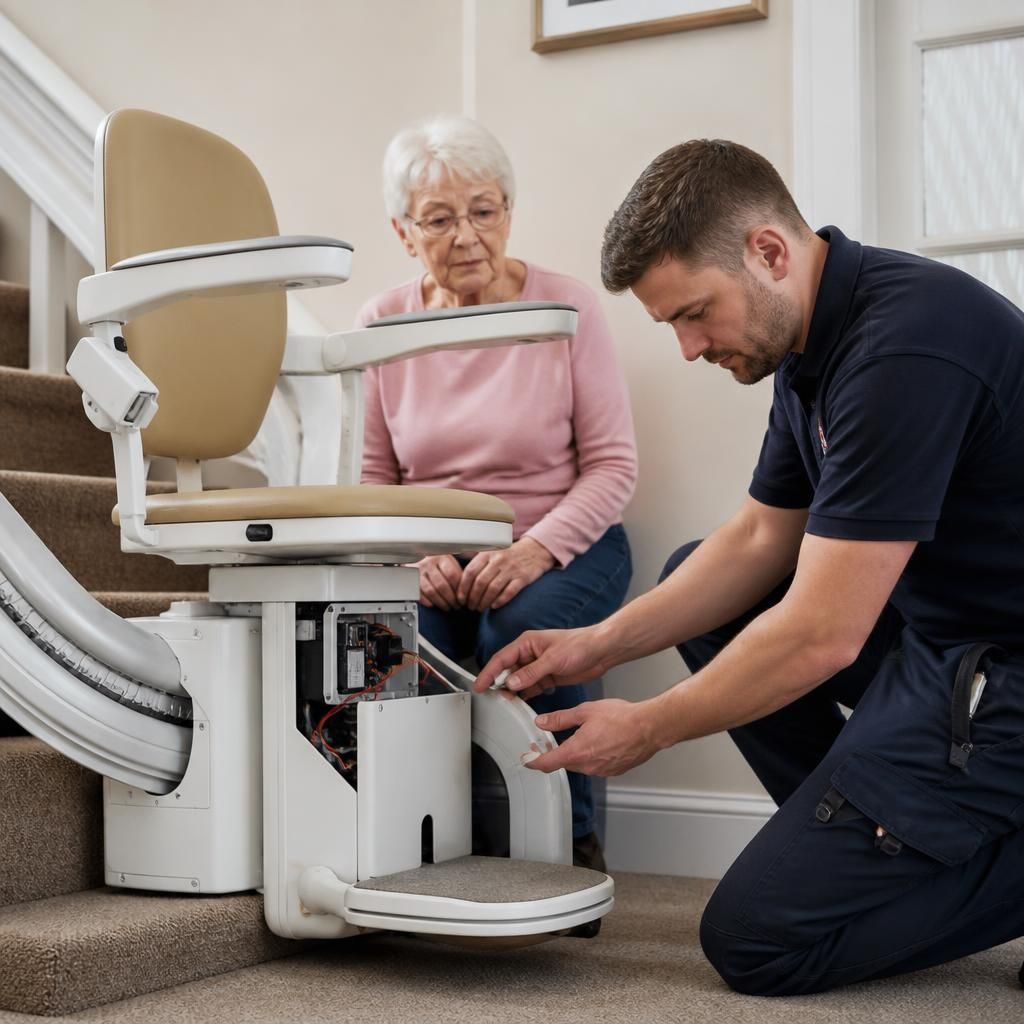
Arrange an earlier Stannah stairlift service
If your Stannah stairlift is showing any warning signs, contact Independent Stairlifts to arrange an earlier inspection rather than waiting for the scheduled service. Our qualified technicians can assess the fault and advise whether the stairlift is safe to continue using.