
What does a typical Stannah stairlift service include?
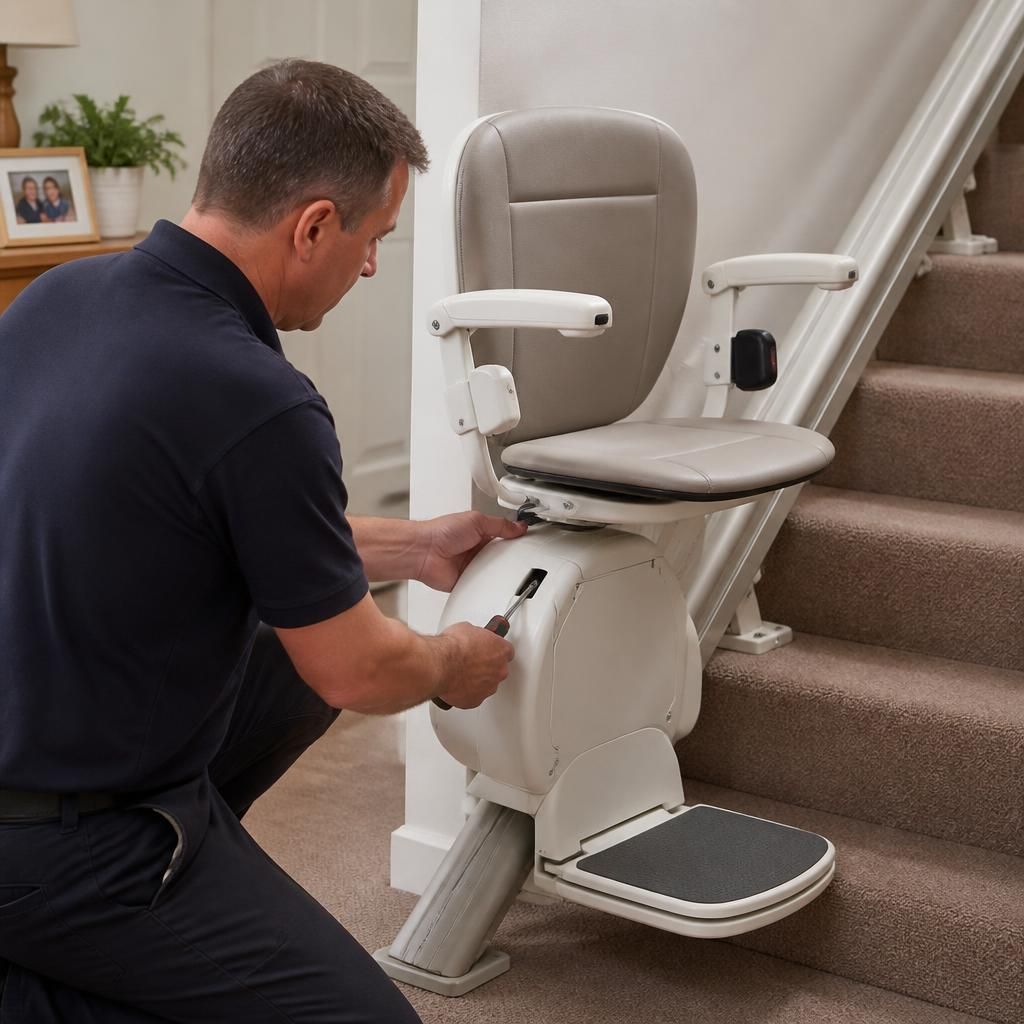
A typical Stannah stairlift service includes a safety inspection, functional checks, cleaning, lubrication and adjustments to key components such as the track, seat, controls and safety sensors. The technician will also identify wear or faults, explain any recommended repairs and confirm that the stairlift operates safely and reliably.
A typical Stannah stairlift service includes a structured safety inspection, operational testing, cleaning, lubrication and adjustment of the stairlift’s key components. The technician will assess the track, seat, controls, sensors, batteries and safety systems, identify signs of wear or damage, and explain any repairs or replacement parts that may be needed.
The exact checks can vary according to the model, whether the stairlift is straight or curved, its age and its condition. A service is not simply a visual inspection: the technician should test the stairlift in operation and confirm that it performs safely throughout its normal journey.
Safety and condition checks
The appointment normally starts with an inspection of the main stairlift components and the surrounding installation. This may include checking:
- the track, brackets and fixings for movement, obstruction, damage or unusual wear;
- the seat, armrests, footrest and swivel mechanism for secure operation;
- the seat belt and other restraint features;
- the controls on the armrest and any controls fitted at the top or bottom of the stairs;
- safety sensors around the footrest, carriage and other moving parts;
- the charging points and electrical connections;
- the batteries and charging performance; and
- the alignment, clearances and general condition of the stairlift within the staircase.
These checks help the technician find problems that may not yet be obvious during everyday use. For example, a loose fitting, worn sensor or weakening battery may not prevent the stairlift from operating immediately, but could affect its reliability or safety if left unaddressed.
Operational testing
The technician will usually run the stairlift through its normal route and test its controls, starting and stopping behaviour, speed and movement. Safety features should also be tested to make sure the stairlift responds correctly when an obstruction is detected or when a control is released. On a curved installation, the technician may pay particular attention to movement around bends, junctions, parking positions and charging points.
Where fitted, the swivel seat, powered footrest, hinged track or remote controls may also be checked. The aim is to make sure each feature operates as intended and that the stairlift comes to a controlled stop rather than jolting, continuing to move or stopping unpredictably.
Cleaning, lubrication and adjustments
Dust, debris and general build-up can affect moving parts and electrical contacts. As part of the service, the technician may clean accessible components, the track and charging areas, taking care not to introduce moisture or unsuitable cleaning products into electrical parts. Appropriate lubrication may be applied to components where the model’s servicing guidance permits it.
Minor adjustments can often be made during the appointment. These may include correcting the position of a sensor, securing a fixing, adjusting a mechanical component or improving the contact between the stairlift and its charging points. Any adjustment should be followed by operational and safety testing.
Battery and charging assessment
Rechargeable batteries are essential because they allow the stairlift to operate when it is away from its charging position or during a temporary power interruption. The technician will check the battery condition, charging connections and indications of reduced capacity. Batteries that are approaching the end of their useful life may need replacing, particularly if the stairlift is travelling more slowly, making repeated low-battery warnings or failing to complete its journey reliably.
Battery replacement is not necessarily included in the basic service price. The technician should explain the condition of the batteries and confirm the cost before carrying out chargeable work.
Fault identification and recommended repairs
If the inspection identifies a fault, the technician should explain what has been found, how it affects operation and whether it requires immediate attention. Some issues can be resolved during the service, while others may require a separate repair visit or a replacement part. Examples can include worn rollers, damaged sensors, faulty switches, deteriorated batteries, track problems or electrical faults.
A service does not automatically include every repair or replacement. Before chargeable work is undertaken, you should be told what is recommended and whether the price covers labour, parts and any follow-up visit. If a fault affects safe operation, the technician may advise taking the stairlift out of use until it has been repaired.
Service report and practical guidance
At the end of the appointment, the technician should explain the checks completed, any issues found and the condition of the stairlift. You may receive a service report or record showing the work carried out and recommendations for future attention. It is useful to keep this information, particularly if the stairlift has a service history or warranty requirements.
The technician can also provide practical advice, such as keeping the track clear, leaving the stairlift parked at its charging point, avoiding unsuitable cleaning products and reporting unusual noises, repeated warning signals or changes in performance promptly. Regular user care does not replace professional servicing, but it can help maintain reliable operation between appointments.
Before the service begins, confirm what is included in the package and whether repairs, batteries, parts or follow-up visits are charged separately. A properly completed service should leave you with a clear understanding of the stairlift’s condition, any action required and whether it is safe to continue using.
A typical stairlift service should include a full safety and operational check, not just a visual inspection. The technician should test the stairlift along its complete route, including the controls, seat belt, swivel seat, footrest, sensors, stopping behaviour and charging points.
They should also inspect the track, fixings, batteries and electrical connections for wear or faults, then clean, lubricate or adjust suitable components where required. Any repair or replacement recommendation should be explained clearly, including whether it is covered by the service or charged separately.
Arrange Your Stannah Stairlift Service
Arrange a professional Stannah stairlift service with Independent Stairlifts to check its safety, condition and performance. Contact our team to discuss your servicing requirements and any concerns about your stairlift.