
What are the specific warning signs indicating my Stannah stairlift requires immediate servicing?
Your Stannah stairlift requires prompt servicing if it stops unexpectedly, moves unevenly, makes unusual noises, struggles to start or reach the top, or shows warning lights or fault tones. Stop using it if it feels unsafe, the safety belt or sensors do not work correctly, or there is visible damage, and contact a qualified stairlift technician for advice.
Immediate servicing is required when your Stannah stairlift becomes unreliable, behaves differently from normal, or develops a safety-related fault. Warning signs include unexpected stops, jerky movement, unusual noises, warning lights or fault tones, difficulty starting or charging, and any problem with the seat belt, sensors, swivel seat or controls. If the stairlift feels unsafe or has visible damage, stop using it and contact a qualified stairlift technician before attempting to travel on the stairs.
Stop using the stairlift immediately if:
- It stops unexpectedly on the stairs, does not stop where expected, or begins moving without the control being operated.
- The lift moves forwards, backwards or between floors unevenly, hesitates, surges, slips or changes speed.
- The seat, footrest, armrests or swivel mechanism feels loose, does not lock correctly, or moves while the stairlift is travelling.
- The safety belt will not fasten, release or remain secure, or a safety sensor does not respond as it normally should.
- There is smoke, a burning smell, sparking, overheating, exposed wiring or damage to the charger, power supply or electrical casing.
- The stairlift appears to be obstructed, has suffered an impact, or has been affected by water or damp.
Do not try to bypass a safety switch, force the lift along the rail, remove covers or repair electrical components yourself. If it has stopped in a position that prevents safe access, keep clear of the stairs and follow the user instructions for the approved emergency procedure. Contact Independent Stairlifts or the appropriate qualified service team for advice.
Arrange servicing promptly when you notice changes in performance. Some faults may not create an immediate hazard but should still be investigated rather than monitored indefinitely. Contact a technician if the stairlift:
- makes a new grinding, squeaking, clicking, knocking or buzzing sound;
- takes longer than usual to start, fails to start consistently or needs repeated commands;
- stops short of the charging point or no longer charges reliably;
- shows a warning light, displays a fault indication or produces repeated warning tones;
- has reduced battery performance or loses power during normal use;
- requires the handset or armrest control to be pressed several times;
- travels less smoothly than before, particularly at bends, joins or changes in direction; or
- leaves unusual grease, oil, metal dust or other debris on or around the rail.
Intermittent faults are important too. A stairlift that works again after being switched off, moved manually according to its instructions, or left to recharge may still have a developing problem. Note what happened, where the lift was positioned, what warning was shown or heard, and whether the issue occurred while travelling, charging or using a control. This information can help the technician identify the cause more efficiently.
Before calling, check only the basic points permitted by the user manual. Make sure the mains supply has not been switched off, the charger is connected correctly, the stairlift is parked at its designated charging point and there is no obvious obstruction on the stairs or rail. Do not continue using it if the problem involves movement, braking, the belt, safety sensors, electrical components or physical damage. Never use a domestic lubricant or cleaning product on the rail or mechanism unless the manufacturer’s instructions specifically allow it.
A service visit normally involves checking the rail, drive system, batteries, charging equipment, controls, safety edges, sensors, seat and belt, together with the relevant electrical and mechanical components. The technician can determine whether the symptom is caused by wear, contamination, a charging fault, an adjustment issue or a component requiring replacement. Servicing should not be delayed because a warning has disappeared; faults affecting safety or reliability can return without warning.
Routine maintenance reduces the likelihood of unexpected breakdowns, but it cannot eliminate the need to report new symptoms. Keep scheduled servicing appointments and arrange an earlier assessment whenever your Stannah stairlift shows any of the warning signs above. If you are unsure whether a problem is urgent, describe the symptom to a qualified technician and follow their advice rather than taking a risk on the stairs.
A Stannah stairlift should be taken out of use immediately if it stops unexpectedly, moves jerkily, changes speed, or fails to stop where expected. These symptoms may indicate a fault with the drive system, braking, controls or safety sensors, so do not make another journey to see whether the problem clears.
Stop using the lift as well if the safety belt, seat swivel, armrests or footrest will not lock securely, or if you notice smoke, a burning smell, sparking, exposed wiring or visible damage. Keep clear of the stairs, follow the approved emergency procedure in the user manual if necessary, and contact a qualified stairlift technician for advice. Never bypass a safety switch, remove covers or attempt an electrical repair yourself.
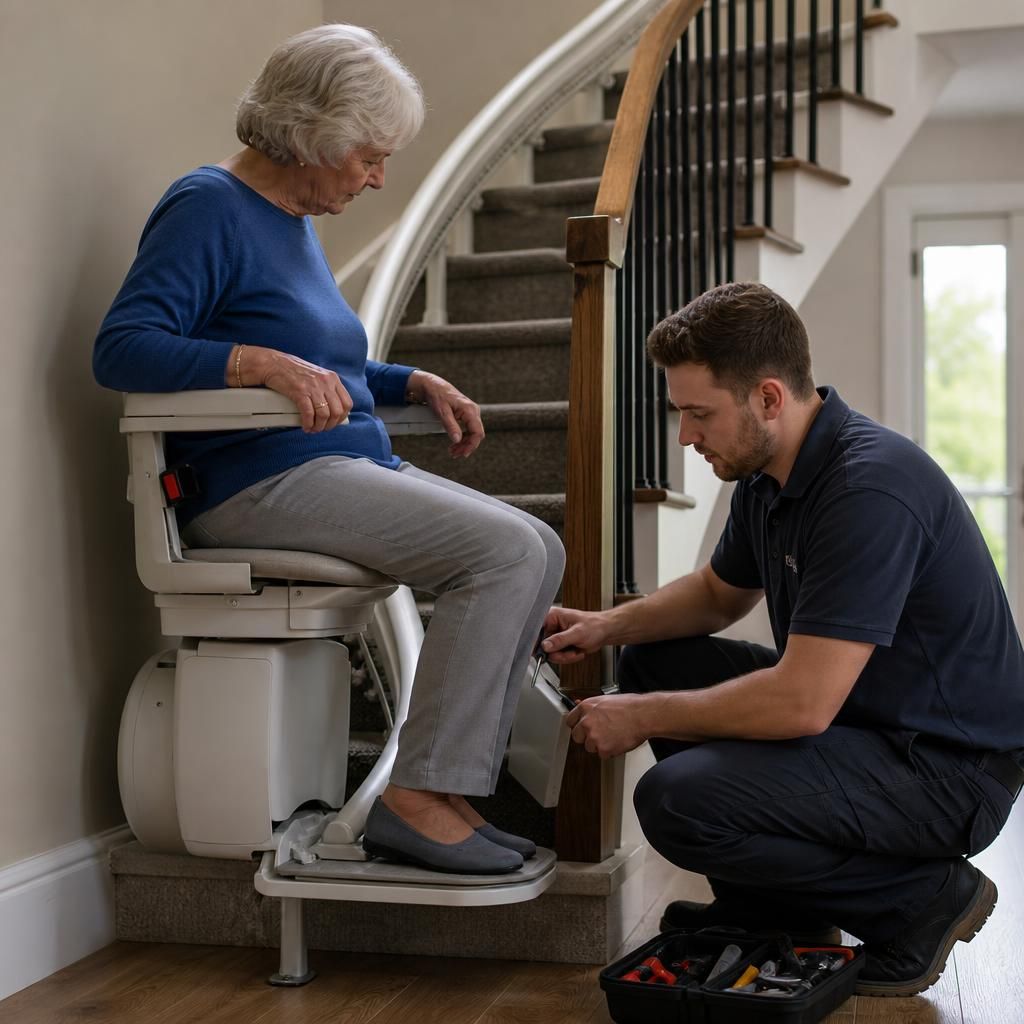
Arrange Your Stannah Stairlift Servicing
If your Stannah stairlift shows any of these warning signs, contact Independent Stairlifts to arrange a professional service assessment. Stop using it if there is a safety or electrical fault and follow the technician’s advice.