Stannah Stairlift Troubleshooting

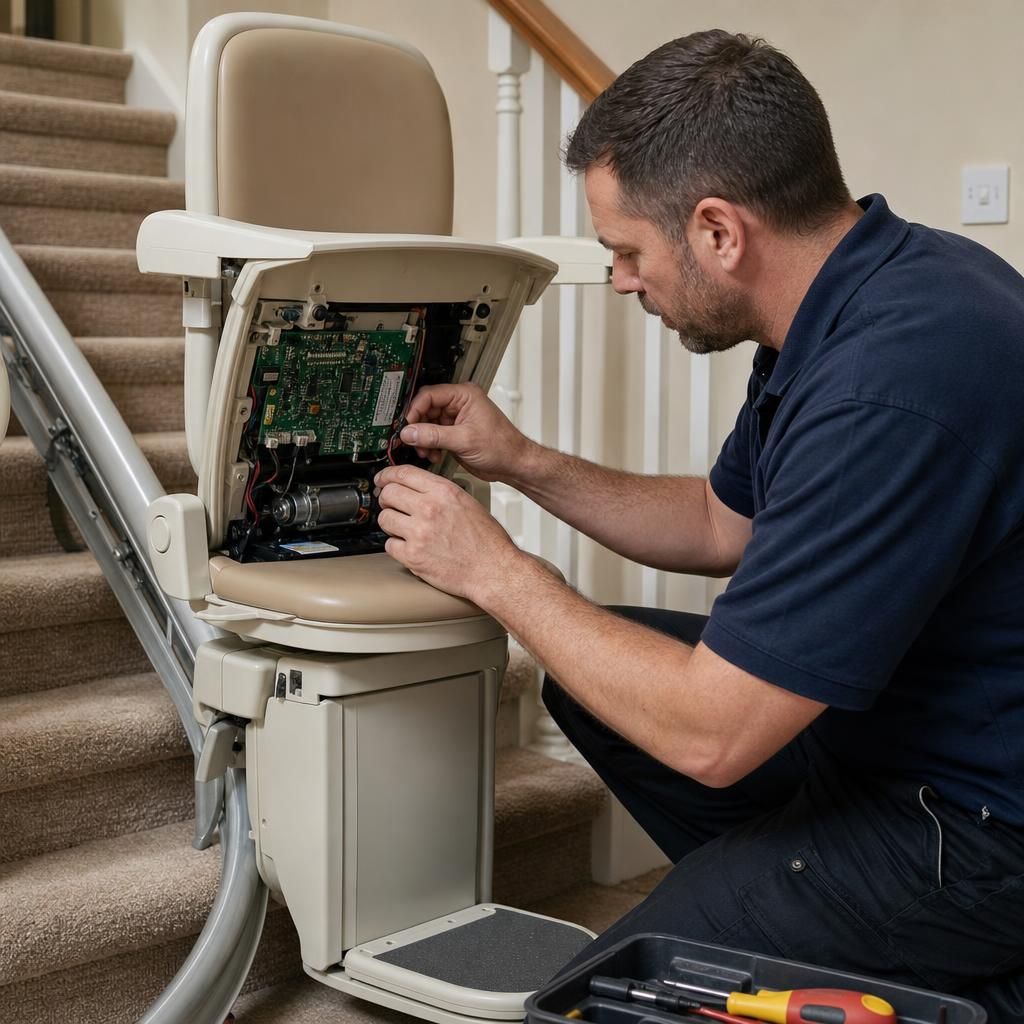
If your Stannah stairlift goes up but not down, the cause may be the handset, control switch, safety sensor or power supply. This guide covers safe checks you can make before arranging professional stairlift servicing or repair.

Book a free assessment

Practical checks for safe, smooth stairlift operation

Restore dependable travel between floors

A correctly operating stairlift should start, stop and change direction smoothly from its controls. If downward travel remains unavailable after basic checks, a technician can identify the fault and return the lift to dependable everyday use.

Check the controls at both ends

Stannah stairlifts can be operated using controls on the armrest and remote handsets. Comparing both controls can help show whether the fault is limited to one handset, a switch or the stairlift itself.

Keep the travel path clear

The stairlift needs a clear rail, footrest and staircase to operate safely. Removing items that interfere with the carriage or footrest can prevent avoidable stops and allow the lift to move as intended.

Maintain reliable charging

Parking the stairlift fully on its charging point helps keep the batteries ready for use. If charging contacts, the power supply or battery condition is affected, the lift may behave inconsistently or stop before completing its journey.

Protective sensors must remain active

Safety sensors beneath the footrest and around the carriage are designed to stop movement when they detect resistance. They should be kept clean and unobstructed, never covered, disconnected or bypassed.

Use a professional assessment for persistent faults

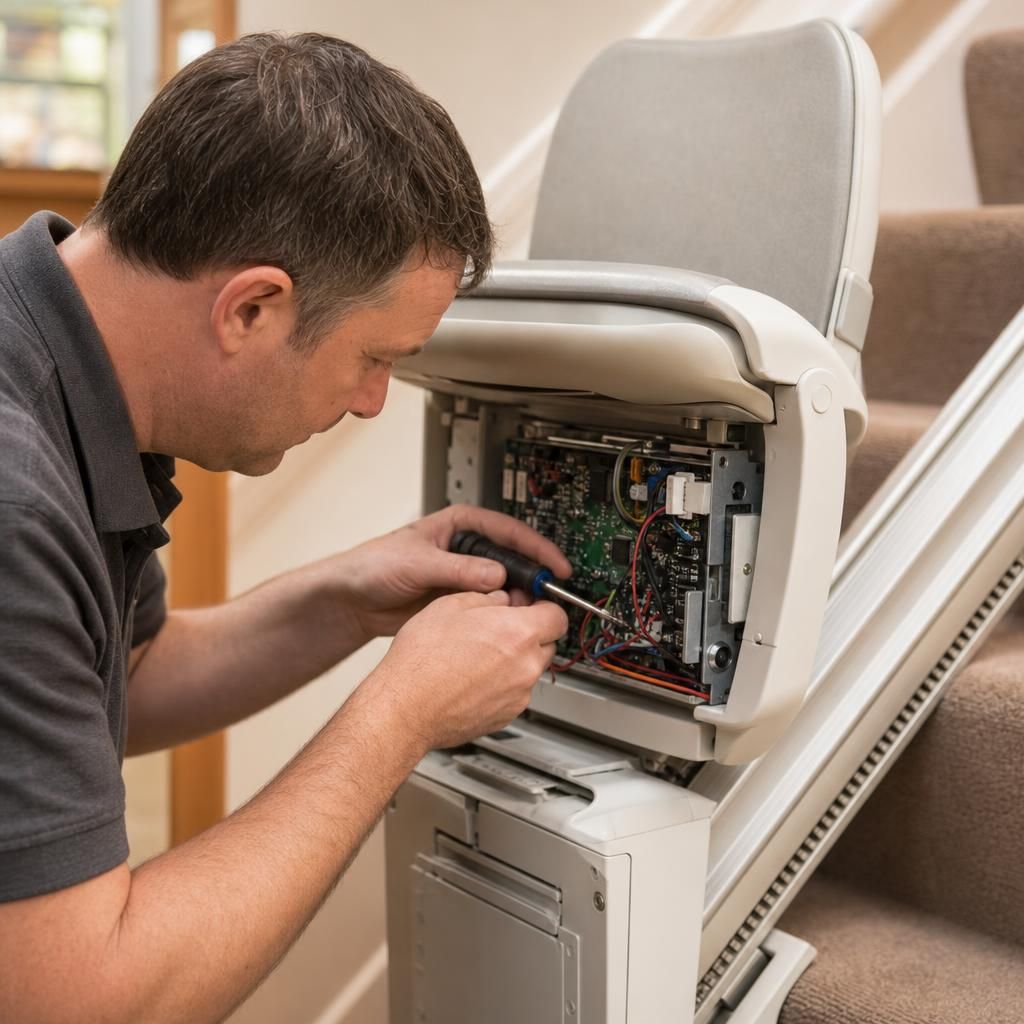
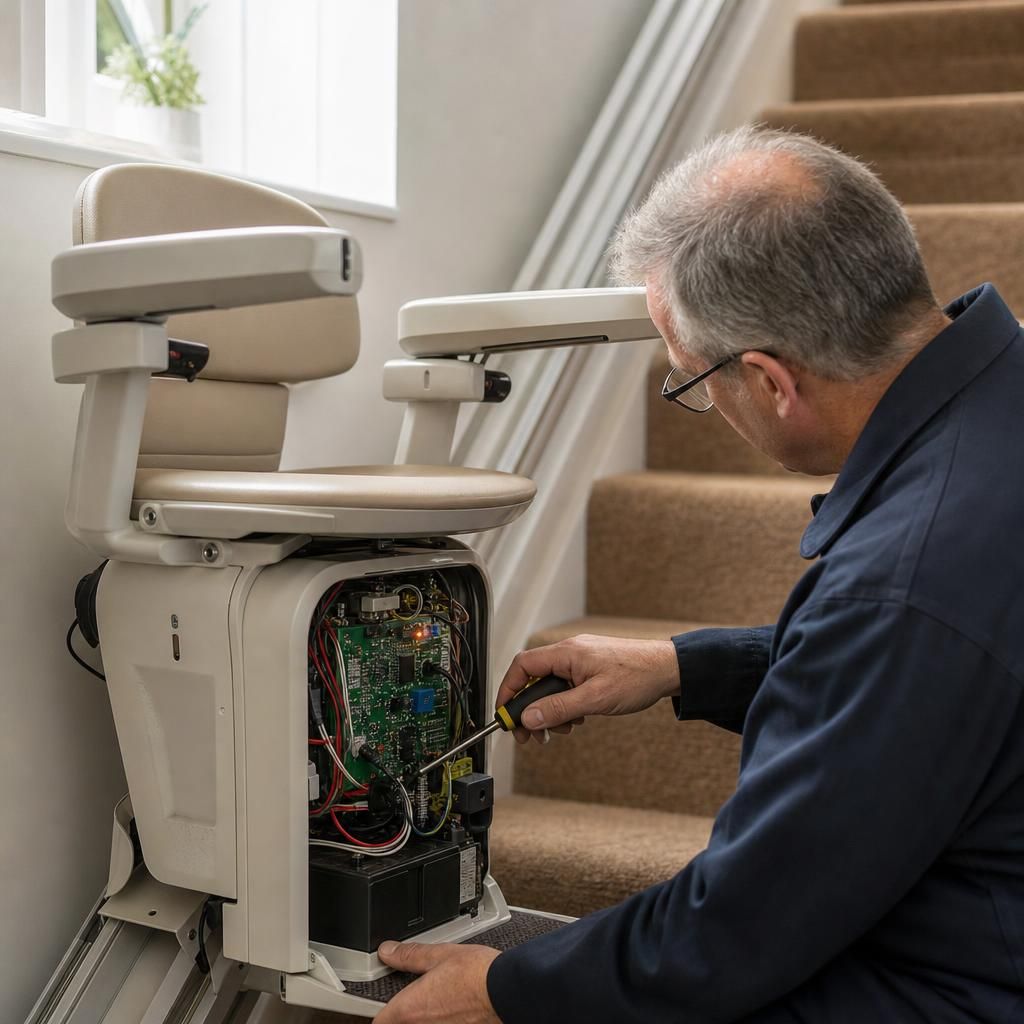
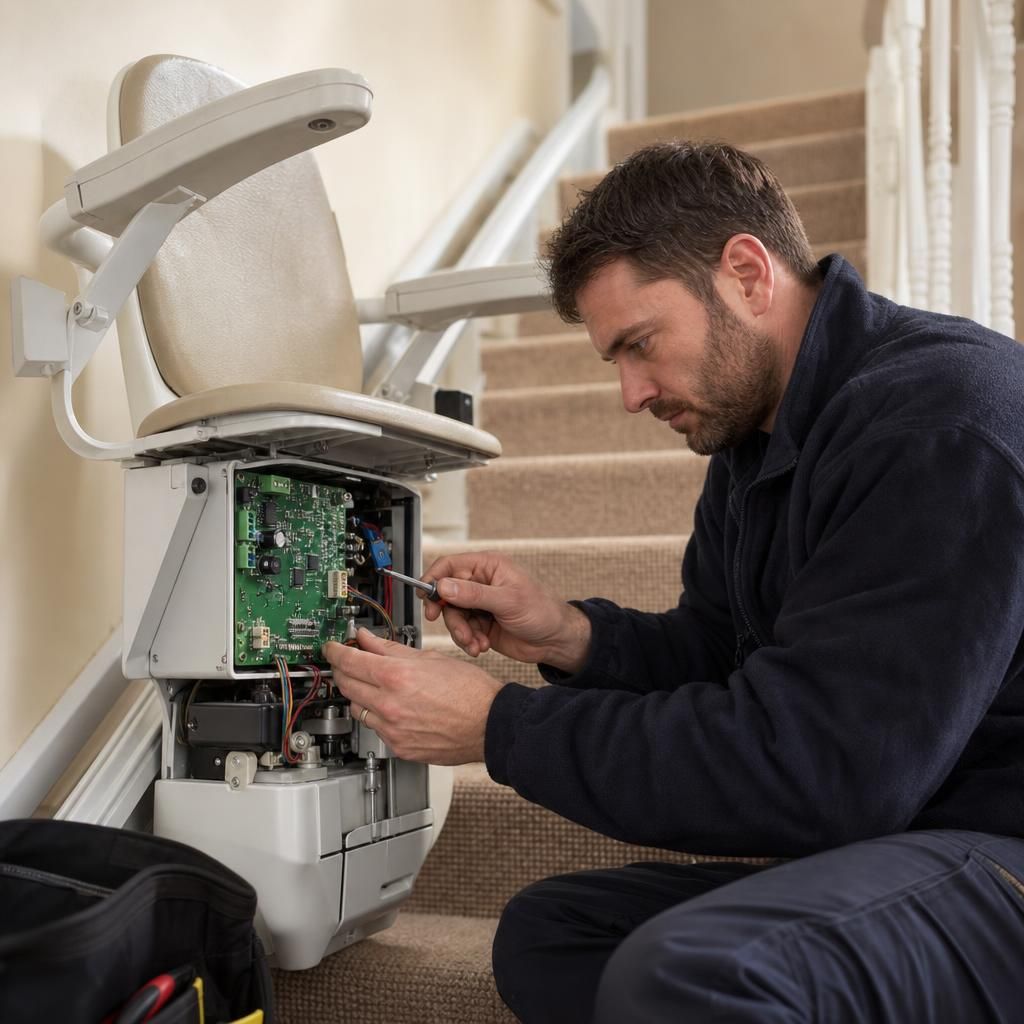
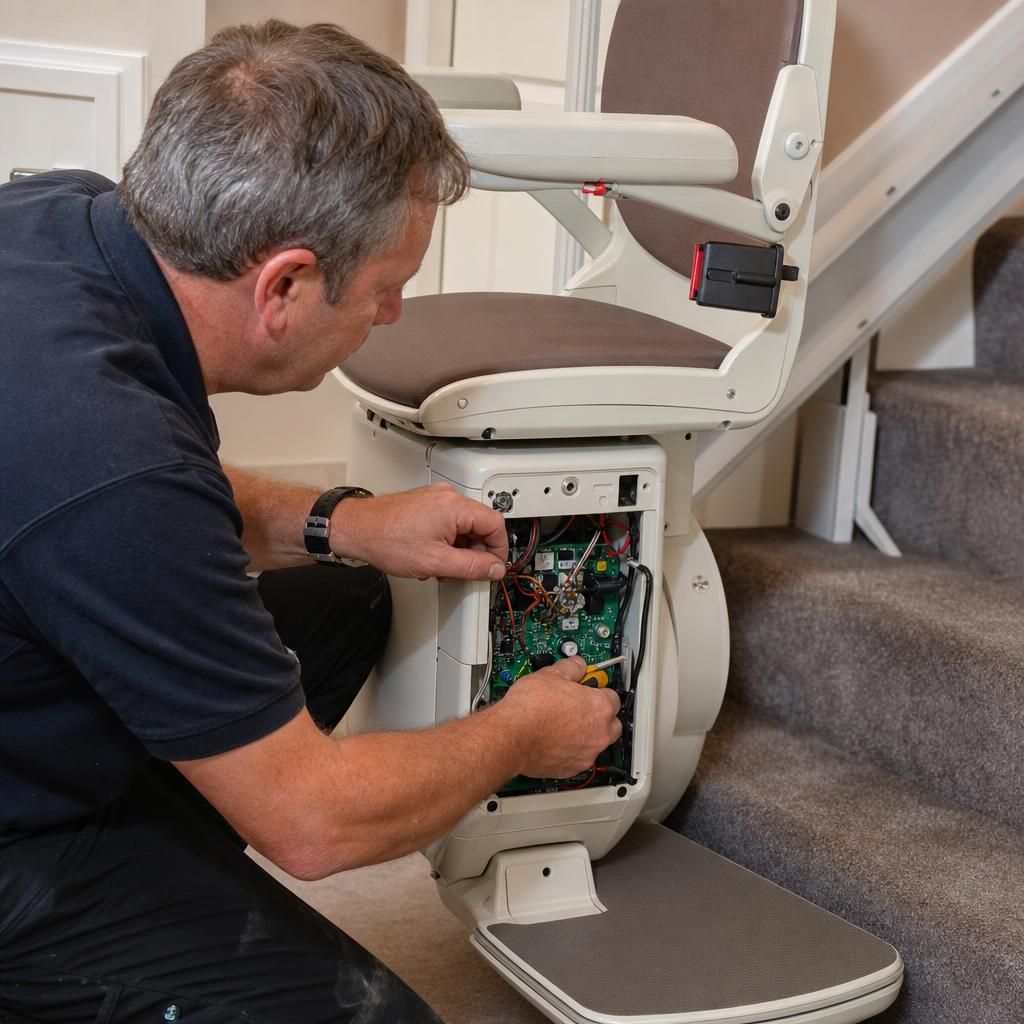
A recurring directional fault can involve wiring, switches, batteries, sensors or the control system. A qualified technician can test these components safely and advise whether servicing, repair or replacement is appropriate.

Safe checks, expert support and clear next steps

If your Stannah stairlift goes up but not down, stop using it if it moves unpredictably, makes unusual noises or shows a warning light. Independent Stairlifts can assess the handset, controls, safety sensors, charging points and mechanical components without bypassing built-in safety features.

After inspection, the technician will explain the fault, recommended repair and any applicable parts or workmanship cover before work begins. If the issue cannot be resolved during the visit, you will receive clear advice on the safest next step and whether further servicing is required.

Is it safe to keep using the stairlift?

A Stannah stairlift that will not travel down should not be used repeatedly until the cause has been identified. Continuing to operate a faulty lift can increase wear or leave the user unable to move safely between floors.

When to stop using the lift

Stop using the stairlift if it moves unevenly, stops without warning, makes unusual sounds, displays a fault indication or has a damaged cable, seat or armrest. Keep the lift parked safely, switch it off if appropriate for the model, and arrange a professional inspection rather than attempting to override a sensor or safety switch.

What will the technician check?

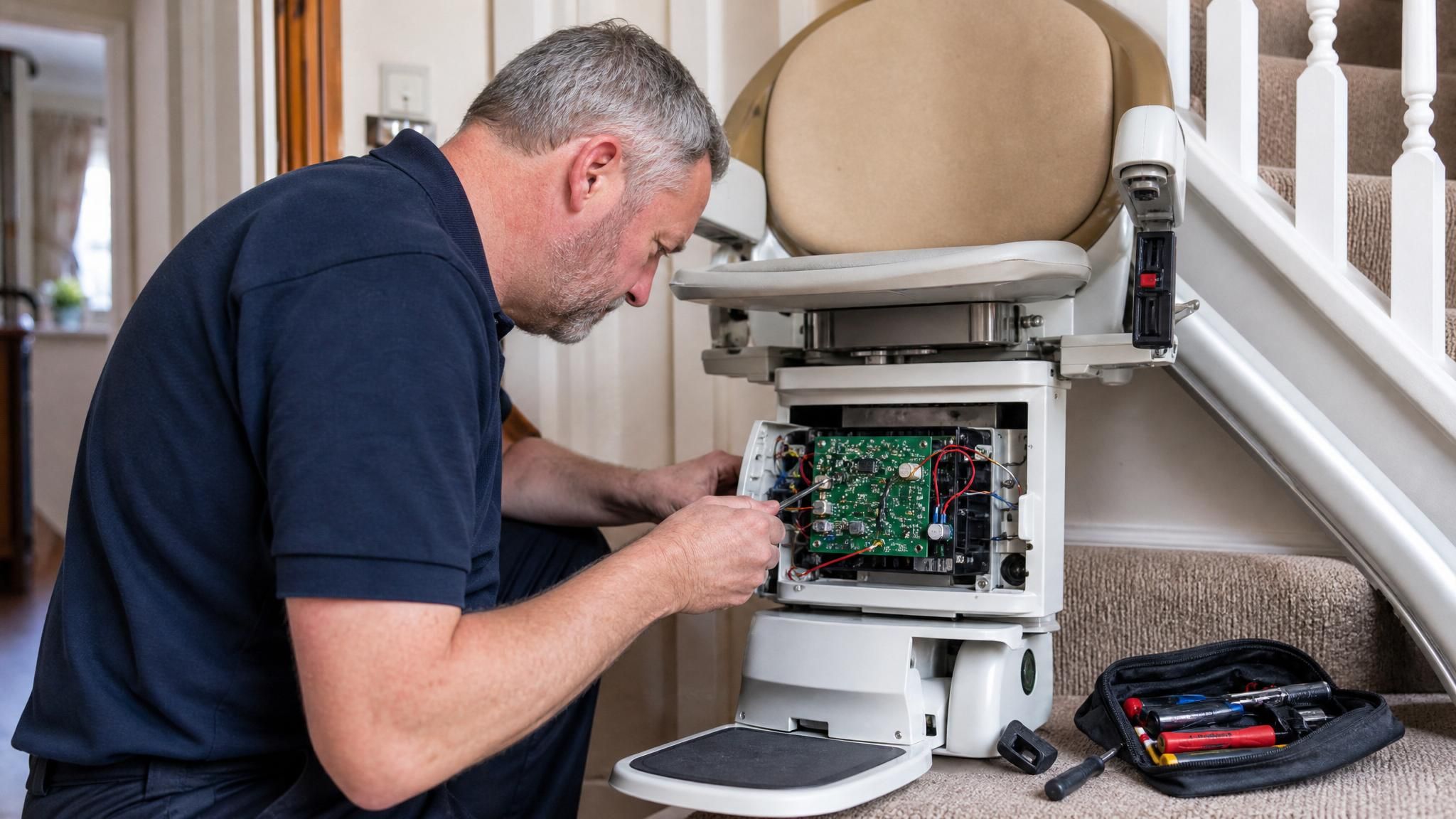
A technician will trace the fault rather than replace parts without diagnosis. The assessment focuses on the controls, handset, safety systems, power supply, charging points and drive mechanism.

How the fault is assessed

The technician can test whether the downward command reaches the control system, check that safety edges and sensors are responding correctly, and inspect the batteries, wiring and charging contacts. They will also look for obstructions, wear or alignment issues that could prevent safe travel. You should receive an explanation of the findings before repair work is carried out.

Will I know the repair cost first?

The likely repair and its cost should be explained before chargeable work begins. This allows you to decide whether to proceed based on the fault, the stairlift’s condition and the recommended solution.

Clear repair recommendations

After testing, ask for the diagnosed fault, the work proposed and any parts that may be required. If further investigation is needed, the technician should explain why and confirm any additional charges before proceeding. Do not approve work that involves disabling a safety feature or using an unsuitable replacement part.

What happens if the fault cannot be fixed on the visit?

Some faults require a specific part, additional testing or a return visit. A responsible service process should leave you with a clear plan rather than an unsafe temporary workaround.

Next steps after an incomplete repair

If the stairlift cannot be restored during the appointment, the technician should explain whether it must remain out of use, what further work is needed and how the next visit will be arranged. Where possible, keep the lift parked in a position that does not block the stairs and use another safe method of access until it has been declared operational.

What cover applies after repair?

Cover after a Stannah stairlift repair depends on the parts fitted, the work completed and the terms agreed for the service. It should never be assumed without checking the documentation.

Confirming warranty and workmanship terms

Before the technician leaves, confirm what parts or workmanship are covered, how long the stated cover applies and who to contact if the same fault returns. Keep the service report and any invoice, as these records help establish what was inspected and what work was completed.

Questions to Ask Before Booking Stannah Stairlift Repairs

What are the common reasons a Stannah stairlift might travel upwards but fail to descend, and how can they be diagnosed?

Ensure the stairlift seat is correctly aligned, check the condition of the remote control batteries, and verify that all safety features function correctly to facilitate uninterrupted downward motion.

Are there any specific safety sensors or switches in the Stannah stairlift that could prevent it from descending, and how can these be checked?

Examine the stairlift's safety sensors and switches for dust or obstructions, which may hinder downward movement. Carefully clean or reset them to restore functionality, ensuring proper descent of your stairlift.

Could a wiring or motor issue be responsible for a Stannah stairlift failing to descend, and what are the first steps to address these potential problems?

Inspect wiring connections and the motor for faults such as loose wires or malfunctions. Ensure the power source is stable, and contact a technician if issues persist after these checks.

What maintenance practices can help prevent a Stannah stairlift from encountering issues with descending in the future?

Schedule regular service checks, clean the track and sensors frequently, and promptly address any minor issues to maintain optimal performance and prevent more significant descent problems from developing.

How can environmental factors or user settings affect the ability of a Stannah stairlift to descend properly, and what adjustments might be necessary?

Drafts, temperature fluctuations, or incorrect user settings can interfere with stairlift descent. Adjust the settings to factory defaults, and ensure the track is free from environmental obstructions for smooth operation.

If Your Stannah Stairlift Will Not Go Down, Stop Using It and Arrange a Safety Check

If your Stannah stairlift goes up but not down, the fault may involve the lower-direction control, handset, safety sensor, power supply or drive system. Stop using it if movement is unpredictable.

Check for obstructions and confirm it is charging, but never bypass safety features. If it still will not descend, arrange a qualified technician’s inspection before using it again.

Stop if movement is unsafe

Do not use the stairlift if it will not descend, moves unpredictably, makes unusual noises or displays a warning light.

Never bypass safety features

Do not bridge sensors, force controls or attempt repairs that could disable the stairlift’s built-in protection systems.

Make only safe visual checks

Remove any visible obstruction and confirm the stairlift is receiving power and positioned correctly on its charging point.

Arrange a professional inspection

If the fault remains, stop using the stairlift and book a qualified technician to inspect the controls, sensors, charging points and drive system.

What to check when your Stannah stairlift will not go down

When a Stannah stairlift goes up but not down, safe troubleshooting identifies whether the fault lies with the handset, controls, sensors, charging system or drive mechanism. The following checks and professional outcomes help restore reliable movement without compromising safety.

  1. 01

    A clear diagnosis of the fault

    A technician will identify why the stairlift will not travel in the affected direction, rather than relying on guesswork or replacing parts unnecessarily.

  2. 02

    Safe restoration of normal travel

    Where the problem can be resolved during the visit, the stairlift will be repaired and tested to confirm that it travels correctly and responds to its controls.

  3. 03

    Safety systems checked properly

    The stairlift’s sensors, switches and other safety controls will be inspected to ensure they stop or permit movement as intended.

  4. 04

    Charging and power issues identified

    The inspection can establish whether poor charging, a disconnected supply or a battery-related fault is contributing to the loss of movement.

  5. 05

    Mechanical wear assessed

    Drive components and other moving parts can be examined for wear, obstruction or damage that may require adjustment, repair or replacement.

  6. 06

    A clear repair recommendation

    If additional work or parts are needed, you will be told what is required, why it is needed and what the safest next step is before proceeding.

Stannah Stairlift Troubleshooting: Your Questions Answered

What could cause a Stannah stairlift to ascend without descending?

Check the stairlift's key switch to ensure it's turned to the correct position, enabling both ascent and descent functions.

Why won’t my Stannah stairlift move down, even though the power light is on?

Ensure all obstructions are cleared from the track and examine the footrest safety edges for debris that may falsely trigger obstruction sensors.

Is it normal for a Stannah stairlift to stop midway and not descend?

Midway stops often indicate a sensor activation or battery issue; check for loose connections, obstacle sensors being triggered, and ensure the battery is fully charged for optimal operation.

Could a faulty remote control prevent my Stannah stairlift from descending?

Yes, a malfunctioning remote control can hinder descent operations. Check the battery and pair the remote correctly with the stairlift to ensure seamless downward movement.

Can a loose connection in the stairlift's control system affect its ability to descend?

Loose connections can disrupt the stairlift's control signals, affecting its ability to descend. Regularly inspect and securely tighten all connection points to ensure reliable operation and address any performance inconsistencies.

Book Expert Help for Your Stannah Stairlift

If your Stannah stairlift goes up but not down, contact Independent Stairlifts for a safety-focused assessment. We’ll identify the cause, explain repair options and help restore dependable movement without bypassing essential safety features.

Contact Us

Request a free assessment

No obligation. We will talk through your staircase and options.

Ease of Use Commendation — Arthritis FoundationAll of our stairlifts carry the Ease of Use Commendation.