
How often should my Stannah stairlift be serviced?
Your Stannah stairlift should generally be serviced once a year, following the manufacturer’s guidance and any servicing terms in your agreement. Arrange a service sooner if you notice unusual noises, jerky movement, reduced battery performance or repeated faults.
Your Stannah stairlift should generally be serviced once a year, or at the interval recommended by the manufacturer and stated in your servicing agreement. An annual service allows a qualified technician to check the lift’s safety systems, mechanical components, electrical connections, batteries and charging equipment before wear develops into a fault. You should arrange an earlier inspection if the stairlift’s performance changes or you notice any warning signs.
The recommended interval is a useful baseline rather than a rule that applies identically to every installation. The most suitable schedule can depend on the age and model of the stairlift, how frequently it is used, the length and design of the staircase, and the conditions around the installation. A stairlift used several times a day may experience more wear than one used occasionally. Outdoor stairlifts and lifts installed in areas exposed to damp, dust or temperature changes may also need closer attention.
Check your Stannah documentation and any service or warranty agreement for the applicable requirements. Some agreements specify when servicing must take place or require servicing by an appropriately qualified provider. Keeping to the recommended schedule can help you meet those terms and provides a clear maintenance record. If you are unsure when the last service took place, contact us so that we can help establish the appropriate next date.
Arrange servicing sooner if you notice any of the following:
- jerky, hesitant or unusually slow movement;
- grinding, clicking, squeaking or other unfamiliar noises;
- the stairlift stopping unexpectedly or showing repeated fault indications;
- the lift failing to start reliably from the charging position;
- reduced battery performance, frequent low-battery warnings or difficulty holding a charge;
- controls, armrests, the seat, swivel mechanism, footrest or safety belt not operating normally;
- the stairlift not stopping smoothly or not reaching its usual position correctly; or
- visible damage, loose parts, leaking batteries, damaged wiring or an obstruction affecting the rail.
Do not continue using the stairlift if it behaves unpredictably, emits a burning smell, has exposed wiring, or appears unsafe. Switch it off if it is safe to do so and request professional advice. Avoid attempting repairs or adjusting safety-related components yourself, as this can cause further damage and may create a risk during use.
During a routine service, the technician will normally assess the stairlift’s overall condition and operation. Depending on the model and installation, checks may include the rail, drive system, seat and swivel, armrests, footrest, safety belt, sensors, controls, wiring, batteries, charger and stopping mechanisms. The technician may clean or lubricate appropriate components, tighten or adjust parts where necessary, test the stairlift through its normal movement, and explain any recommended repairs or replacement items.
A service is more than a quick test ride, but it is not the same as repairing every worn component automatically. If a part is approaching the end of its serviceable life, the technician should explain the issue, its effect on safe or reliable operation, and the available options. This gives you the information needed to decide whether work should be completed immediately or planned for a later date.
Regular servicing helps identify gradual wear that may not be obvious during everyday use. It can also confirm that the batteries are charging correctly and that safety features continue to operate as intended. However, servicing cannot eliminate every possible breakdown. Keep the rail and surrounding steps clear, use the controls as instructed, leave the stairlift correctly positioned for charging where applicable, and report changes in performance rather than waiting for the next annual appointment.
If your stairlift is used heavily, is older, has previously required repairs, or is installed outdoors, ask whether a more frequent maintenance schedule would be appropriate. Equally, a stairlift that has been unused for a long period should be checked before regular use resumes, particularly if the batteries may have discharged. The correct interval is the one that reflects the manufacturer’s guidance, the condition of the equipment and the way it is used.
For most domestic Stannah stairlifts, booking a service every twelve months is a sensible routine. Record the service date and any advice provided, and contact Independent Stairlifts if you need to arrange the next inspection, discuss a change in performance or decide whether your current servicing interval remains suitable.
Most Stannah stairlifts should be serviced every twelve months, although the appropriate interval depends on the model, age, usage and installation conditions. An annual service gives a qualified technician the opportunity to identify wear, check safety features and confirm that the batteries and charging system are working correctly.
You may need an earlier inspection if the stairlift is used heavily, installed outdoors, has previously needed repairs or has been unused for an extended period. Arrange professional advice promptly if you notice jerky movement, unusual noises, repeated fault indications, reduced battery performance or difficulty starting. Do not continue using the lift if it behaves unpredictably or appears unsafe.
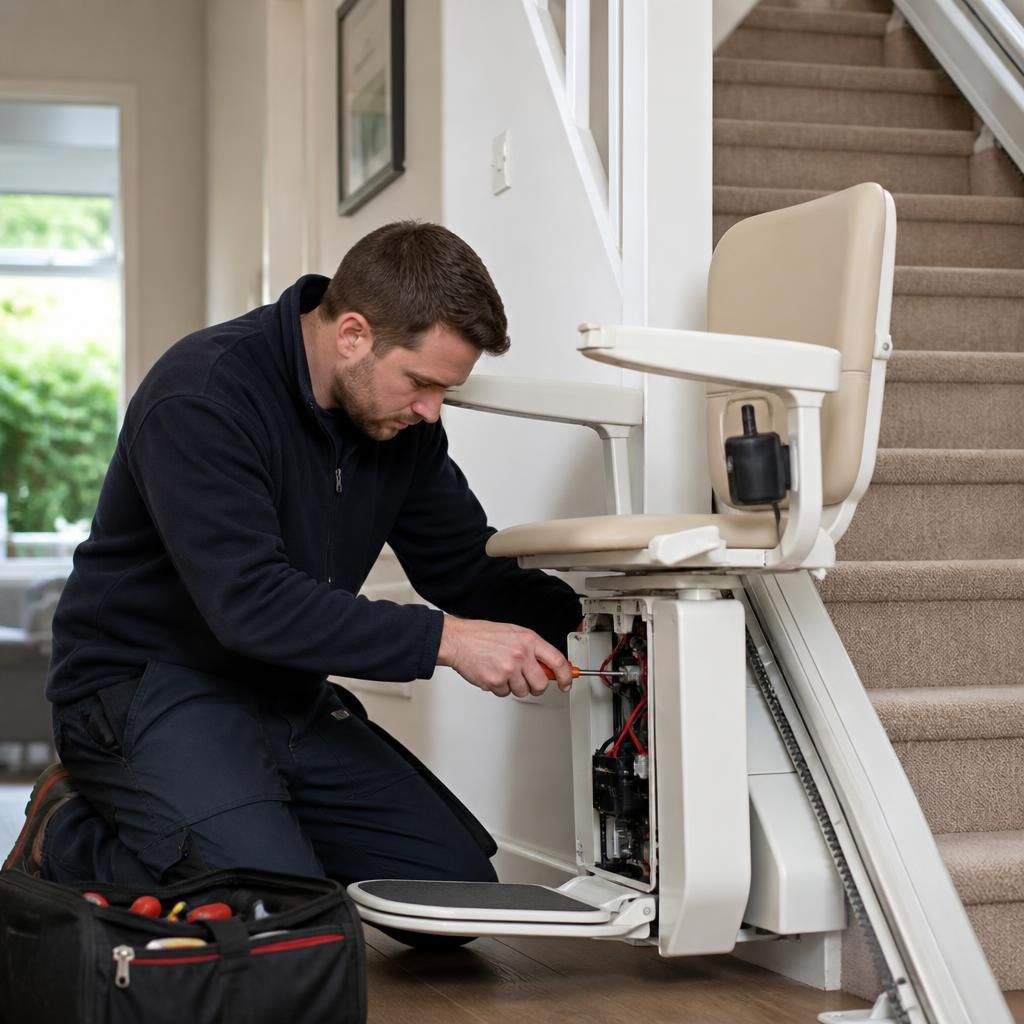
Arrange your next Stannah stairlift service
Contact Independent Stairlifts to arrange your next Stannah stairlift service or discuss whether your current servicing interval remains suitable. If you have noticed a change in performance, mention it when booking so the technician can assess it promptly.