
How does regular maintenance minimise the risk of unexpected breakdowns for my Stannah stairlift?
Regular maintenance helps minimise unexpected Stannah stairlift breakdowns by identifying wear, loose components, battery problems and developing electrical or mechanical faults before they cause a failure. Professional servicing also confirms that key safety systems are working correctly, although it cannot eliminate the possibility of an unforeseen fault.
Regular maintenance minimises the risk of unexpected Stannah stairlift breakdowns by identifying wear, loose components, battery deterioration and developing electrical or mechanical faults before they result in a loss of service. A professional service also checks that the lift’s safety systems are operating correctly. It cannot prevent every unforeseen fault, but it substantially improves reliability when combined with sensible day-to-day care.
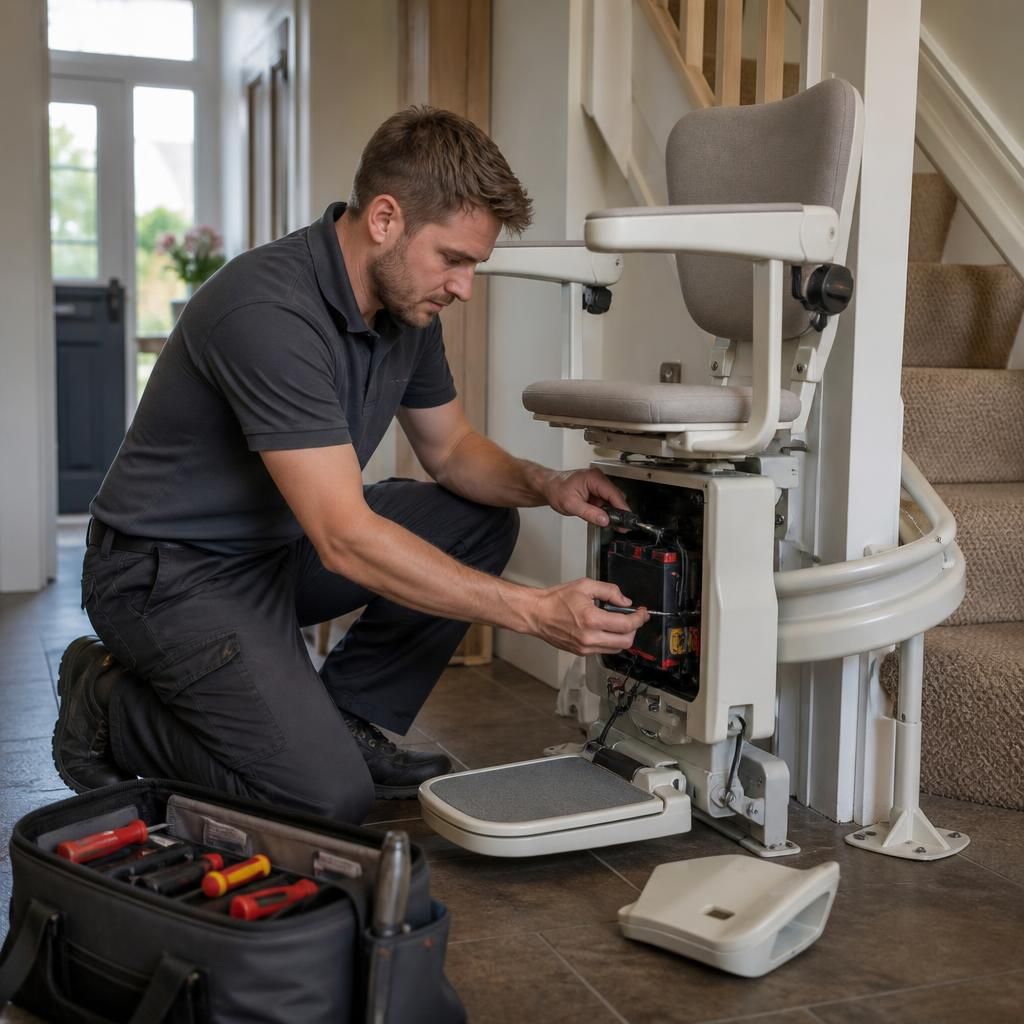
A stairlift is used repeatedly and carries moving mechanical, electrical and safety components. Gradual changes may not be obvious during normal use. For example, a battery can lose capacity over time, a charging connection may become less reliable, or dirt and wear can affect the movement of parts. Routine maintenance gives a trained technician the opportunity to detect these issues while the stairlift is still operating, rather than waiting for a complete failure.
Key ways regular maintenance helps prevent breakdowns include:
- Detecting battery deterioration: Batteries are consumable components and their performance reduces with age and use. Testing helps identify whether they are holding charge properly and whether the stairlift is likely to struggle away from its charging point.
- Checking charging equipment: The technician can inspect the charging contacts, connections and charger operation. Poor contact, obstruction or an electrical fault may prevent the batteries from charging fully.
- Identifying mechanical wear: The seat, swivel mechanism, armrests, footrest, drive system and other moving parts are checked for excessive play, stiffness, unusual resistance or damage. Addressing wear early can reduce the likelihood of a component failing unexpectedly.
- Inspecting the track and drive area: The rail and drive components must remain correctly aligned and free from obstructions. Cleaning and adjustment, where appropriate, help the stairlift travel smoothly and reduce unnecessary strain.
- Testing safety features: Safety edges, sensors, the seat swivel lock, seat belt, controls, emergency stop functions and other protective systems are checked as part of a service. These features are intended to stop or control the stairlift if an unsafe condition is detected.
- Checking electrical connections: Loose, damaged or corroded connections can cause intermittent operation or a complete loss of power. A technician can inspect relevant wiring and connections safely and identify faults that may not be visible to the user.
- Confirming correct operation: Test journeys help reveal hesitation, unusual noise, vibration, uneven movement or stopping problems. These symptoms can indicate an issue requiring adjustment or further investigation.
Preventive maintenance is particularly useful because some faults develop gradually. A stairlift may continue to complete a journey while its batteries are weakening or a mechanical part is becoming worn. If the problem is left until the lift stops, it may cause greater disruption and require an urgent repair. Early attention may allow a technician to replace or adjust the affected part during a planned visit and reduce the chance of a more extensive fault.
Regular servicing also helps ensure that the stairlift is being used within safe operating conditions. The technician can identify issues such as an obstructed track, damage caused by an impact, a loose seat or controls that are not responding consistently. These checks are important even when the stairlift appears to be working normally, as safety-related problems are not always apparent from routine use.
Maintenance does not remove every breakdown risk. Electronic components can fail without obvious warning, and accidental damage, power problems or normal component failure can still occur between services. You should therefore report a fault rather than waiting for the next scheduled appointment. Do not attempt to bypass a safety feature, open electrical covers or carry out repairs yourself unless you have been specifically instructed and are suitably qualified to do so.
Between professional services, simple user checks can support reliable operation:
- Keep the track, steps, charging points and areas around the stairlift clear of objects.
- Make sure the stairlift is returned to its designated charging position when not in use, in accordance with the manufacturer’s instructions.
- Listen for new noises and look for hesitation, juddering, unexpected stops or changes in travel speed.
- Check that the seat belt, controls and swivel mechanism appear to work normally before use.
- Report warning lights, error messages, repeated battery alerts or a noticeable reduction in operating range.
- Do not use the stairlift if it appears unsafe, damaged or unreliable; contact a qualified servicing provider for advice.
Keeping a record of servicing and repairs can also help identify recurring issues. If the same symptom appears more than once, tell the technician when it occurs, whether the stairlift is travelling up or down, and whether it happens at a particular point on the stairs. This information can make diagnosis more efficient and help determine whether a component needs adjustment, replacement or closer monitoring.
The appropriate servicing interval depends on the stairlift’s age, condition, usage, environment and servicing guidance. A stairlift used frequently, installed in a demanding environment or showing early signs of wear may need attention sooner than one used occasionally. Your service record and the technician’s recommendations should guide the schedule. Regular planned maintenance, prompt reporting of symptoms and correct charging and cleaning practices together provide the best practical protection against unexpected breakdowns.
Battery and charging checks are an important part of preventing unexpected Stannah stairlift breakdowns. A stairlift may continue to operate while its batteries are gradually losing capacity, but it can then stop working or struggle to complete a journey if it is not charging correctly.
During maintenance, a qualified technician can inspect the charging contacts, charger and relevant connections, and assess whether the batteries are holding charge as expected. Cleaning or correcting a poor connection, or replacing worn batteries at a planned appointment, can reduce the risk of an inconvenient loss of service.
Between services, return the stairlift to its designated charging position when it is not in use, following the manufacturer’s instructions. Report repeated battery warnings, reduced travel range, failure to charge or a need to recharge more frequently. Do not continue using the stairlift if it appears unreliable; arrange professional advice instead.
Book your Stannah stairlift maintenance appointment
Book your Stannah stairlift maintenance appointment with Independent Stairlifts to help identify developing faults and keep your stairlift operating safely and reliably. Contact our team to arrange a service at a suitable time.