
What specific components or features should be included in a comprehensive stairlift servicing plan to ensure optimal performance and prevent future issues?
A comprehensive stairlift servicing plan should include safety inspections, cleaning and lubrication, checks of the rails, seat, controls, sensors, charging system and batteries, plus operational testing under normal load. It should also record any wear or faults, confirm that safety features operate correctly, identify parts likely to need attention and provide clear advice on repairs or future servicing.
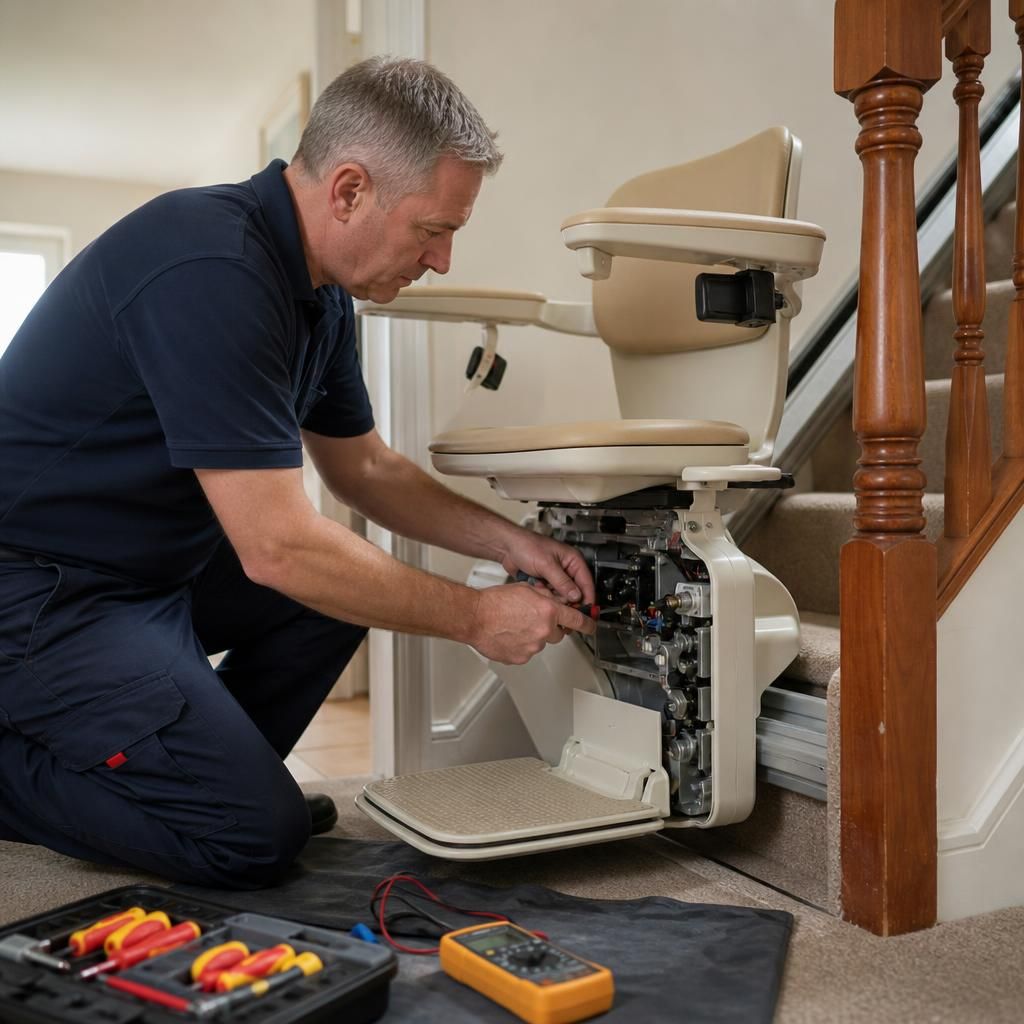
A comprehensive stairlift servicing plan combines safety inspections, mechanical checks, electrical and battery testing, cleaning, lubrication, operational testing and a written record of findings. It should cover the complete lift system rather than focusing only on the seat or rail, so that developing wear, charging problems and safety faults can be identified before they cause a breakdown.
Safety inspection and risk assessment
The service should begin with an inspection of the stairlift in its installed environment. The technician should check that the lift is securely fitted, that the rail and brackets remain stable, and that there are no changes to the staircase, flooring, lighting or surrounding furniture that could affect safe use. The position of the lift when parked should also be considered, particularly where it could obstruct a doorway, landing or other route through the home.
All user safety features should be tested, including the seat belt, armrests, swivel seat mechanism, footrest and any locking or interlocking mechanisms. Where the design includes a powered swivel or folding footrest, its movement should be checked for smooth and secure operation. The technician should also confirm that the lift cannot travel when a safety-critical component is in an unsafe position.
Rail, brackets and drive system
- Inspect the rail for looseness, damage, corrosion, obstruction or unusual wear.
- Check every visible fixing and support bracket for stability.
- Examine the carriage, drive mechanism, rollers, gears and other moving parts for wear or contamination.
- Clean and lubricate components where the manufacturer permits it, using suitable products and the correct amount.
- Look for excessive movement, vibration, juddering or unusual noise during travel.
Lubrication should not be treated as a universal remedy. Some rails and drive components are designed to operate without routine lubrication, and unsuitable oil or grease can attract dust, affect sensors or damage materials. A competent technician should follow the requirements for the particular stairlift model.
Seat, carriage and footrest checks
The seat should be inspected for secure attachment, damage, excessive movement and correct locking. The swivel function should engage and return properly, while the armrests and seat belt should be checked for both condition and usability. The footrest should be examined for cracks, looseness and interference with the stairs. If it includes a safety sensor, the sensor must be tested rather than simply inspected visually.
On powered swivel seats, powered footrests or folding mechanisms, the technician should check the motor, hinges, wiring and limit switches. Any movement that is hesitant, incomplete or accompanied by clicking may indicate wear or an adjustment issue that should be recorded and addressed.
Controls, switches and safety sensors
A service should test the controls on the armrest, remote controls and any call or send switches. The controls should respond consistently, with no sticking buttons, delayed operation or damaged casing. Remote controls should be checked for range, pairing and battery condition where applicable.
Safety sensors on the footrest, carriage and other parts of the lift should be tested under controlled conditions. The stairlift should stop or prevent movement when a relevant obstruction is detected. The technician should also check the emergency stop, key switch, directional controls, limit switches and any audible or visual warning indicators. A sensor that works intermittently can be especially difficult to identify without deliberate testing, so it should not be overlooked.
Electrical system and battery testing
The charging system should be inspected at the lift, charging points and mains supply. The service should confirm that the stairlift returns to its charging position correctly, makes reliable contact with the charging points and receives a charge when parked. Plugs, cables, connectors and accessible wiring should be checked for damage, heat marks, loose connections or signs of corrosion.
Batteries should be tested for condition and charging performance rather than judged solely by their age or appearance. The technician should look for symptoms such as slow travel, reduced operating time, repeated low-battery warnings or failure to operate away from the charging point. Battery terminals and connections should be clean and secure. Replacement should be recommended where testing shows that the batteries are no longer providing dependable performance, using parts suitable for the model.
For a stairlift with a backup battery system, the service should also establish whether it can operate safely during a power interruption. This does not replace the need to follow the manufacturer’s instructions about charging and emergency use.
Cleaning and condition of accessible components
Dust, pet hair and debris can collect around the rail, carriage, footrest and sensors. Appropriate cleaning should be included, particularly around moving parts and detection areas. The technician should avoid introducing liquid into electrical components and should not use cleaning products that could affect belts, plastics, upholstery or sensor surfaces.
For outdoor stairlifts, the plan should include checks for water ingress, corrosion, ultraviolet damage, drainage and the condition of protective covers. Outdoor equipment is exposed to different conditions from an indoor lift, so the servicing approach should reflect its location and the manufacturer’s maintenance requirements.
Operational testing under normal conditions
After inspection and any permitted adjustments, the stairlift should be operated through its full usable route. Testing should cover starting and stopping, travel speed, transitions, parking positions, charging points and the operation of safety features. Where appropriate, the technician should test the lift with the user’s normal operating conditions in mind, without exceeding the manufacturer’s specified capacity or safety instructions.
The technician should listen for changes in motor or drive noise and check for hesitation, jolting, excessive vibration or inconsistent stopping. A lift can appear satisfactory when stationary but reveal a developing problem during a complete journey, so operational testing is an essential part of a proper service.
Fault identification, adjustments and replacement advice
The service plan should distinguish between components that are working correctly, items that need adjustment, and parts showing wear that may require replacement. Minor adjustments may include securing a fixing, aligning a sensor or correcting a charging contact. Repairs and replacement parts should only be recommended when supported by the inspection and test results.
Any issue affecting immediate safety should be explained clearly and dealt with in accordance with the appropriate safety procedure. Where a component is usable but approaching the end of its serviceable condition, the technician should explain the likely consequence of leaving it in place, the available repair options and whether further monitoring is suitable.
Service records and follow-up plan
A written service record should identify the stairlift, document the checks carried out, record faults or wear, note any parts fitted and confirm the outcome of the operational test. It should also include practical advice for the user, such as keeping the lift on charge when parked, reporting unusual noises promptly and keeping the rail and footrest area clear.
The next service should be planned according to the stairlift model, manufacturer’s guidance, usage, environment, age and condition. A curved, outdoor or reconditioned stairlift may need particular attention to its configuration and components. If the lift is used frequently, has previously required repairs or is showing changes in performance, the servicing plan may need to include closer monitoring. Between scheduled services, stop using the stairlift and request advice if it develops erratic movement, repeated battery warnings, burning smells, damaged wiring or a safety feature that does not operate correctly.
Battery and charging checks are essential parts of a comprehensive stairlift service because a lift may appear to operate normally while its batteries are losing capacity. The technician should inspect the charging points, cables, connectors and battery terminals, then test charging performance and operation away from the charging position where appropriate.
Testing should take account of practical symptoms such as slow travel, reduced operating time, repeated low-battery warnings or failure to charge reliably. Batteries should not be replaced solely because of their age; replacement is appropriate when testing shows they can no longer provide dependable performance. The service record should note the findings and confirm any advice about keeping the stairlift parked on charge.
Book your comprehensive stairlift service
Arrange a comprehensive stairlift service with Independent Stairlifts to check safety features, mechanical components, controls, charging system and batteries. Contact us to book a service or discuss any changes in your stairlift’s performance.