
What factors should be considered when comparing local stairlift service providers?
When comparing local stairlift service providers, consider their experience with your stairlift model, technician qualifications, response times, service coverage, pricing transparency, parts availability and aftercare. Check that the service includes a thorough safety inspection, functional testing and clear records of any work completed, rather than focusing on the lowest quoted price alone.
When comparing local stairlift service providers, assess more than the call-out price. The important factors are relevant experience, technician competence, the scope of the inspection, response times, parts availability, pricing clarity, service records, insurance and the support available after the visit. A suitable provider should be able to maintain your particular stairlift safely and explain what work is required without recommending unnecessary repairs.
Experience with your stairlift
Stairlifts differ in their controls, drive systems, charging arrangements, safety sensors and diagnostic procedures. Ask whether the provider regularly services your make and model, including older or reconditioned equipment. This is particularly important for curved stairlifts, outdoor stairlifts and installations with unusual rails, intermediate charging points or more than one seat position.
A competent provider should be able to identify the model, check the relevant manufacturer guidance and obtain suitable replacement parts. If the company does not recognise the equipment or cannot explain how it will source compatible parts, ask for clarification before booking.
Technician qualifications and competence
Ask who will carry out the service and what training they have completed. Manufacturer training or demonstrable experience with the relevant stairlift system is useful, especially where the equipment is still under warranty. The technician should also understand electrical safety, battery and charging systems, mechanical wear and the safe testing of mobility equipment.
There is not one universal qualification that covers every stairlift service in every situation. However, a reputable provider should be willing to explain its technicians’ training, supervision arrangements and relevant insurance. You can also ask whether the work is completed by directly employed technicians or subcontractors, and how competence is checked in either case.
What the service actually includes
Compare the scope of the service rather than treating every visit as equivalent. A thorough appointment will normally include a visual and operational assessment, cleaning or adjustment where appropriate, inspection of safety features and functional testing. Depending on the model and its condition, the technician may check:
- the rail, drive mechanism, carriage, brackets and fixings;
- seat operation, swivel or folding mechanisms, armrests, footrest and seat belt;
- obstacle sensors, limit switches, safety edges and emergency controls;
- joysticks, remote controls, key switches, displays and other user controls;
- batteries, charging contacts, charger operation and standby charging;
- unusual noise, vibration, hesitation, stopping or changes in travel speed; and
- the condition of covers, wiring and accessible connections.
The provider should tell you which checks are included as standard and which repairs or replacement parts would cost extra. A basic visual check may not provide the same assurance as a documented service with operational and safety testing.
Response times and local coverage
“Local” can mean different things, so confirm the area covered and the usual response process. Ask how soon the provider can attend for routine servicing, whether urgent breakdown support is available, and whether visits are handled by a nearby technician or scheduled from a wider regional network.
Also check opening hours, arrangements for evenings or weekends, and what happens if a technician cannot restore the stairlift during the first visit. A clear explanation of call-out procedures is especially important if the stairlift is the main means of accessing bedrooms, bathrooms or the entrance to the property.
Pricing and contract terms
Request a written quotation or clear price breakdown before work begins. It should state whether the price covers the inspection, labour, travel, VAT where applicable and any report provided afterwards. Ask how additional work is authorised and whether parts are charged separately.
A low initial price may not represent the lowest overall cost if travel, diagnosis, emergency attendance or replacement components are excluded. Conversely, a higher price is not automatically evidence of better service. Compare like for like, including the checks performed, the likely availability of parts and the aftercare provided.
If you are considering a servicing plan, check its duration, renewal terms, cancellation arrangements, exclusions, limits on call-outs and treatment of wear-and-tear items such as batteries. Make sure you understand whether repairs are included or simply discounted.
Parts, repairs and warranty considerations
Ask whether the provider uses manufacturer-approved or otherwise compatible parts and how it deals with discontinued equipment. A provider should explain any difference between an original component, a compatible replacement and a refurbished part where those options are available.
If your stairlift is under a manufacturer or installer warranty, check whether using another service provider could affect the warranty terms. Keep invoices, service reports and details of any parts fitted. These records can help establish the stairlift’s maintenance history and may be useful when diagnosing a later fault or arranging a future repair.
Service reports and communication
A useful service report should identify the stairlift, record the checks completed, note any defects or developing wear and state whether the equipment was left operational. It should distinguish between an immediate safety issue, a recommended repair and general maintenance advice.
The technician should explain any findings in practical language and show you how to use relevant features safely. If a repair is recommended, ask what could happen if it is delayed, whether the stairlift can continue to be used safely and whether a temporary restriction is necessary. You should not feel pressured into authorising work that has not been explained.
Safety standards, insurance and safeguarding
Confirm that the provider has suitable public liability insurance and appropriate procedures for working in customers’ homes. Staff should arrive with identification, treat the property respectfully and take reasonable steps to protect flooring, walls and furnishings.
For an older person or anyone who may be vulnerable, reliable communication and professional conduct matter as much as technical ability. Ask whether appointment details are confirmed in advance, whether a family member or carer can be included in explanations and how personal information is handled.
Aftercare and breakdown support
Find out what support is available after a service visit. This may include advice by telephone, a defined period for reporting an unresolved issue, follow-up visits and access to repair support. Ask whether the provider keeps records of previous work so that future technicians can understand the stairlift’s history.
Do not assume that a routine service includes emergency repairs. Confirm the breakdown number, expected response times, likely charges and what you should do if the stairlift stops while you are using it. If the lift stops between floors or you are unable to leave the seat safely, follow the manufacturer’s instructions and seek assistance rather than attempting to move the equipment or dismantle it.
Questions to ask before choosing a provider
- Do you service this exact make and model?
- What checks and tests are included in the standard service?
- Will I receive a written report and recommendations?
- Are travel, labour, VAT and follow-up visits included in the quoted price?
- How are additional repairs and parts approved and charged?
- What training and experience does the attending technician have?
- Are suitable parts available for this model, including if it is older or reconditioned?
- What support is available if the stairlift breaks down after the service?
- Could this work affect an existing warranty or service agreement?
- Do you offer a reminder service for future maintenance?
Warning signs include a provider that will not explain what is included, cannot confirm experience with your stairlift, gives an unclear total price, refuses to provide a service record or pressures you to approve unrelated work. Comparing the full service, safety process and aftercare gives a more reliable basis for choosing local support than comparing headline prices alone.
When comparing local stairlift service providers, compare the checks included in each appointment rather than the headline price alone. A suitable service should assess the stairlift’s mechanical operation, electrical system, safety features and charging equipment, then explain any faults or developing wear.
Before booking, ask whether the technician will check the rail and drive mechanism, seat and footrest, sensors, controls, batteries, charging contacts and emergency functions. Confirm whether cleaning, adjustments, replacement parts and follow-up visits are included or charged separately.
You should also receive a clear service report identifying the stairlift, recording the work completed and explaining whether it was left safe to use. Any recommended repair should be categorised clearly, with an explanation of the risks of delaying it. This makes it easier to compare providers fairly and helps maintain an accurate maintenance history for future servicing or breakdown support.
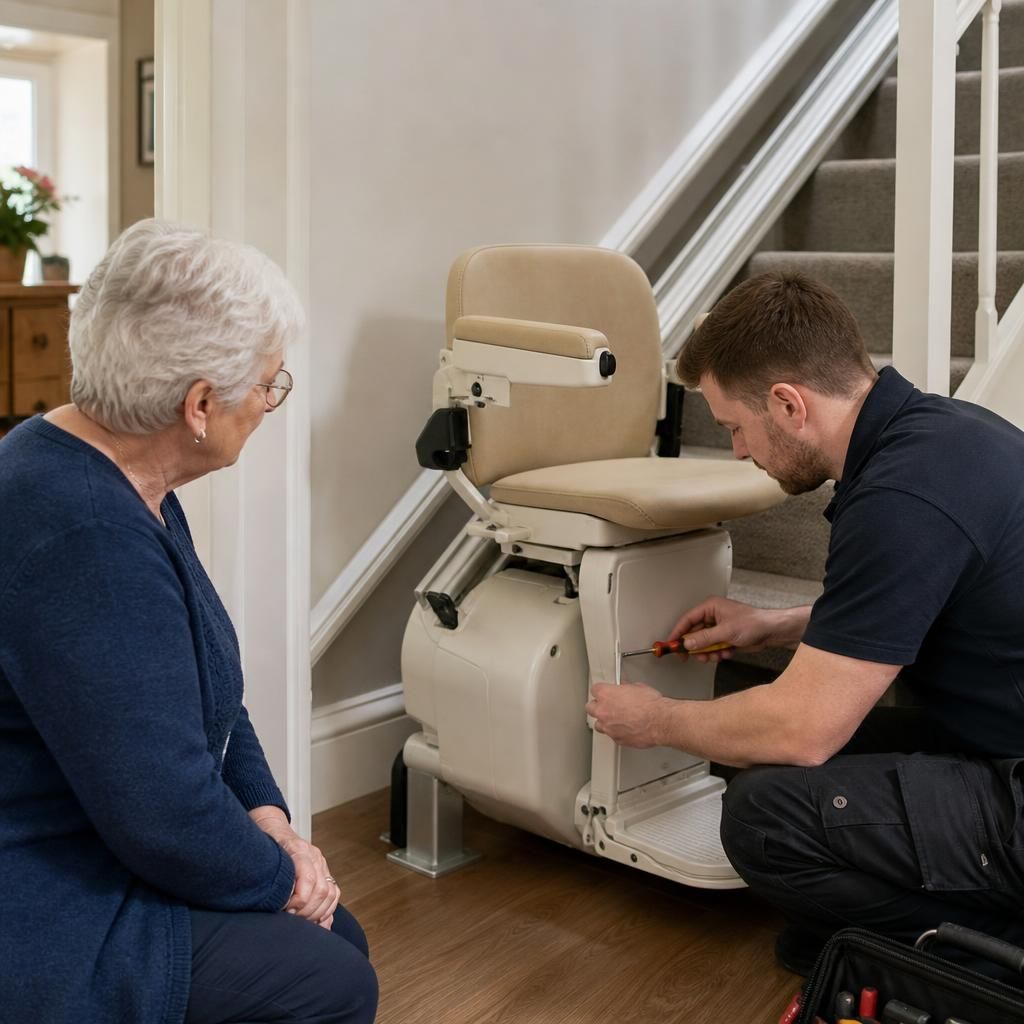
Compare Your Local Stairlift Servicing Options
Compare the service scope, technician experience, pricing and aftercare available for your stairlift before booking. Contact Independent Stairlifts to discuss your servicing requirements and arrange suitable local support.