
What does a typical stairlift service include?
A typical stairlift service includes a thorough inspection of the track, carriage, seat, controls, sensors, batteries and safety systems, followed by cleaning, lubrication, adjustments and operational testing where required. The technician will identify wear or faults, complete suitable minor repairs where possible, and explain any further maintenance or replacement work needed to keep the stairlift safe and reliable.
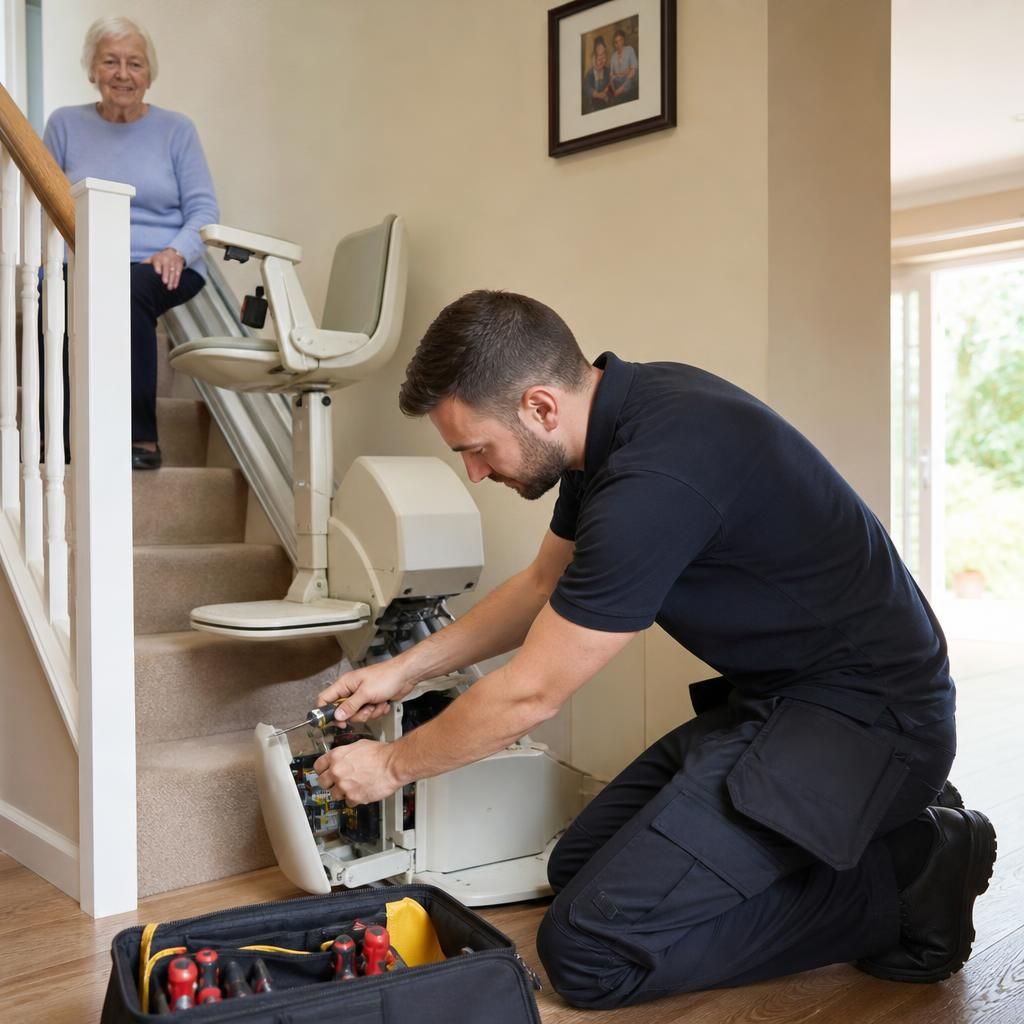
A typical stairlift service is a systematic inspection, clean, adjustment and safety test of the complete lift. It normally covers the rail or track, carriage, seat, armrests, controls, sensors, batteries, charging system and safety features. The technician will identify wear or faults, carry out suitable minor adjustments or repairs where possible, and explain clearly if parts or further work are needed.
Initial inspection and service history
The service usually begins with a discussion about how the stairlift has been performing. You may be asked about unusual noises, changes in movement, intermittent stopping, battery warnings or any occasions when the lift has failed to operate. The technician may also review previous service notes, repairs and replacement parts so that recurring issues can be identified rather than treated in isolation.
A visual inspection is then made of the installation and the surrounding staircase. This can identify loose fittings, damage, obstructions, signs of impact or changes to the home that could affect safe operation. For a curved stairlift, the condition and alignment of the bespoke track are particularly important. Outdoor models are also checked for weather-related deterioration, water ingress and damage to protective covers or electrical connections.
Track, rail and carriage checks
- The track is checked for secure fixings, damage, contamination and anything that could interfere with smooth travel.
- The carriage is inspected for unusual movement, excessive play, wear and correct engagement with the track.
- Drive components, rollers and accessible mechanical parts are examined for signs of deterioration.
- Relevant moving parts are cleaned and lubricated in line with the manufacturer’s requirements.
- The lift is operated along the full usable route to check for hesitation, vibration, grinding, juddering or unusual noise.
Lubrication is not automatically applied to every part. Some components require a specific lubricant, while others should remain dry because applying the wrong product can attract dirt or affect the mechanism. A competent technician will follow the requirements for the particular model.
Seat, arms and safety equipment
The seat is checked for secure attachment, correct swivelling and locking, and safe positioning at the top or bottom of the stairs. The seat belt or harness is examined for damage and reliable operation. Where fitted, the footrest, armrests, swivel seat, folding mechanism and powered seat functions are also tested.
Safety edges, obstruction sensors and other protective devices are tested to confirm that the stairlift stops or responds as intended when an obstruction is detected. The technician will also check that the seat, swivel mechanism, armrests and belt interlocks prevent travel when they are not in the correct position. These checks are essential because a stairlift should not rely solely on the user noticing a hazard.
Controls and electrical checks
The controls on the armrest and at the charging points are tested for responsive operation. If the stairlift has remote controls, these may be checked as well. The technician will look for sticking buttons, damaged casings, weak signals or controls that do not consistently operate the lift.
Electrical connections, wiring that is accessible for inspection, charging contacts and the charger are checked for damage or poor contact. The technician may test the batteries and charging performance, although the precise method depends on the stairlift model. Batteries are consumable parts: a stairlift can still operate for a period while its batteries are beginning to lose capacity, so warning lights, slow charging or reduced performance should be reported.
Where a mains supply, isolator or dedicated electrical connection forms part of the installation, it is inspected as appropriate. A routine stairlift service is not the same as a full inspection of the home’s electrical installation, so any separate electrical concern may need to be referred to a suitably qualified electrician.
Operational and safety testing
After inspection and adjustments, the stairlift is run through its normal operating cycle. This commonly includes travel in both directions, starting and stopping, operation at the top and bottom of the track, charging and the response of safety controls. The technician checks that the lift starts smoothly, travels at the expected speed and stops accurately without excessive noise or movement.
Testing may also include the emergency stop, safety sensors, swivel or folding functions, and any alarm or diagnostic indicators fitted to the model. The exact checks vary between straight, curved, outdoor and reconditioned stairlifts, as well as between manufacturers and individual configurations. A service should therefore be carried out using the relevant technical information for that particular lift rather than a generic checklist alone.
Cleaning and adjustments
Dust, hair and debris can build up around the track, carriage, footrest and other moving areas. Appropriate cleaning helps prevent contamination from affecting movement or sensors. The technician may tighten accessible fixings, adjust alignment or make other minor corrections where this can be done safely and within the manufacturer’s requirements.
Cleaning does not mean that every part of the stairlift can or should be dismantled. Parts that require specialist repair, electrical diagnosis or replacement should be dealt with using the correct procedure. Attempting to clean inside covers or alter mechanisms yourself can create a safety risk and may affect future servicing.
Faults, wear and recommended work
If the service identifies a worn battery, damaged belt, deteriorating roller, faulty sensor, charging problem or other defect, the technician should explain what has been found and how it affects operation. The recommendation may be an adjustment, a minor repair, replacement of a consumable part or further diagnostic work. If a repair cannot safely be completed during the visit, you should be told whether the stairlift can remain in use, needs restricted use or should be taken out of service until the issue is resolved.
A service is intended to assess and maintain the stairlift; it does not automatically include every repair or replacement part. The work completed and any additional recommendation should be recorded clearly, including whether parts are required and whether the issue is urgent. You should be able to ask for an explanation of any proposed work before it goes ahead.
Service record and advice
At the end of the visit, the technician should explain the condition of the stairlift, work carried out, parts fitted, outstanding concerns and any recommended follow-up. The service record may include the model details, inspection findings and safety test results. Keep this information, particularly if the stairlift is used by more than one person or if another technician may need to attend later.
You should also receive practical advice relevant to the model. This may include keeping charging points clear, leaving the stairlift at its recommended charging position when not in use, reporting warning lights promptly and avoiding heavy items on the footrest. The track and surrounding stairs should be kept free from objects, clothing and cleaning equipment that could obstruct travel.
Before the appointment
To help the service proceed efficiently, make sure the full staircase and charging points are accessible. Tell the technician about any change in use, unusual sound, error message, repeated stopping or battery issue. Do not wait for the appointment if the stairlift is behaving dangerously, emitting a burning smell, showing exposed wiring or repeatedly stopping unexpectedly. Switch it off if it is safe to do so and contact the service team for advice.
A thorough service should leave you with a clear understanding of whether the stairlift is operating safely, what has been maintained and what may need attention next. The checks should be adapted to the type, age, condition and configuration of your lift, rather than treating every installation as identical.
A typical stairlift service includes a complete safety check, not just a quick test of whether the lift moves. The technician checks the track, carriage, seat, belt, controls, batteries, charging points, sensors and emergency features, then operates the lift through its full route to identify unusual movement, noise, stopping or vibration.
Any safe minor adjustments, cleaning or lubrication are completed in line with the manufacturer’s requirements. If the inspection finds worn parts or a fault requiring further work, the technician should explain the issue clearly, confirm whether the stairlift is safe to use and record the recommended repair or replacement.
Arrange Your Stairlift Service
If your stairlift is due for a service or showing signs of wear, contact Independent Stairlifts to arrange a professional inspection and safety check. We can assess your lift, explain any recommended work and help keep it reliable for everyday use.