
What are the common signs that my stairlift needs servicing?
Common signs that your stairlift needs servicing include unusual noises, jerky or uneven movement, slower travel, difficulty starting or stopping, and repeated warning lights or fault tones. Contact Independent Stairlifts for advice if you notice these symptoms, particularly if the lift stops unexpectedly, the seat or footrest feels loose, or the safety sensors do not operate correctly.
The common signs that a stairlift needs servicing are unusual noises, jerky or uneven movement, slower travel, difficulty starting or stopping, repeated warning lights or fault tones, and a battery that is not holding its charge. A loose seat, armrest or footrest, unreliable safety sensor, or unexpected stopping also needs prompt attention. These symptoms can indicate wear, a developing electrical fault, a charging problem or an issue with the lift’s safety systems.
Unusual noises
Some operating noise is normal, but a new or worsening sound should not be ignored. Grinding, squealing, clicking, knocking or repeated rattling may indicate that the drive mechanism, track, rollers or another moving part needs inspection. Do not apply household oil or lubricant unless the manufacturer or a qualified technician specifically advises it, as the wrong product can affect components and safety systems.
Jerky, uneven or hesitant movement
A stairlift should travel smoothly at a controlled speed. Shuddering, stopping and starting, vibration or hesitation can be linked to contamination or wear around the track, drive components, sensors or electrical connections. If the lift lurches when it starts or stops, remove it from use and arrange a service rather than continuing to test it with someone seated in the chair.
Slower travel or difficulty starting
A noticeable reduction in speed, a delay before the lift moves, or a failure to start can point to a low or deteriorating battery, charging fault, control issue or mechanical resistance. First check that the stairlift is correctly parked on its charging point and that the charger is switched on, where applicable. If it remains slow or unreliable after charging, contact Independent Stairlifts for advice.
Frequent stopping or loss of power
Unexpected stops, power cuts during a journey, or a lift that works intermittently should be treated seriously. A stairlift may stop because a safety sensor has detected an obstruction, but repeated stopping can also indicate a fault. Park the lift safely if possible, switch it off according to the user instructions and avoid using it until the cause has been checked if the problem continues.
Warning lights, fault tones or error messages
Flashing indicators, repeated beeps and displayed fault codes are useful warnings rather than features to be ignored. Check the user manual for the meaning of the indication and confirm that the seat, armrests and footrest are in their normal operating positions. If the warning remains, returns regularly or is accompanied by unusual movement, arrange servicing. Make a note of what the indicator is showing, as this can help the technician identify the problem.
Battery and charging problems
Battery-related signs include the stairlift failing to complete its usual journey, needing to be charged more often, stopping away from a charging point or sounding a low-battery alert despite being left to charge. Check that the charging contacts are clean and that the lift is parked fully in position, without attempting electrical repairs yourself. Batteries are serviceable components and may eventually need replacement, particularly where the lift no longer retains charge reliably.
Loose or difficult-to-operate parts
Arrange a service if the seat swivels unexpectedly, the swivel mechanism does not lock securely, or the armrests, footrest, seat belt or joystick feel loose or behave differently. The seat belt should fasten and release correctly, and the footrest should move and support the user as designed. Do not use the stairlift if a restraint, seat or other part appears insecure.
Safety sensor problems
Stairlifts use sensors and safety edges to detect obstructions and help prevent movement when a component is not in the correct position. If the lift moves when it should not, fails to move when the route is clear, or continues to report an obstruction after you have checked for anything in its path, stop using it and request professional assistance. Never bypass, cover or disconnect a safety sensor.
Visible damage, obstruction or unusual wear
Inspect the accessible areas of the track, seat and footrest without dismantling anything. Report cracked covers, exposed wiring, damaged controls, fluid contamination, unusual debris or anything that appears loose. Keep the track and steps clear, but do not reach into moving parts or attempt to remove a trapped object while the stairlift is powered.
When to stop using the stairlift
- The lift stops unexpectedly or cannot be controlled normally.
- The seat, seat belt, armrest, footrest or swivel mechanism is loose or fails to lock.
- There is smoke, a burning smell, sparking, exposed wiring or evidence of overheating.
- The lift moves without the control being operated or does not respond reliably.
- A safety sensor or safety edge appears not to work correctly.
- The stairlift repeatedly loses power, gives fault warnings or becomes stuck on the stairs.
If any of these occur, keep the user safely away from the lift and contact Independent Stairlifts or the appropriate service team. If there is smoke or a burning smell, switch off the power only if it is safe to do so and follow the manufacturer’s instructions. Do not dismantle the stairlift or attempt to release a passenger from a difficult position without suitable guidance.
Not every warning means that a major repair is required. A misplaced charging position, obstruction, low battery or control setting can sometimes explain a minor symptom. However, a symptom that returns, becomes more frequent or affects safe operation should be assessed by a qualified stairlift technician. Keep a note of when the problem occurs, whether the lift was travelling up or down, any warning displayed and whether it happens with or without a passenger. This information can make diagnosis more efficient.
Regular servicing can identify wear, charging problems, track and drive issues, loose connections and safety-system faults before they cause a breakdown. It does not replace everyday checks: keep the route clear, use the controls as instructed and report changes in performance promptly. If you are unsure whether a noise or fault is significant, contact Independent Stairlifts for practical advice rather than continuing to use a stairlift that does not feel safe.
A stairlift that moves jerkily, stops unexpectedly or gives repeated fault warnings should be taken out of use until it has been checked by a qualified technician. These symptoms may indicate a problem with the drive system, battery, electrical connections or safety sensors. Do not bypass a sensor, dismantle the lift or continue testing it with someone seated. If you notice smoke, a burning smell, sparking, exposed wiring or a loose seat belt, armrest or footrest, keep the user safely away and contact Independent Stairlifts for advice.
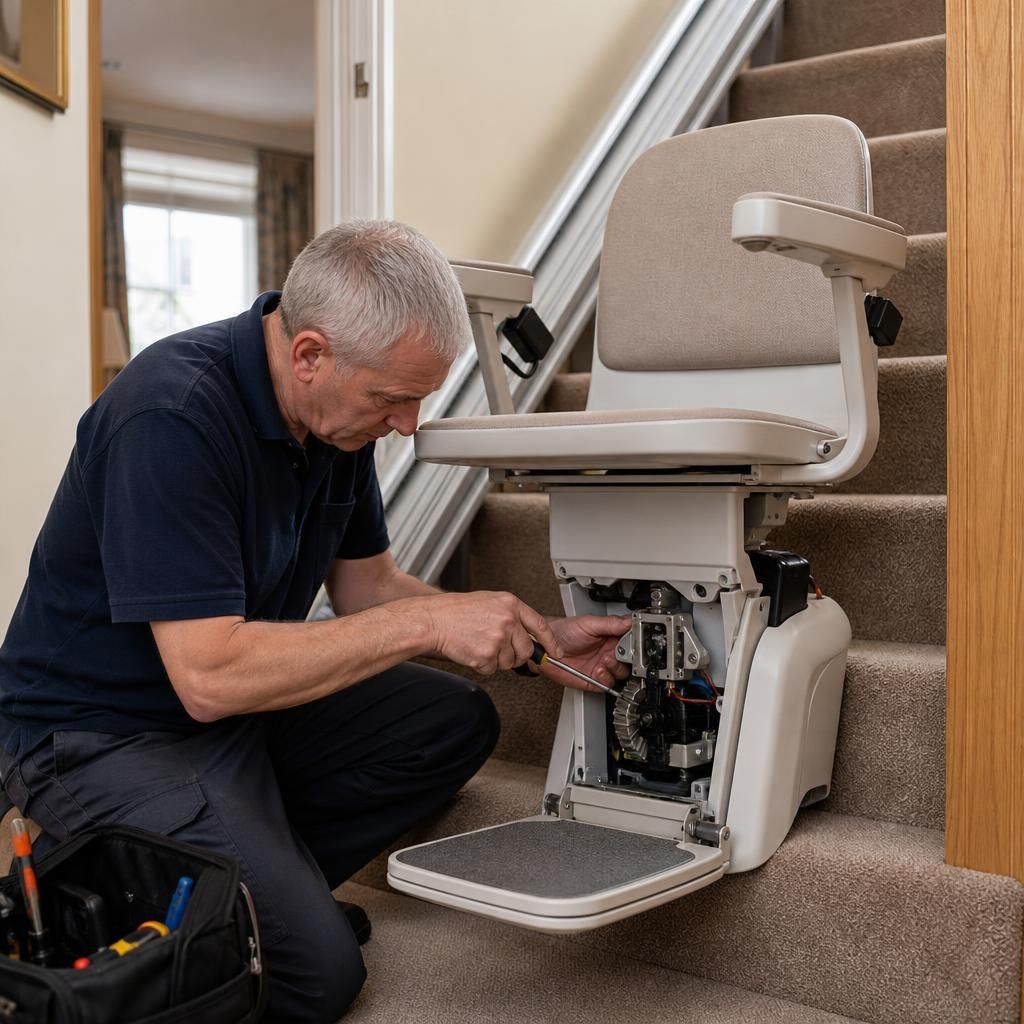
Arrange a Stairlift Service with Independent Stairlifts
If your stairlift is showing any of these warning signs, contact Independent Stairlifts to arrange a professional service and safety check.