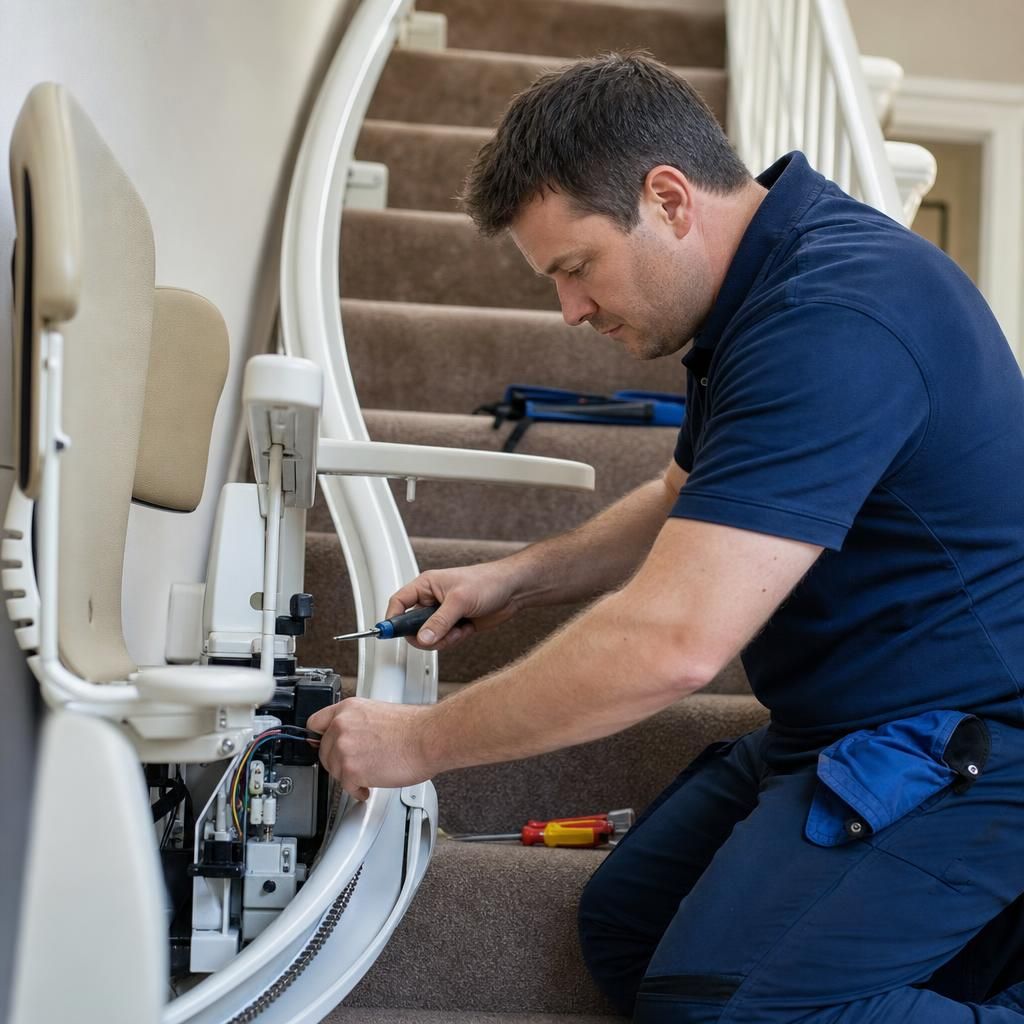
A Thorough Service Inspection
A maintenance visit checks the parts that affect safe movement, including the track, seat, armrests, controls and safety sensors. Identifying wear or adjustment needs early can help prevent avoidable disruption.

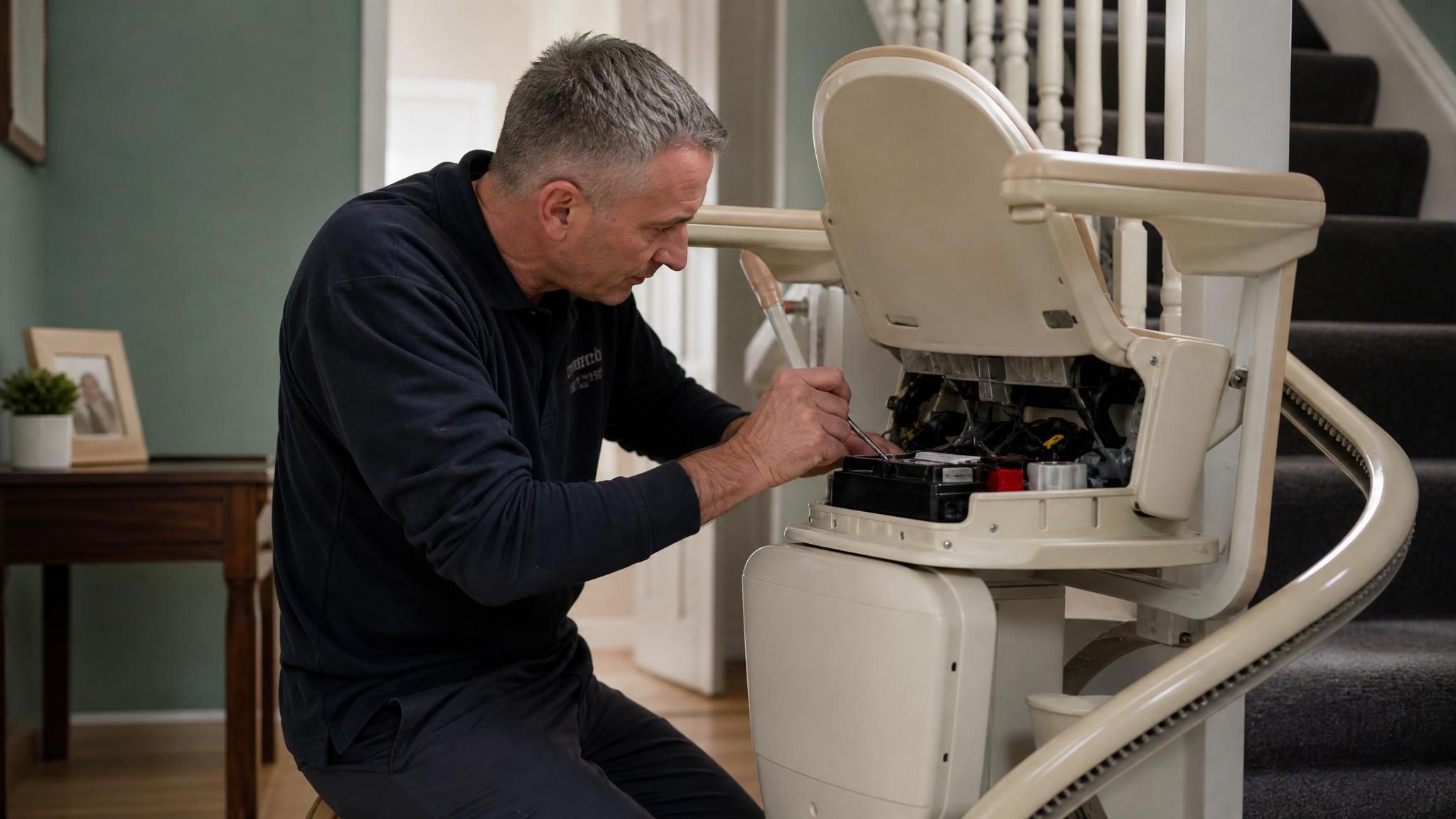
Stairlift maintenance and repairs are inspections and corrective work that keep your lift safe, reliable and ready for regular use. Independent Stairlifts provides servicing, fault diagnosis and repairs for straight, curved and outdoor models across the UK, tailored to home.
A maintenance visit checks the parts that affect safe movement, including the track, seat, armrests, controls and safety sensors. Identifying wear or adjustment needs early can help prevent avoidable disruption.
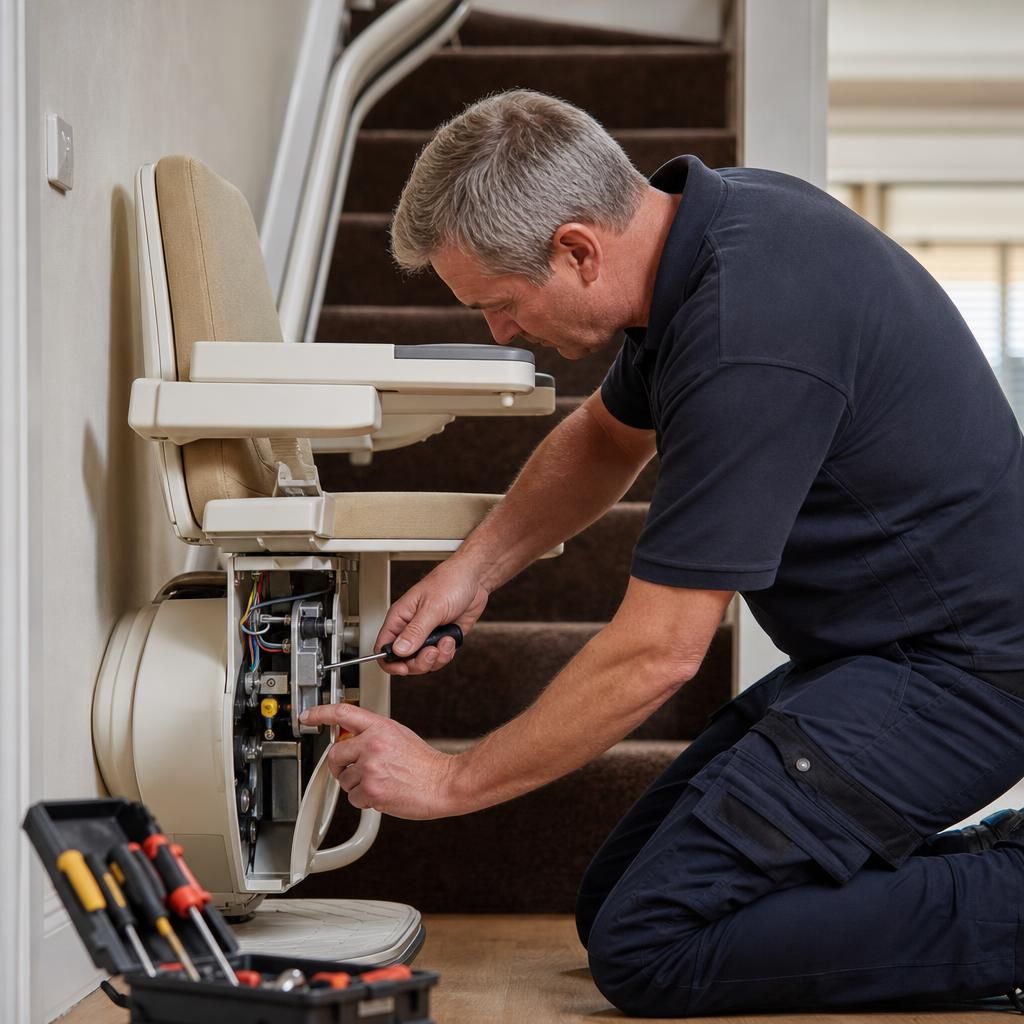
Responsive controls make everyday use simpler. Servicing can identify issues with the handset, armrest switch or stop controls and confirm that the stairlift responds correctly during operation.
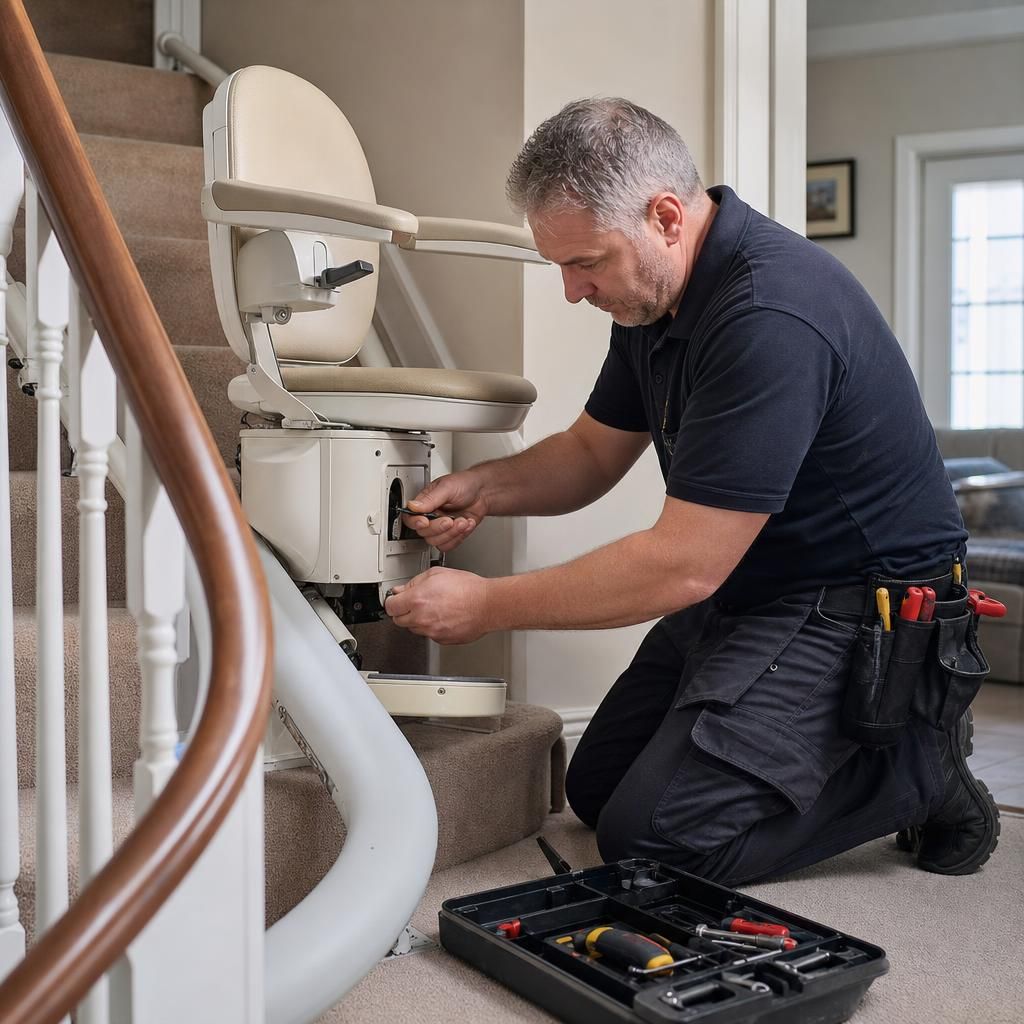
A stairlift needs effective charging to remain ready for use. Battery condition, charging contacts and the parking position can all be checked when the lift is not holding charge or gives a low-power warning.
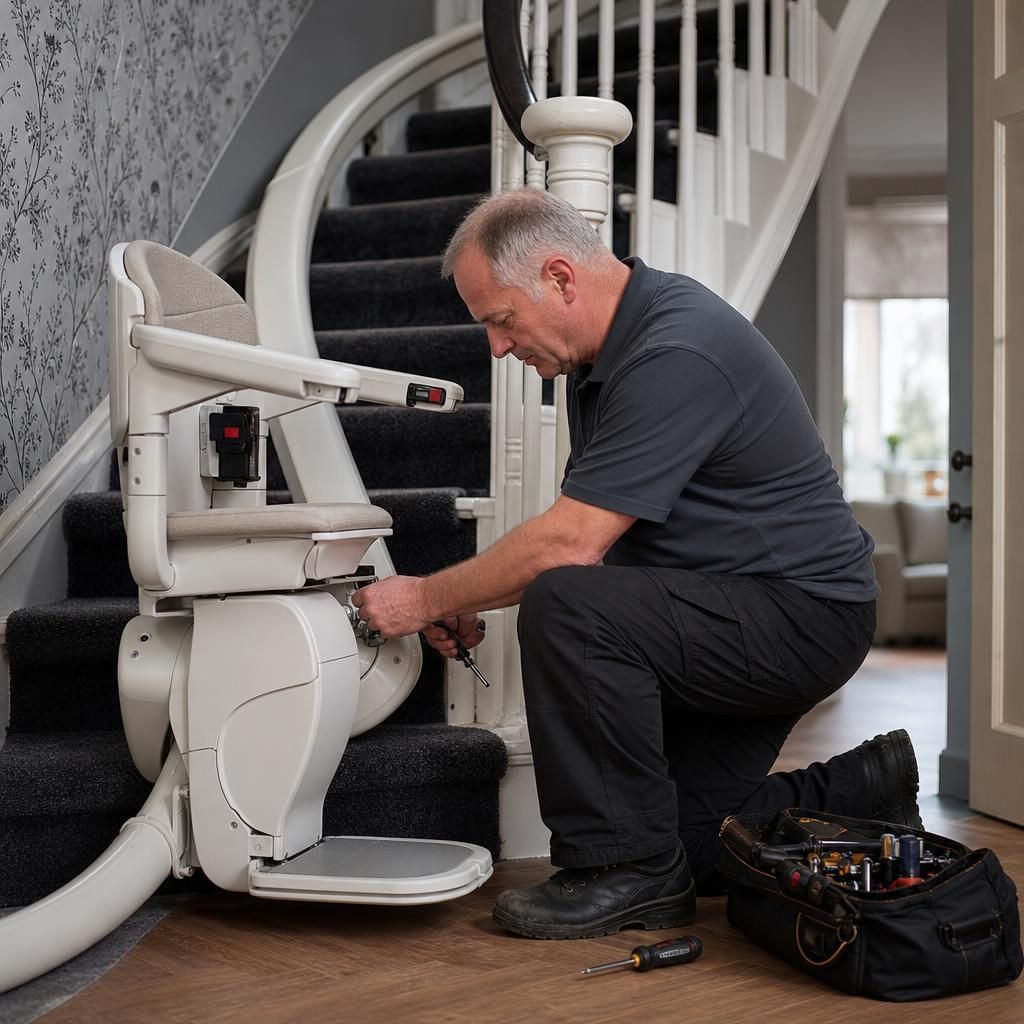
Unusual noises, jolting, slow movement or a lift that will not start can have different causes. Fault diagnosis helps identify the affected component so the repair advice is relevant to the stairlift and its installation.
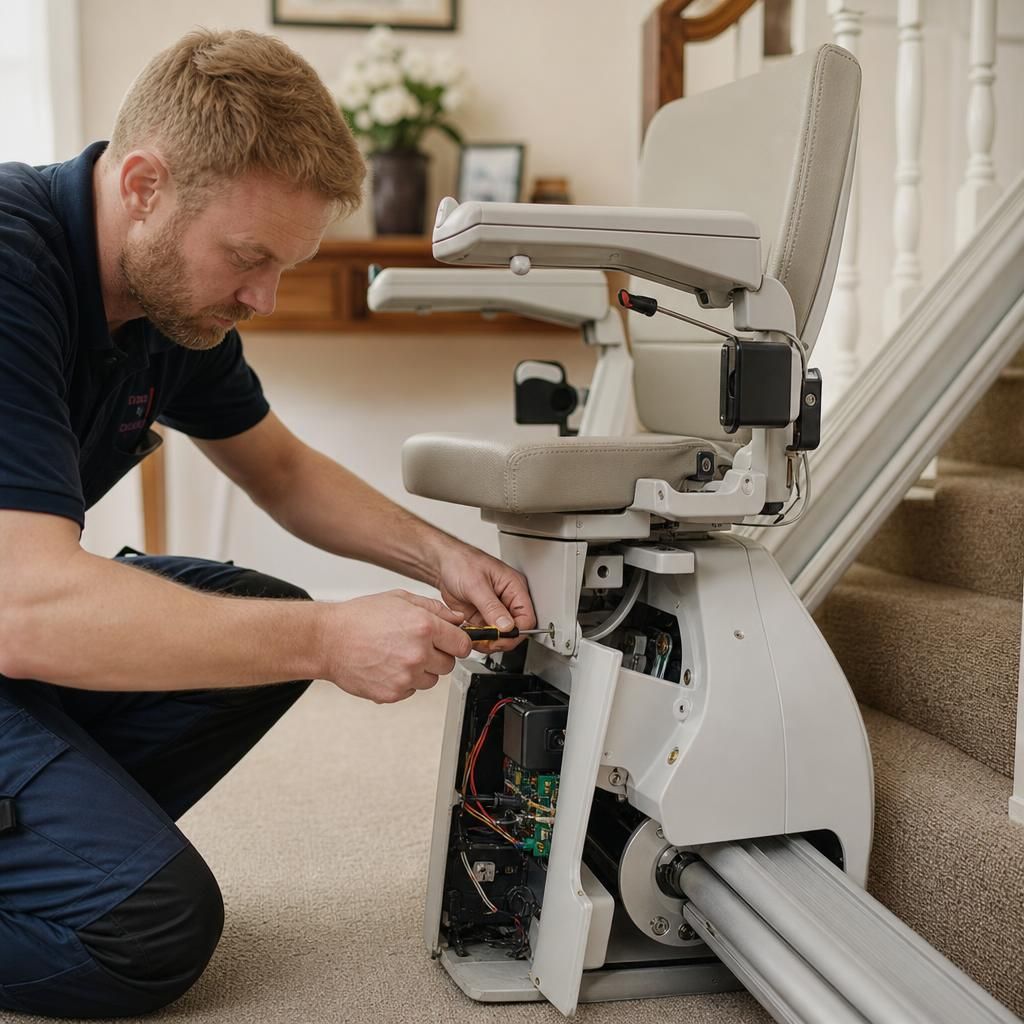
Outdoor stairlifts are exposed to changing weather and may need checks focused on covers, controls, charging points and exposed fittings. Maintenance helps keep the installation suitable for regular external use.
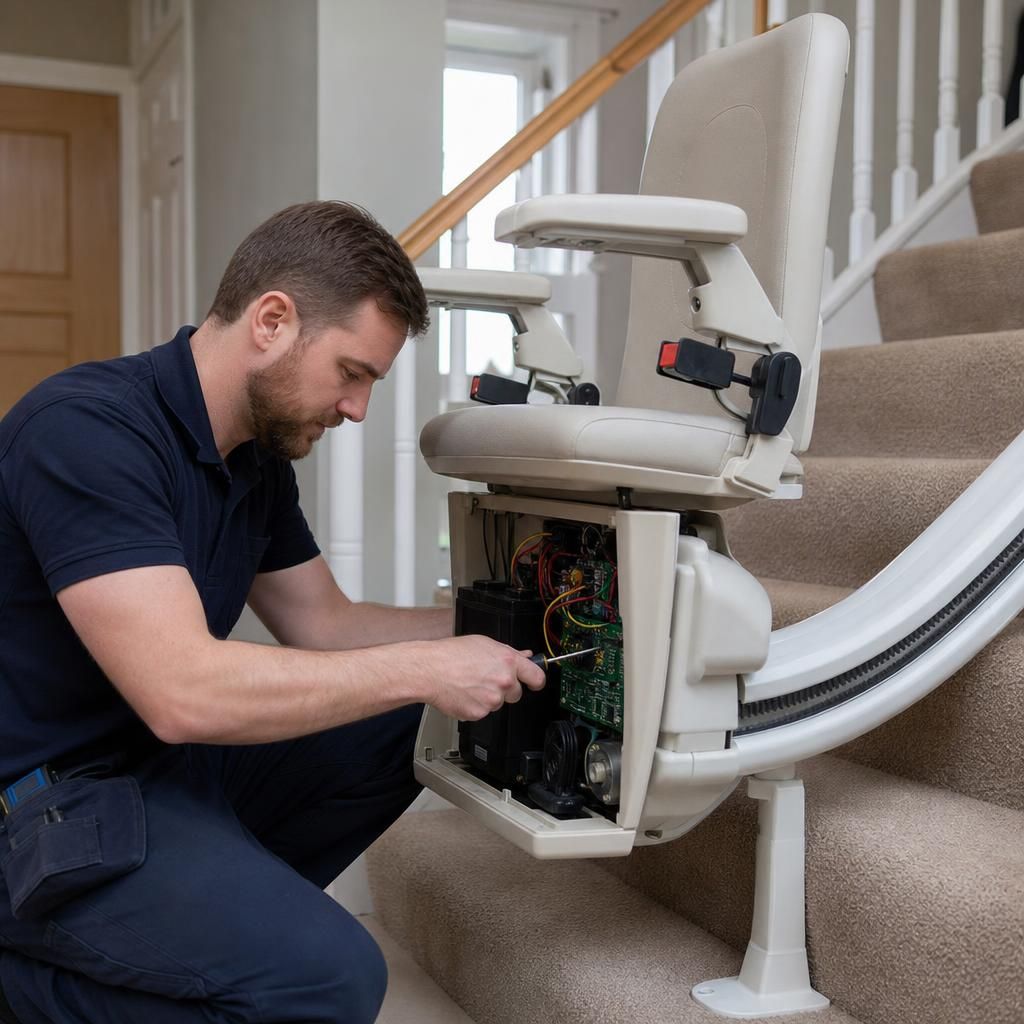
Curved stairlifts are made for the layout of an individual staircase. Servicing can assess movement along the full track, helping identify alignment, travel or seating issues specific to the installation.
Stairlift maintenance and repairs involve checking, servicing and correcting the parts that affect safe operation, including the track, seat, controls, batteries, charging points and safety sensors. Regular maintenance can identify wear before it causes a breakdown, while repairs address faults such as unusual noises, jerky movement, warning lights or failure to start.
Independent Stairlifts assesses each fault against the stairlift model and installation, explains the recommended work clearly and tests the lift after repairs. If your stairlift is not operating normally, stop using it if necessary and contact us for practical advice and a suitable inspection.
A fault assessment identifies whether the problem comes from the stairlift’s controls, drive system, batteries, charging points, safety sensors or another component. The inspection is matched to the lift’s make, model and installation.
We discuss what has happened, when the problem occurs and whether any warning lights or sounds are present. The stairlift can then be inspected and tested to establish the likely cause before repair work is recommended. This helps avoid replacing parts unnecessarily and ensures the proposed solution is appropriate for the lift and the home.
A stairlift repair involves correcting the identified fault and checking that the lift operates safely afterwards. The work required depends on the condition, design and age of the stairlift.
After assessing the issue, we explain the recommended repair, any relevant parts and the expected work involved. Once repairs are completed, the stairlift is tested through its operating functions, including controls, movement and safety features. If further work is advisable, this is explained clearly rather than assumed.
Servicing checks the components and functions that help prevent unsafe operation, including stopping systems, sensors, controls and the charging arrangement. A stairlift should not be used if its behaviour suggests a safety fault.
The inspection considers whether the stairlift starts, stops and travels as intended, and whether safety features respond correctly. We also look for signs of wear, damage or installation-related issues that could affect operation. If a fault creates a safety concern, follow the advice given and keep the lift out of use until it has been assessed.
Any guarantee or warranty applying to repair work or replacement parts depends on the work carried out and the terms explained at the time. It is important to understand what is covered before approving a repair.
We explain the applicable cover, exclusions and any conditions relevant to the recommended work. Coverage may differ between labour, replacement components and the original stairlift, particularly where an older or reconditioned lift is involved. If you need clarification after the repair, contact us with the service details so the position can be checked.
If a stairlift stops unexpectedly, check that it is switched on, positioned correctly and connected to its charging point, provided it is safe to do so. Do not force the controls, bypass a safety feature or attempt an electrical repair yourself.
Make a note of what the stairlift was doing, any warning indicators or unusual sounds, and whether the problem affects the handset or the controls on the chair. Contact Independent Stairlifts for advice and an assessment. If someone is left unable to move safely between floors, use an alternative safe route if available and seek appropriate assistance while waiting for the stairlift to be inspected.
Our highly trained technicians conduct thorough inspections, address wear and tear, and ensure optimal stairlift functionality, providing a reliable and safe mobility solution tailored to your stairlift's unique needs.
A professional maintenance schedule is typically recommended annually, but higher usage or complex models may require more frequent checks to ensure optimal performance and prevent potential faults.
Commonly needed repairs for stairlifts include addressing motor malfunctions, replacing worn-out tracks or rollers, adjusting seat mechanisms, and resolving electrical issues to ensure smooth and reliable operation.
Ensure cleanliness by regularly wiping down the stairlift with a soft, dry cloth. Check for obstructions on the tracks and keep the charging points dust-free for efficient operation.
We offer comprehensive warranty and support options, including prompt repairs and free service callouts, to ensure your stairlift remains reliable and efficient throughout its lifespan, enhancing your peace of mind.
Stairlift maintenance and repairs involve inspecting, testing and correcting the components that keep a lift safe and operational, including its track, seat, controls, batteries, charging points and safety sensors.
If your stairlift makes unusual noises, moves unevenly, shows warning lights or will not start, stop using it and contact Independent Stairlifts for professional advice and an inspection.
If the lift jolts, stops unexpectedly, shows a warning light or will not start, switch it off and arrange a professional inspection before using it again.
An inspection checks the track, seat, controls, batteries, charging points and safety sensors to identify the cause of the fault.
Routine servicing can identify wear, charging problems and safety issues before they develop into a breakdown.
Weak batteries or a faulty charging connection can affect reliability, so both should be tested as part of a suitable service.
After corrective work, Independent Stairlifts checks the stairlift's operation and explains any further maintenance recommended for the model and installation.
Servicing and repairs are available for straight, curved and outdoor stairlifts across the UK, with advice based on your home and lift.
Professional stairlift maintenance and repairs combine planned inspections with targeted fault finding to keep essential systems safe and usable. They can identify wear, restore reliable operation, reduce avoidable disruption and clarify when replacement or further assessment is appropriate.
Safer day-to-day use
A professional inspection can identify faults affecting safe travel, including ineffective safety edges, controls or seat sensors. Corrective work helps ensure the stairlift responds as intended during normal journeys.
Fewer unexpected breakdowns
Servicing detects developing problems such as worn drive components, loose connections or declining batteries before they prevent the lift from operating. Addressing these issues can reduce avoidable interruptions at home.
More consistent movement
Cleaning, adjustment and replacement of worn parts can improve how the stairlift starts, travels and stops. This is particularly useful where movement has become noisy, hesitant or uneven.
Better battery and charging performance
Battery condition, charging contacts and the charger can be checked together rather than treated as separate faults. The resulting advice can help restore dependable charging or confirm when battery replacement is needed.
Appropriate repairs for the model
Straight, curved and outdoor stairlifts use different tracks, drives and controls. An engineer can match the repair to the equipment already installed, avoiding unsuitable parts or unnecessary replacement.
Clearer decisions about future costs
A written or explained assessment can distinguish between a straightforward repair, ongoing maintenance and a larger equipment issue. This gives you practical information before authorising work or considering a replacement.
A tested lift after work
After maintenance or repairs, the stairlift should be operated and its key functions checked. This confirms that the reported fault has been addressed and that the lift is ready for normal use.
Regular maintenance includes thorough inspections, minor adjustments, cleaning, lubrication, and system testing to ensure safe and efficient stairlift operation. Repairs address specific mechanical or electrical issues affecting performance.
Immediately switch off the power, check for any visible obstructions, and refer to the user manual for troubleshooting tips. If unresolved, contact our professional technicians for prompt assistance.
Warranty specifics vary; check your documentation for coverage details. Often, warranties cover repairs for manufacturer faults, but user-caused damage may incur charges. Confirm your policy or contact us for clarification.
Professional inspection is crucial to diagnose unusual noises, indicating potential mechanical issues. Prompt attention ensures safety, efficiency, and prevents exacerbating minor faults, ultimately safeguarding your stairlift investment.
Look for erratic movements, loss of power, strange odours, or unresponsive controls. Such issues may indicate urgent repair needs to prevent safety hazards and ensure reliable stairlift operation.
Arrange a stairlift inspection with Independent Stairlifts for clear advice on maintenance, repairs or replacement. Contact our UK-wide team today with your stairlift model and symptoms, and we will help identify the appropriate next step.
Contact Us