
How often should regular stairlift servicing be scheduled to maintain optimal performance and safety?
A stairlift should normally receive a professional service at least once every 12 months, or at the interval specified by the manufacturer. More frequent servicing may be appropriate for heavily used, older or outdoor stairlifts, and a service should also be arranged after a significant fault, repair or change in performance.
A stairlift should normally be professionally serviced at least once every 12 months, or at the interval specified by the manufacturer. More frequent servicing may be appropriate for a heavily used, older or outdoor stairlift. Arrange an additional service after a significant fault, repair, prolonged period out of use or noticeable change in performance.
Annual servicing provides a planned opportunity to check the stairlift’s mechanical, electrical and safety systems before a minor issue develops into a breakdown. It is also useful for identifying wear that may not be obvious during everyday use. The recommended interval is a minimum guide rather than a substitute for acting promptly when something changes.
When a shorter service interval may be appropriate
- Frequent use: A stairlift used several times a day may experience more wear to its drive components, rollers, batteries and charging contacts than one used occasionally.
- Older equipment: Ageing batteries, switches, wiring, motors and mechanical parts may need closer monitoring, particularly where replacement parts are becoming less readily available.
- Outdoor stairlifts: Exposure to rain, moisture, temperature changes, dirt and sunlight can affect electrical connections, upholstery, covers, rails and moving parts. An outdoor model may therefore benefit from checks more often than the standard annual interval.
- Demanding stair configurations: Curved stairlifts have more complex rails and drive arrangements than straight models, so the technician should follow the model-specific maintenance schedule carefully.
- Changes in the user’s needs: If the user has become less steady, uses different mobility equipment or finds transfers more difficult, a service visit can help confirm that the seat position, controls, belt and operating settings remain suitable.
What happens during regular servicing
A competent technician will inspect and test the stairlift in line with the manufacturer’s instructions. The exact work varies by model, but commonly includes checking the rail, drive system, rollers, motor, seat, armrests, footrest, swivel mechanism, safety sensors, seat belt, controls, batteries, charging points and stop switches. The technician should also check that the stairlift travels smoothly, stops correctly at the top and bottom, charges properly and responds to its safety features.
Where appropriate, moving parts are cleaned, adjusted or lubricated using materials and procedures suitable for that model. The technician should explain any worn components, safety concerns or recommended repairs rather than treating a service as a simple visual inspection. A service record should note the checks completed, any work carried out and issues that need monitoring.
Checks to carry out between professional services
Regular servicing does not remove the need for simple user checks. Keep the rail and steps clear, avoid placing objects on the footrest, and use the stairlift only as intended. Check that the seat belt latches securely, the controls respond normally and the stairlift reaches its charging point. Keep charging contacts clean and ensure the power supply or isolator has not been switched off accidentally.
Do not attempt to dismantle the stairlift, adjust electrical components or bypass a safety switch. If the lift makes an unusual noise, judders, stops unexpectedly, moves more slowly, fails to charge or repeatedly displays a fault, stop using it if it is unsafe and arrange a professional assessment rather than waiting for the next scheduled service.
When an extra service should be arranged
Contact a stairlift servicing provider promptly following a breakdown, repair, impact, water exposure or extended period without use. A service is also sensible if the stairlift has been moved to a different property, if its installation environment has changed or if a new user is experiencing difficulty operating it. After a repair, the technician should test the affected system and confirm that the stairlift is safe to return to normal use.
Always check the service information supplied with your stairlift, as the manufacturer’s requirements may differ. Warranty or service agreement conditions may also specify inspection intervals or approved repair procedures. If the documentation is unavailable, a qualified technician can identify the model and advise on an appropriate schedule.
For most domestic stairlifts, booking a professional service every 12 months is a practical baseline. Keep the date of the last inspection recorded, arrange the next appointment before the interval is missed and bring forward the service whenever usage, age, environment or performance indicates that the stairlift needs closer attention.
Regular stairlift servicing should normally be scheduled every 12 months, unless the manufacturer specifies a different interval. This inspection checks the lift’s mechanical, electrical and safety systems and can identify wear before it affects reliable operation.
A shorter interval may be advisable for an older, heavily used or outdoor stairlift, as these conditions can place additional demands on batteries, drive components, charging contacts and electrical connections. Arrange an additional assessment after a breakdown, major repair, water exposure, prolonged disuse or any noticeable change such as unusual noise, juddering, slower movement or charging problems.
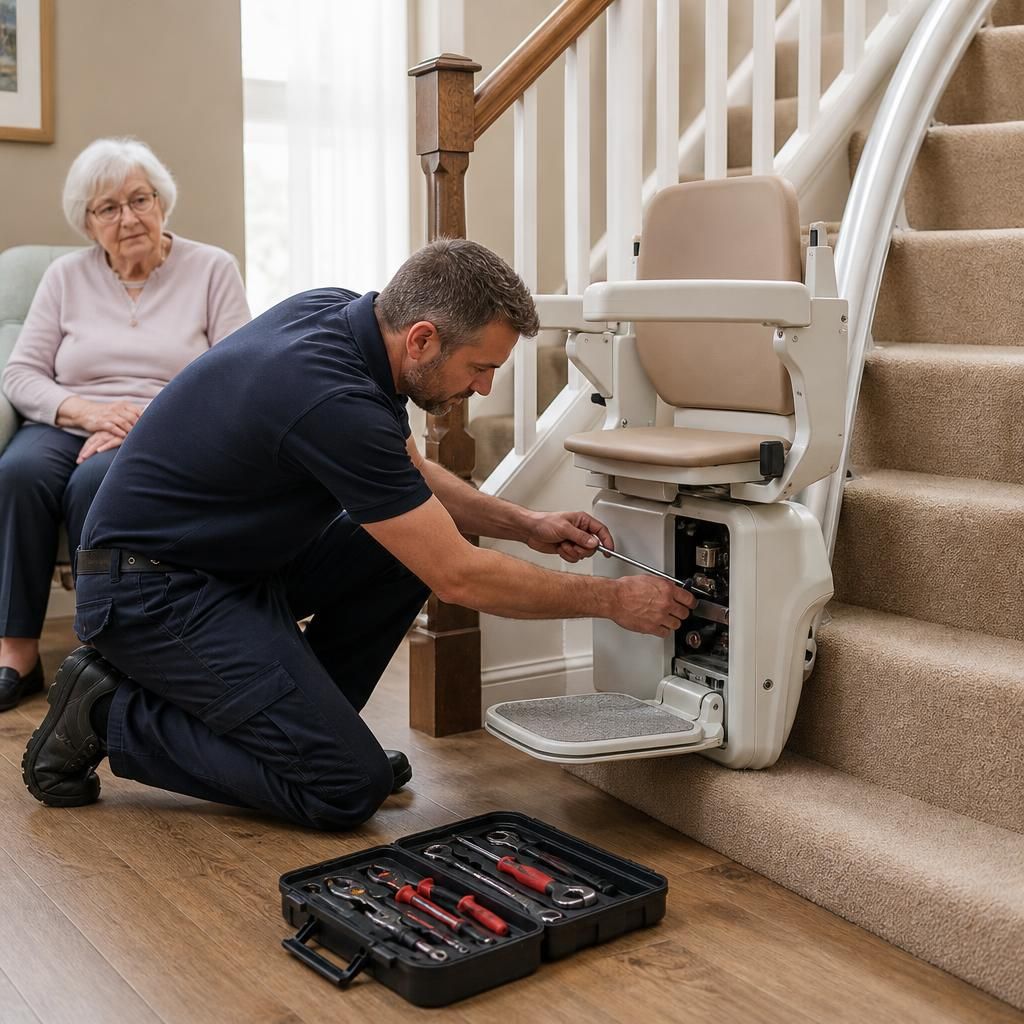
Arrange your regular stairlift service
If your stairlift is due for its annual service, or you have noticed a change in its performance, contact Independent Stairlifts to arrange a professional inspection. We can advise on the appropriate servicing interval for your stairlift and its installation environment.