
How often should my stairlift be serviced by a local provider?
Most stairlifts should be serviced at least once a year by a qualified local technician, or according to the manufacturer’s guidance. More frequent servicing may be appropriate for heavily used lifts, outdoor models, or any stairlift showing signs of wear, unusual noise or unreliable operation.
Most stairlifts should be serviced at least once a year by a qualified technician, or at the interval specified by the manufacturer. A local service visit may be needed sooner if the lift is used heavily, operates outdoors, has been unused for a prolonged period, or develops any change in performance. The correct schedule is based on the model, its condition, the installation environment and how often it is used.
Regular servicing is a preventive check rather than a response to a breakdown. It allows the technician to inspect safety-critical components, identify wear and confirm that the stairlift is operating as intended. Keeping to the recommended schedule can also help you maintain service records and comply with any warranty or care agreement conditions.
When an annual service is appropriate
For a domestic stairlift in normal use, an annual service is a sensible minimum in many cases. This applies to most straight and curved indoor stairlifts when they are used regularly and have no known faults. The technician should still follow the manufacturer’s instructions, as different models can have different inspection and maintenance requirements.
Do not wait for the next scheduled appointment if the stairlift shows warning signs. A service or repair assessment should be arranged promptly if you notice:
- unusual grinding, squeaking, clicking or rattling sounds;
- jerky, slower or inconsistent movement;
- the lift stopping unexpectedly or failing to start reliably;
- the seat, footplate, armrests or swivel mechanism feeling loose;
- the safety belt, sensors or controls not working correctly;
- the batteries losing charge quickly or the lift sounding an alert;
- the stairlift stopping at a particular point on the rail; or
- visible damage, an obstruction, fluid contamination or signs of corrosion.
These symptoms can have several causes, including worn mechanical parts, electrical faults, charging problems, a contaminated rail or an obstruction. They should not be ignored or treated as a routine service issue if they affect safe operation. Stop using the stairlift if it is unsafe or unreliable, and contact a qualified provider for advice.
When more frequent servicing may be needed
Some stairlifts need attention more often than the usual annual visit. This may apply where the lift is used several times a day, supports a user who places greater demands on the seat or controls, or is installed in a busy household. Frequent use increases the amount of movement, charging and braking cycles experienced by the lift, so wear may develop sooner.
Outdoor stairlifts are exposed to rain, damp, temperature changes, dirt and, in some areas, salt or other corrosive materials. They generally benefit from closer monitoring and may require servicing more frequently than an equivalent indoor model. The rail, seat, covers, charging points and electrical connections should be checked for water ingress, corrosion and debris.
A lift that has been unused for a long period should also be checked before regular use resumes. Batteries can discharge or deteriorate while standing, and dust or moisture may affect moving and electrical parts. Do not assume that a stairlift is ready for use simply because it operated correctly before it was stored.
What happens during a local service visit
A competent technician will normally assess the complete installation rather than only testing whether the lift travels up and down the stairs. Depending on the model, the service may include:
- checking the rail, fixings, carriage and drive mechanism;
- testing the seat swivel, footplate, armrests and safety belt;
- checking sensors, control switches, remote controls and emergency functions;
- testing batteries, charging points and electrical connections;
- examining the motor, gearbox, brakes and other accessible drive components;
- cleaning or lubricating parts where the manufacturer permits it;
- checking travel stops, obstruction sensors and smooth movement; and
- recording any defects, recommended repairs and parts that may need future attention.
The exact work depends on the make, model and installation. Some components are sealed or require model-specific procedures, so you should not lubricate the rail or dismantle covers unless the manufacturer or service technician has instructed you to do so.
How to arrange the right service interval
Check the user manual, installation paperwork, warranty terms or previous service report first. If these documents are unavailable, a local provider can identify the model and advise on an appropriate schedule. Give the technician details of how the lift is used, any recent fault codes or warning sounds, and whether it is installed indoors or outdoors.
Choose a technician who is suitably trained for the stairlift model and able to carry out both safety checks and necessary repairs. Ask what is included in the service, whether replacement parts and additional work are charged separately, and whether you will receive a written report. A clear record should state the date of the visit, checks completed, defects found and any follow-up recommended.
Servicing does not replace everyday checks. Keep the rail and steps clear, use the lift as instructed, park it at a charging point where applicable, and report changes in operation without delay. Avoid carrying loads that exceed the manufacturer’s guidance and do not allow unauthorised people to adjust or repair the equipment.
For most customers, booking a service every year and arranging an earlier assessment when symptoms appear provides a practical approach to ongoing safety and reliability. The manufacturer’s instructions and the technician’s assessment should take priority where they recommend a different interval for your particular stairlift.
Most domestic stairlifts should be serviced at least once a year, unless the manufacturer specifies a different interval. An earlier check may be needed if the lift is used heavily, installed outdoors, has been unused for a long period or begins to operate differently.
Annual servicing helps a qualified technician identify wear before it affects safety or reliability. The inspection should cover the rail, drive system, batteries, charging points, controls, safety belt, sensors, seat and other model-specific components. Do not wait for the scheduled service if the stairlift becomes noisy, jerky, slow, unreliable or fails to stop and start correctly. Stop using it if you believe it is unsafe and arrange advice from a suitably trained local provider.
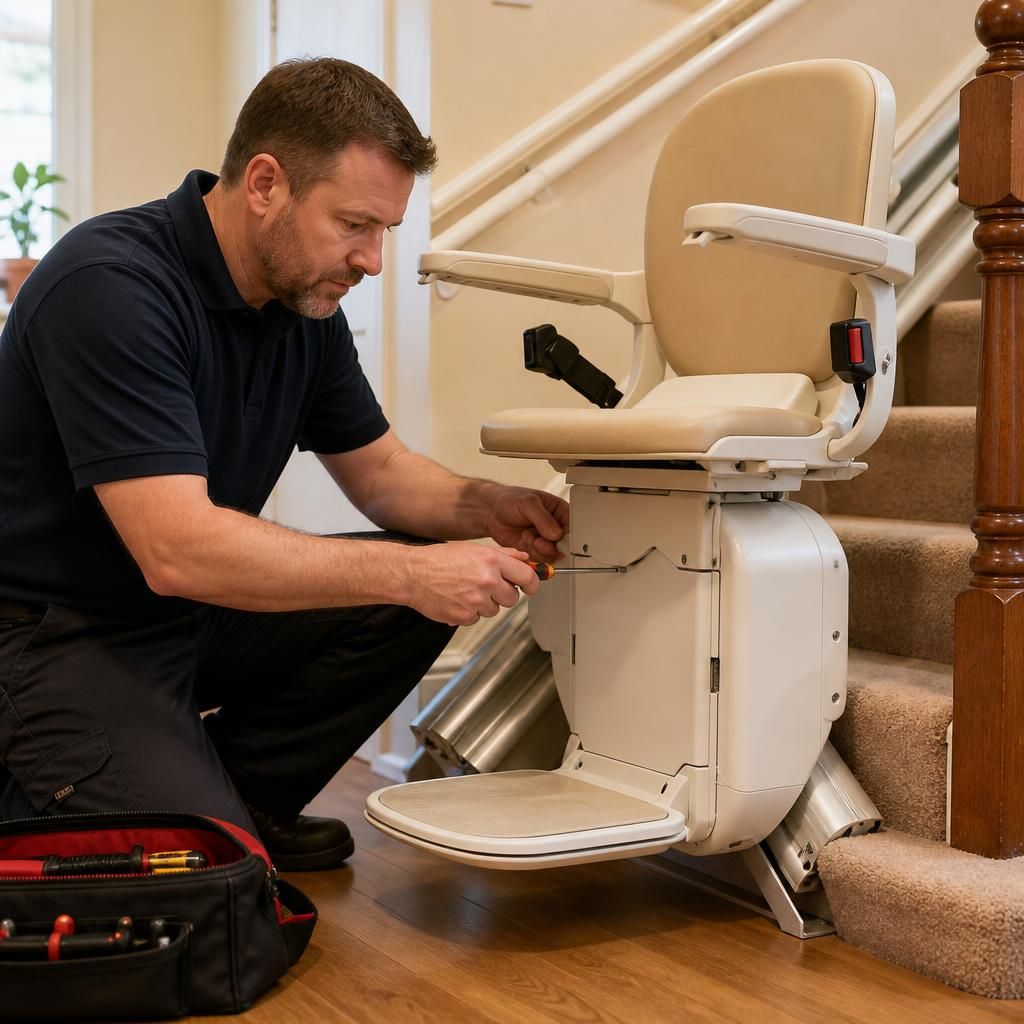
Arrange Your Stairlift Service
If your stairlift is due for its annual service or has started operating differently, contact Independent Stairlifts to arrange an assessment with a suitably trained technician.