
What steps can I take to maintain my stairlift between professional services?
Between professional services, keep your stairlift safe and reliable by charging it as recommended, keeping the track and seat area clear, wiping away dust, and checking for visible damage or unusual noises. Do not attempt electrical or mechanical repairs yourself; contact Independent Stairlifts if the lift behaves unusually, displays a fault, or its safety features do not work correctly.
You can maintain your stairlift between professional services by keeping it clean and unobstructed, charging it correctly, carrying out safe visual checks, and reporting changes promptly. These simple steps help preserve reliable operation, but they do not replace a professional service or repair. Do not remove covers, adjust components, or work on the electrical system yourself.
Keep the stairlift charged
Park the stairlift at its designated charging point whenever it is not in use, unless your user instructions state otherwise. Check that the charger is switched on where applicable and that the lift makes proper contact with the charging points. If the batteries repeatedly lose charge, the lift travels more slowly than usual, or the charger indicator behaves differently, contact Independent Stairlifts for advice rather than replacing batteries yourself.
Keep the track and stairs clear
- Remove bags, toys, clothing, footwear and other objects from the staircase and the area around the track.
- Make sure curtains, cables and other loose items cannot catch on the lift as it moves.
- Keep the landing and access areas clear so you can sit down and stand up safely.
- Do not allow other people to use the stairs while the stairlift is travelling.
For a stairlift with a folding rail or hinged track, check that the rail can move through its normal position without contacting furniture, doors or other obstructions. Never force a rail that feels stiff or will not fold correctly.
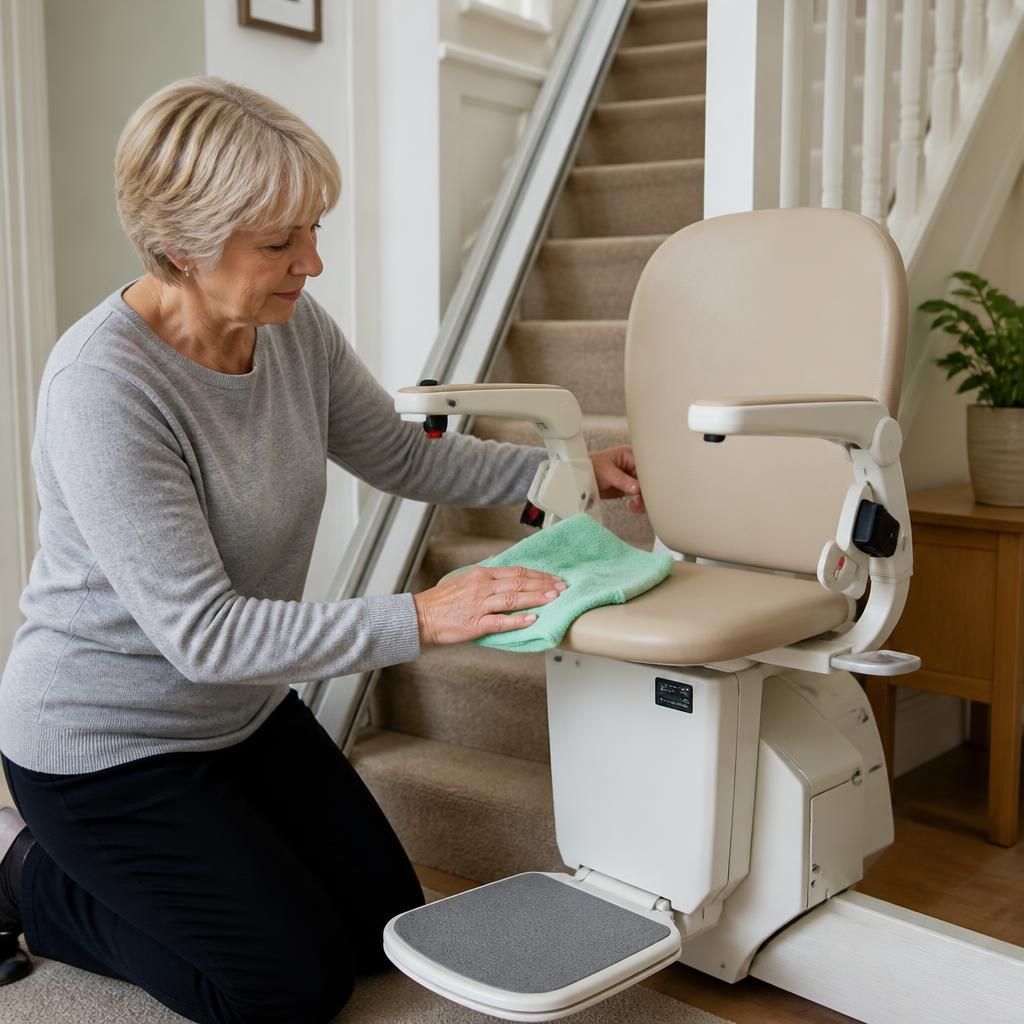
Clean the parts you regularly touch
Wipe the seat, armrests, footrest, control handset and other accessible surfaces with a soft, slightly damp cloth. Use a mild cleaning product only if it is suitable for the material, and follow the manufacturer’s instructions. Keep moisture away from switches, charging contacts and electrical components. Do not hose, pour water over, or use a steam cleaner on the stairlift.
Remove loose dust from the accessible parts of the track with a dry or lightly damp cloth. Do not apply oil, grease, polish or general-purpose lubricant unless the manufacturer or a qualified technician specifically instructs you to do so. Incorrect products can attract dirt, affect sensors, or interfere with the lift’s movement.
Carry out a visual safety check
Before use, look for obvious damage, loose trim, displaced covers, frayed cables, leaking fluids or anything caught around the track, carriage or footrest. Check that the seat, armrests and footrest appear secure and that the seat is in its normal travelling position. Do not use the lift if a component looks damaged or has become loose.
Test the controls only during normal use and from a safe position. The stairlift should start, stop and change direction as expected. Pay attention to warning lights, display messages or audible alerts, and make a note of what appeared on the display before contacting us. Avoid repeatedly resetting the lift without investigating the cause.
Check the safety features during normal operation
Safety edges and sensors are designed to stop the lift if they detect an obstruction. Keep them clean and free from clothing or debris. Do not deliberately trigger a safety sensor, sit on the footrest while the lift is moving, or test a feature in a way that could place you at risk. If the stairlift fails to stop when expected, does not run when a control is released, or a seat belt will not fasten securely, stop using it and arrange professional assistance.
Use the seat belt as instructed and ensure the seat is correctly positioned before travelling. If the swivel seat, swivel lock, folding mechanism or footrest does not operate smoothly, do not force it. These mechanisms can require adjustment by a trained technician.
Monitor changes in performance
Report changes such as unusual grinding, clicking, squealing or vibration; jerky movement; unexpected stopping; slower travel; repeated fault messages; or difficulty charging. A single unusual sound may be difficult to assess remotely, so describe when it happens, whether the lift is travelling up or down, and whether the sound continues when the lift is stationary.
If the stairlift stops between floors, follow the instructions supplied with your model and contact us. Do not attempt to climb out at an awkward position or move the lift by force. If there is smoke, a burning smell, visible electrical damage or another immediate hazard, switch off the lift if this can be done safely, keep clear and seek urgent assistance.
Take extra care with outdoor stairlifts
Outdoor models need protection from avoidable exposure as well as their normal weather-resistant construction. Use the supplied cover when the lift is not in use, keep drainage areas clear, and remove leaves, mud, snow or standing water from accessible surfaces. Wipe away moisture where practical and report corrosion, water ingress, damaged covers or deterioration of seals. Never use an outdoor stairlift if weather conditions have made the seat, footrest or track dangerously slippery.
Keep useful information available
Keep the user manual and our contact details accessible, and make sure anyone who regularly uses the stairlift knows the basic operating and emergency instructions. Record fault messages and the circumstances in which they occur. This information helps a technician identify whether the issue relates to charging, an obstruction, a control, a sensor or another component.
These checks should be limited to cleaning, keeping the route clear and observing normal operation. Professional servicing is still needed to inspect, test and adjust internal, mechanical and electrical parts safely. Contact Independent Stairlifts if the lift is unreliable, any safety feature is affected, or you are unsure whether it is safe to continue using it.
Between professional services, stairlift maintenance should be limited to safe user checks, cleaning and keeping the lift’s route clear. These steps help identify problems early without exposing you to electrical or mechanical risks.
Keep the stairlift parked at its designated charging point when not in use, unless your user instructions state otherwise. Wipe accessible surfaces with a soft, slightly damp cloth, keep the track and safety sensors free from dust and obstructions, and check for loose parts, damage, unusual noises or warning messages before travelling. Do not remove covers, apply lubricant, force a stiff mechanism or attempt electrical repairs. If the lift stops unexpectedly, charges poorly or any safety feature does not work correctly, stop using it and contact Independent Stairlifts for professional advice.
Need help maintaining your stairlift?
If you need advice about maintaining your stairlift or have noticed a change in its performance, contact Independent Stairlifts to arrange professional support.