
How often should stairlift maintenance services be scheduled to ensure optimal performance?
Stairlift maintenance services should generally be scheduled at least once a year, or according to the manufacturer’s guidance. More frequent servicing may be appropriate for heavily used, outdoor or older stairlifts, and any unusual noise, movement or fault should be checked without waiting for the next routine appointment.
For most domestic stairlifts, a professional maintenance service should be scheduled at least once a year, or at the interval specified by the manufacturer. This routine check helps identify wear, battery problems, charging faults and safety issues before they affect reliable use. A shorter interval may be appropriate where the stairlift is used heavily, fitted outdoors, exposed to demanding conditions, or showing signs of deterioration.
The recommended interval is not identical for every stairlift. The model, age, installation environment and pattern of use all affect how often servicing is sensible. Manufacturer guidance should be treated as the starting point, while the technician may recommend a different schedule after assessing the lift and its condition.
- Standard indoor use: annual servicing is generally suitable when the stairlift is operating normally and has no known defects.
- Frequent or intensive use: more regular checks may be advisable where several people use the lift throughout the day or it completes many journeys.
- Outdoor stairlifts: servicing may need to be more frequent because rain, moisture, dust, temperature changes and direct sunlight can affect electrical components, rails, covers and moving parts.
- Older stairlifts: a technician may suggest closer monitoring as batteries, drive components, sensors and mechanical parts become more susceptible to wear.
- Stairlifts that have been unused: a check is sensible before putting the lift back into regular service, particularly if it has been stored, isolated from power or exposed to damp conditions.
Routine maintenance should not be delayed until the stairlift stops working. A service normally includes functional and safety checks, inspection of the carriage and rail, examination of the seat, armrests, footrest, belts, sensors and controls, and checks on the batteries and charging system. The technician can also clean relevant parts, assess lubrication requirements and identify components that may need adjustment or replacement. The exact work depends on the stairlift model and its condition.
Book an earlier inspection if you notice a change in performance. Warning signs include unusual grinding, clicking or squeaking, jerky movement, slower travel, difficulty starting, inconsistent charging, a battery that loses power quickly, repeated fault indications or the stairlift stopping unexpectedly. Physical changes, such as a loose armrest, damaged belt, unstable seat, obstruction around the rail or a footrest that does not operate correctly, also require attention.
A fault should be treated as a repair issue rather than waiting for the next planned service. Stop using the stairlift if it behaves unpredictably, emits a burning smell, shows visible electrical damage or presents an immediate safety concern. Follow the operating instructions and contact a qualified stairlift technician for advice. Do not remove covers or attempt electrical or mechanical repairs yourself, as this can create additional risks and may affect the equipment’s warranty or service record.
Between professional services, the user or their carer can carry out simple visual and operational checks. Keep the rail, steps and charging points clear; remove dust or dirt using the method recommended for the model; check that the seat, belt, armrests and footrest appear secure; and make sure the lift reaches its charging point correctly. Use the controls as instructed and report any change rather than repeatedly resetting the stairlift or continuing to operate it with a known fault.
Battery care is particularly important because batteries are consumable components and can deteriorate with age, infrequent use or charging problems. Leaving the stairlift correctly positioned on its charging point, where the manufacturer’s instructions require this, helps maintain battery condition. If the lift is not being used for an extended period, obtain model-specific advice before switching it off or disconnecting it.
Keep a record of the service date, work completed, parts replaced and any recommendations. This makes it easier to plan the next appointment and helps a technician understand recurring issues. It is also useful when a stairlift has been moved, reconditioned or transferred to a different property, as its maintenance needs may change after installation.
In practical terms, arrange the next professional service when the annual or manufacturer-recommended interval is due, then review the schedule if usage, location or condition changes. Regular servicing supports safe, dependable operation, but it does not replace daily awareness: any new fault, unusual noise or change in movement should be reported promptly, regardless of when the last maintenance visit took place.
Most domestic stairlifts should receive a professional maintenance service at least annually, unless the manufacturer recommends a different interval. This allows a technician to check the lift before wear, battery deterioration or charging faults affect safe, dependable operation.
More frequent servicing may be appropriate for stairlifts that are used intensively, installed outdoors or several years old. Outdoor models are exposed to moisture, dust, temperature changes and sunlight, while older equipment may need closer monitoring of batteries, drive components, sensors and other moving parts. Any unusual noise, jerky movement, slower travel or repeated fault indication should be reported promptly rather than waiting for the next scheduled service.
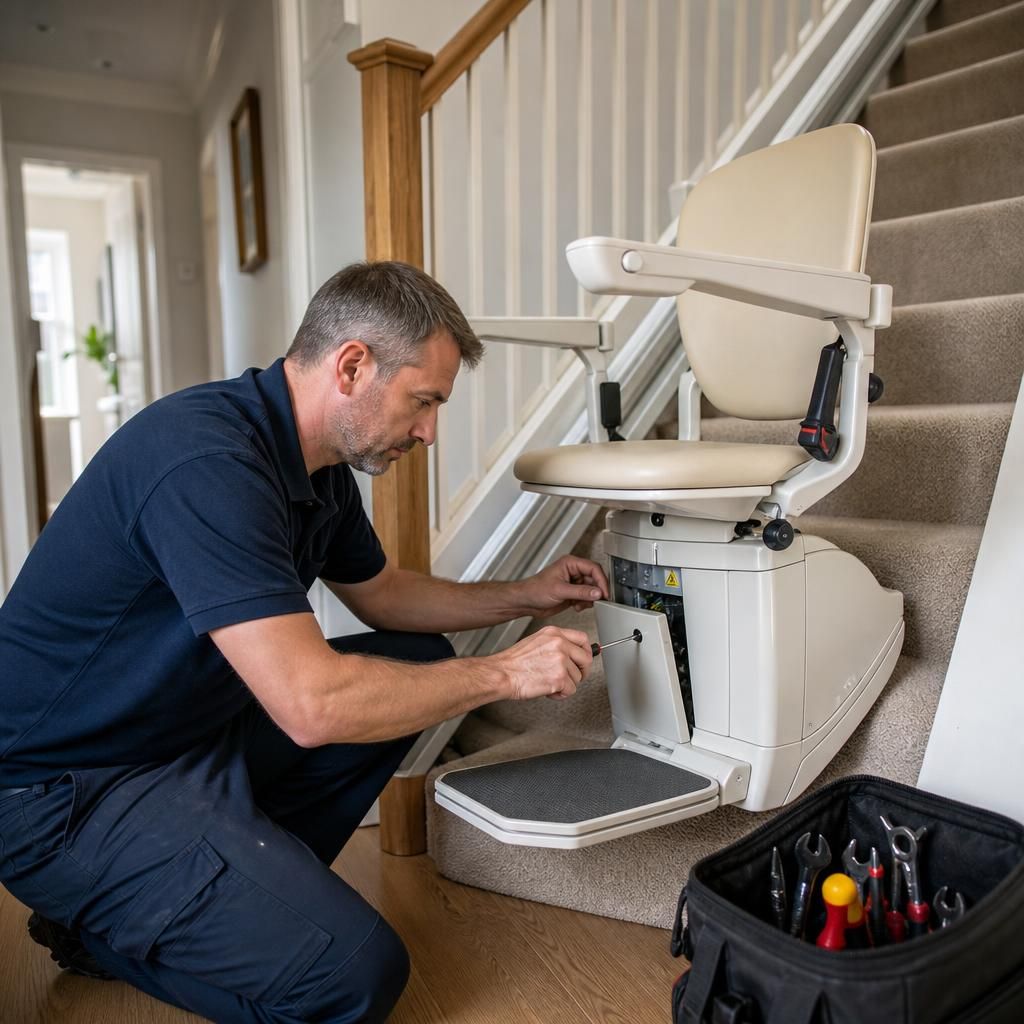
Book your stairlift maintenance service
If your stairlift is due for its routine service, or you have noticed a change in its performance, contact Independent Stairlifts to arrange a maintenance appointment. Our technician can assess the lift, identify wear or faults and advise on any work needed.