
How often should my stairlift be serviced to ensure optimal performance?
Most stairlifts should be professionally serviced at least once a year, or according to the manufacturer’s guidance. More frequent servicing may be appropriate for heavily used, outdoor or older stairlifts, and any unusual noise, movement or repeated fault should be assessed promptly rather than waiting for the next scheduled service.
Most stairlifts should be professionally serviced at least once every 12 months, or at the interval specified by the manufacturer. This allows a trained technician to inspect the lift, test its safety systems, identify wear and adjust components before they affect reliability. A shorter interval may be more appropriate for a heavily used, older or outdoor stairlift, while any unusual noise, movement or repeated fault should be investigated promptly rather than left until the next scheduled service.
Regular servicing is different from repairing a fault. A service is a planned inspection and preventative maintenance visit carried out while the stairlift is operating normally. A repair addresses a specific problem, such as a lift stopping unexpectedly, failing to charge or making an abnormal sound. If you notice a change in performance, contact a qualified stairlift technician even if the annual service is not due.
Follow the manufacturer’s servicing guidance
The manufacturer’s instructions should be the starting point for your servicing schedule. They may set out a recommended interval, inspection requirements and limits on which parts can be adjusted or replaced. If your stairlift is covered by a warranty, servicing at the required interval and keeping a record of the work may also be important for maintaining that cover.
If you are unsure when the last service took place, check the service label, paperwork or installation records. Where the history is unavailable, a technician can assess the stairlift and advise whether it needs a full service before being placed on a regular schedule.
When a more frequent service may be sensible
- High usage: A stairlift used several times a day experiences more movement and charging cycles than one used occasionally. Frequent use can increase wear on the carriage, drive system, seat mechanism and batteries.
- Older equipment: As a stairlift ages, components may require closer monitoring even when the lift appears to be working correctly. Preventative replacement or adjustment can help avoid an unexpected breakdown.
- Outdoor installations: Outdoor stairlifts are exposed to rain, damp, dirt, temperature changes and sunlight. Their covers, controls, charging points, rails and safety components may need more regular inspection than those of an indoor model.
- Demanding conditions: Dust, pet hair, building work, limited use or a particularly long or complex staircase can affect cleaning, charging and general operation. A technician can take the installation environment into account when recommending an interval.
- Changes in use: If the person using the stairlift has become less steady, needs additional support or is using mobility equipment alongside it, ask for the setup and safety features to be reviewed.
What happens during a service
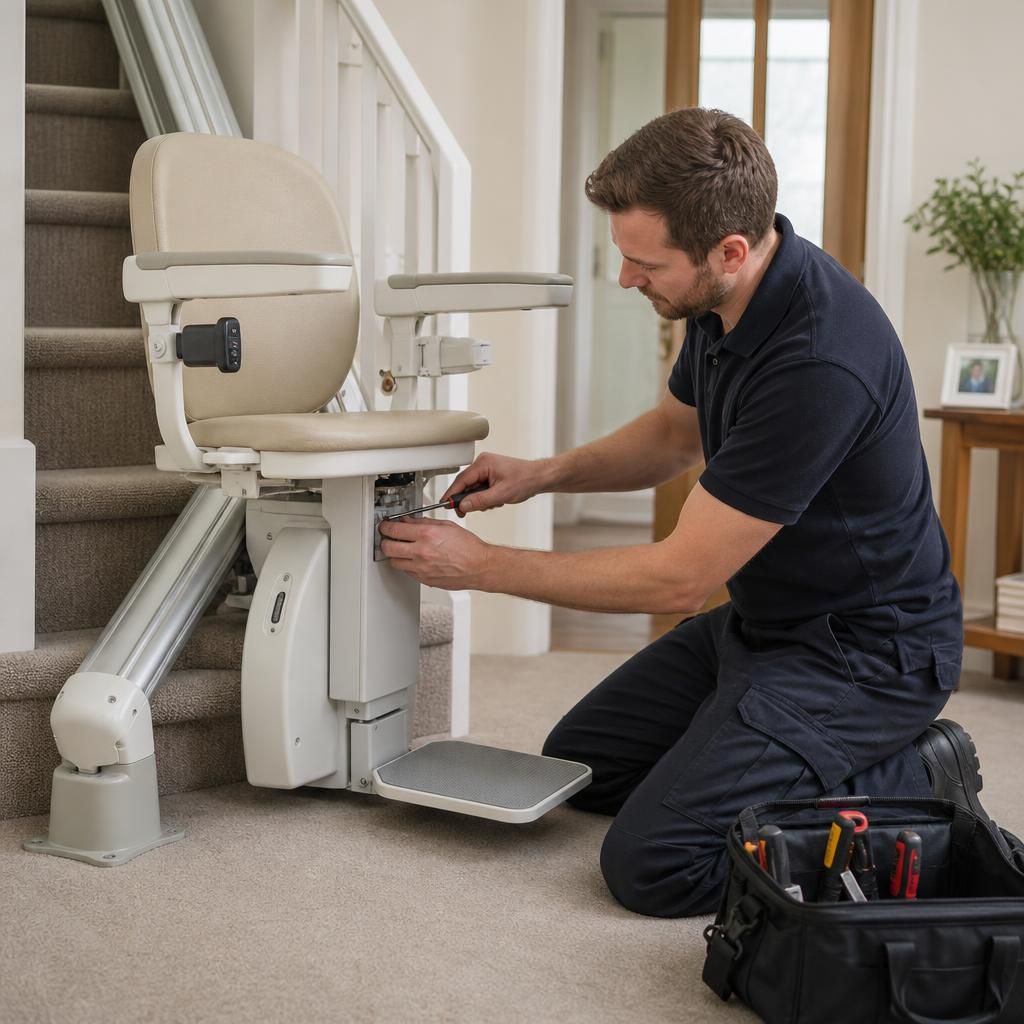
A thorough service normally includes a visual inspection, operational tests and checks of the lift’s safety systems. The technician may examine the rail and fixings, carriage, drive components, seat, armrests, footrest, swivel or folding mechanisms, controls and charging equipment. Batteries and electrical connections are also assessed, along with sensors, safety edges, obstruction detection and the emergency stop or lowering functions fitted to the model.
The technician may clean accessible parts, lubricate components where appropriate, tighten or adjust items within the manufacturer’s requirements and identify parts showing signs of wear. They should explain any defects or developing issues, distinguish urgent repairs from recommended work and provide a record of the inspection. A service does not necessarily include replacement parts or repairs, so ask what is included before work begins.
Do not wait for the service date if you notice a problem
Arrange an assessment as soon as possible if the stairlift stops between floors, moves unevenly, judders, takes longer to start, struggles on the rail or makes a new grinding, clicking or squealing noise. Other warning signs include a seat or footrest that does not lock securely, controls that respond intermittently, a battery that is not charging, repeated fault tones or a lift that loses power more quickly than usual.
Stop using the stairlift if it appears unsafe, if a safety feature is not working or if there is visible damage. Do not remove covers, bypass sensors, alter the wiring or attempt to repair the drive system yourself. Keep the staircase clear and contact a competent technician for advice. If the lift is needed for essential access, explain this when arranging assistance so the issue can be assessed appropriately.
Checks between professional services
There are simple steps you can take between visits, but these do not replace professional servicing. Keep the rail, steps and charging areas free from objects, wipe accessible surfaces with a suitable dry or lightly damp cloth and follow the manufacturer’s instructions for charging. If the lift has a parking position, leave it there when not in use so the batteries can charge as intended. Avoid using unsuitable cleaning products or applying lubricant unless the manufacturer or technician has specifically advised it.
Keep a note of any warning sounds, fault messages or changes in operation, including when they occur. This information can help the technician diagnose an intermittent problem. Never rely on a service reminder alone: a stairlift that is used heavily, exposed to weather or showing symptoms may need attention before its planned annual visit.
For most domestic stairlifts, an annual professional service is a sensible minimum. The correct interval ultimately depends on the model, age, condition, environment and level of use. A qualified technician can review these factors and recommend a maintenance schedule that supports safe, reliable operation without carrying out unnecessary work.
Most stairlifts should receive a professional service at least once a year, unless the manufacturer recommends a different interval. A yearly inspection allows a qualified technician to check the rail, drive system, batteries, controls and safety features before wear develops into a breakdown.
A shorter servicing interval may be appropriate if the stairlift is used heavily, is older, operates outdoors or is exposed to damp, dust or temperature changes. Do not wait for the next scheduled service if you notice unusual noise, juddering, uneven movement, charging problems or repeated fault warnings. These symptoms require prompt assessment, as servicing is preventative maintenance rather than a substitute for repairs.
Book Your Stairlift Service
Contact Independent Stairlifts to book your stairlift service and keep your lift operating safely and reliably. Our team can advise on the appropriate servicing interval for your model, age and level of use.