
How do regular maintenance services improve the safety features of my stairlift?
Regular stairlift maintenance improves safety by checking and adjusting essential systems such as the brakes, sensors, seat belt, controls, batteries and charging points before faults affect operation. Professional servicing also identifies wear or damage early, helping your stairlift stop reliably, run smoothly and remain safe to use.
Regular stairlift maintenance improves safety by confirming that the lift’s braking, sensing, restraint, control and power systems operate correctly before wear or minor faults develop into a hazard. A professional service also checks the installation and the surrounding staircase, so the stairlift can start, travel and stop predictably in everyday use.
Although a stairlift is designed with several safety features, those features still need inspection and adjustment. Components can become worn, loose, contaminated or less effective through regular use. Servicing provides a structured check rather than relying on the lift continuing to work without obvious problems.
- Braking and stopping: The technician checks that the stairlift stops smoothly and securely at the correct points. The braking system and drive components are inspected for wear, damage or unusual movement. Reliable stopping is particularly important if the lift encounters an obstruction or the controls are released during travel.
- Sensors and safety edges: Obstacle sensors and safety edges are tested to make sure they respond as intended. These devices should interrupt or prevent movement when they detect an obstruction on the stairs, near the footrest or around the carriage. Dirt, impact damage or misalignment can affect their operation.
- Seat belt and seating: The seat belt, buckle, armrests, swivel seat and locking mechanism are examined. The technician confirms that the seat is secure during travel and that the swivel or folding mechanism does not move unexpectedly. A damaged or difficult-to-use belt should be reported rather than ignored.
- Footrest and carriage: The footrest is checked for cracks, looseness and correct folding. The carriage, rollers and track are inspected to identify excessive play, obstruction or wear that could affect stability and smooth travel.
- Controls and switches: The armrest controls, remote controls, direction switches and emergency stop functions are tested. A service can identify sticking buttons, intermittent operation or controls that require excessive force, all of which may make it harder to stop or operate the lift safely.
- Batteries and charging: Batteries are checked for condition, connections and signs of deterioration. Charging points and charger operation are tested so that the stairlift remains available when required. Weak batteries can cause reduced travel, unexpected stopping or failure away from a charging position.
- Electrical connections: Wiring, terminals, plugs and protective covers are inspected for damage or looseness. The technician also checks for fault indicators and verifies that safety circuits respond correctly. Electrical work should only be carried out by a suitably qualified technician.
- Track, fixings and installation: The rail, brackets, mounting points and end stops are checked for security. The stairlift must remain properly aligned with the staircase and clear of doors, handrails and other objects. Any changes to the staircase or surrounding area should be mentioned during the service.
Maintenance can also improve safety indirectly by reducing unreliable operation. A stairlift that judders, runs slowly, makes a new noise or stops intermittently may encourage a user to lean, stand up or attempt to intervene while it is moving. Identifying the cause early helps keep the journey controlled and reduces the need for unsafe workarounds.
A thorough service normally includes a functional test under normal operating conditions, followed by adjustments, cleaning or replacement recommendations where necessary. The technician should explain any fault found, distinguish between an urgent safety issue and routine wear, and record work that has been completed. If a part cannot be made safe during the visit, the stairlift may need to be taken out of use until the repair is completed.
Regular professional servicing does not remove the need for sensible checks between visits. Keep the track and charging areas clear, avoid placing objects on the stairs, use the seat belt as instructed and report changes in movement, noise, braking, battery performance or sensor response. Do not attempt to bypass a safety switch, force the seat or footrest, or carry out electrical repairs yourself.
If the stairlift stops unexpectedly, shows a fault warning, fails to charge, travels unevenly or does not stop when a safety sensor is activated, stop using it and contact a qualified stairlift technician. Do not continue using a lift simply because it still completes the journey. Prompt attention can prevent a minor adjustment or worn component from developing into a more serious safety fault.
The appropriate service interval depends on the stairlift model, its age, usage, environment and the manufacturer’s guidance. Outdoor stairlifts and lifts used frequently may need particular attention because moisture, dirt and temperature changes can accelerate deterioration. Following the recommended maintenance schedule, retaining service records and reporting concerns promptly are practical ways to keep the lift’s safety features working as intended.
Regular maintenance improves stairlift safety by testing the components designed to control, stop and secure the lift. A technician checks the seat belt, swivel-seat lock, controls, sensors, braking system and emergency stop function, then confirms that the stairlift responds correctly during normal operation.
These checks can identify issues that may not be obvious during everyday use, such as a sensor affected by dirt, a loose connection, worn drive components or batteries that are no longer holding charge reliably. Early adjustment or repair helps prevent unexpected stops, uneven travel and unsafe attempts to intervene while the stairlift is moving. If a safety-critical fault cannot be corrected during the visit, the lift should remain out of use until it has been made safe.
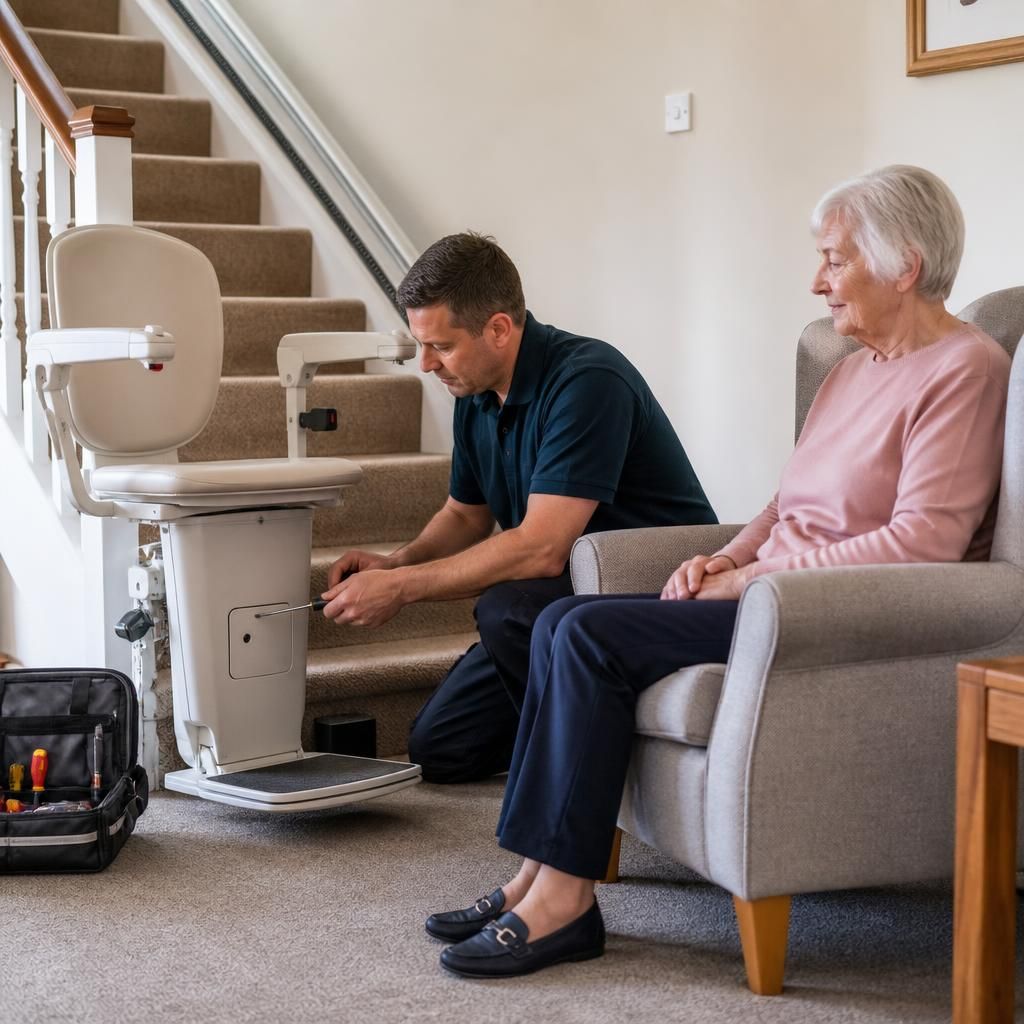
Book a professional stairlift maintenance service
Book a professional stairlift maintenance service to check the safety systems, identify wear and address faults before they affect reliable operation. Contact Independent Stairlifts to arrange an assessment for your stairlift.