
How can I tell if my stairlift needs maintenance or repairs?
Your stairlift may need maintenance or repairs if it moves unevenly, makes unusual noises, stops unexpectedly, struggles to charge, or shows warning lights. Any change in normal operation, including unreliable controls or reduced battery performance, should be assessed by a qualified technician before the lift is used again.
A stairlift needs maintenance or repairs when its performance, controls, safety features or charging behaviour changes from normal. Uneven movement, unusual noises, unexpected stops, warning lights, unreliable controls, difficulty charging or a noticeable reduction in battery performance should be treated as signs that a qualified technician needs to assess the lift. If the stairlift behaves unpredictably or a safety feature does not work correctly, stop using it until it has been checked.
Some changes indicate routine servicing, while others point to a fault requiring repair. A service can identify wear, clean and adjust components, test safety systems and deal with developing issues before they affect reliability. A repair is more likely to be needed when a component has failed or the stairlift can no longer complete its normal operation.
Watch for changes in movement
- The stairlift starts, stops or travels unevenly.
- It moves more slowly than usual, hesitates or struggles on part of the track.
- The lift stops before reaching the top or bottom of the stairs, or stops unexpectedly during a journey.
- There is excessive rocking, vibration or movement in the seat, footrest or carriage.
- The stairlift makes grinding, scraping, clicking, knocking or other unfamiliar noises.
A small change may be caused by dirt, wear, a charging issue or an obstruction, but it is not advisable to diagnose internal faults yourself. Do not continue using the lift if movement is jerky, the lift stops repeatedly or you feel unsafe when travelling.
Check for control and safety problems
Arrange an assessment if the armrest control, remote control or call-and-send control responds intermittently, works only from certain positions, or fails to operate. The same applies if the lift moves without a clear command, does not stop when the control is released, or does not respond to the normal start procedure.
Safety features should operate consistently. Depending on the model, these may include the seat belt, swivel seat interlock, armrest controls, obstruction sensors, safety edges, footrest sensors and stop switch. Do not bypass, tape down or disable any safety device. If the seat will not lock in its travelling position, the swivel mechanism does not secure correctly, the belt will not latch or an obstruction sensor is not working, keep the stairlift out of use and request professional help.
Look for battery and charging symptoms
Battery-related warning signs include:
- The stairlift does not charge when parked at its usual charging point.
- A charging indicator remains off, shows a fault or changes unexpectedly.
- The lift repeatedly reports a low battery or runs out of power sooner than it normally would.
- The stairlift works after charging but soon loses power again.
- The lift will not operate after being left on a charging point.
First check that the mains supply has not been switched off and that the stairlift is positioned correctly on its charging point. If the charger, cable or socket appears damaged, do not touch exposed wiring or attempt an electrical repair. Persistent charging problems may require testing of the charger, charging contacts, battery condition and associated electrical components. Batteries are consumable parts and may eventually need replacement, but reduced performance should be confirmed by a technician rather than assumed.
Pay attention to visible damage or deterioration
Contact a technician if you notice loose or damaged covers, exposed wires, leaking batteries, a damaged seat belt, cracked armrests, a loose footrest, corrosion or anything obstructing the track. For outdoor stairlifts, also look for water ingress, rust, debris, damage caused by weather and deterioration of protective covers or seals. Do not use an outdoor model if water has entered an electrical area or if its controls are wet or damaged.
Keep the track and steps clear of clothing, toys, bags, furniture and other objects. If an obstruction has triggered the stairlift’s safety system, remove the object only if it can be done safely without reaching into moving parts. Never place hands, feet or tools near the carriage, drive mechanism or track while the lift is operating.
Use the stairlift’s indications as useful information
Warning lights, display messages and audible alerts can identify a charging issue, a trapped control, an obstruction, a parking problem or another fault. The exact meaning varies by model, so check the user manual for the relevant indication. Note what the light or sound is doing, when it appears and whether the lift is parked on a charging point. This information can help the technician identify the problem more efficiently.
Do not repeatedly reset the stairlift or switch it off and on to conceal a fault. A reset may clear a temporary indication, but it does not replace an inspection if the warning returns or the underlying symptom continues.
Simple checks you can make safely
- Make sure the track and stairway are clear.
- Check that the mains supply to the charging point is switched on.
- Park the stairlift where it normally charges and confirm that the charging indicator behaves as described in the manual.
- Check that the seat is fully rotated and locked for travel, where applicable.
- Look for obvious external damage without removing covers or touching electrical parts.
- Record any warning message, unusual sound, stopping point or change in battery performance.
These checks are intended to identify straightforward external issues, not to replace maintenance or repair work. Do not remove covers, lubricate internal parts, alter the track, replace wiring or attempt to work on the battery unless the work is specifically covered by the manufacturer’s instructions and you are suitably competent. Incorrect adjustments can affect the lift’s safety systems.
When to stop using the stairlift immediately
Stop using the lift and seek advice promptly if it moves unexpectedly, fails to stop correctly, repeatedly stops on the stairs, emits a burning smell, shows signs of electrical damage, has a damaged safety belt or seat, or has been affected by water. If someone is left on the stairs or in the seat after a breakdown, follow the emergency guidance supplied with the stairlift and avoid attempting to force the lift to move. If there is an immediate risk of injury, contact the appropriate emergency service.
Even when the lift is still operating, arrange maintenance if a symptom is recurring, becoming more frequent or affecting confidence in its use. Intermittent faults can be harder to identify after a complete failure, so provide the technician with a clear description of when the problem occurs and any changes since the last service.
A professional maintenance visit normally includes an inspection of the track, carriage, drive system, seat, controls, batteries, charging points and safety devices, with cleaning, adjustment or replacement of worn parts where appropriate. The technician should explain any fault found, identify work that is urgent, and distinguish essential repairs from recommended preventative work. Keep the service and repair records, particularly where replacement parts or battery work have been carried out.
Regular servicing remains important even if there are no obvious symptoms, because wear, loose connections and changes in safety-system performance may not be visible during everyday use. If you are unsure whether a particular noise, warning light or performance change is normal for your model, contact Independent Stairlifts for advice and arrange an assessment rather than taking unnecessary risks.
A stairlift should be taken out of use immediately if it moves unexpectedly, stops repeatedly, fails to stop when the control is released, or has a damaged seat belt, seat or safety sensor. Burning smells, exposed wiring, water ingress or other electrical damage also require prompt professional attention.
Do not bypass a safety feature, force the lift to move or remove covers to investigate the fault. If someone is stranded, follow the emergency instructions supplied with the stairlift and contact Independent Stairlifts for advice. Recording any warning light, unusual noise or stopping point can help the technician identify the cause.
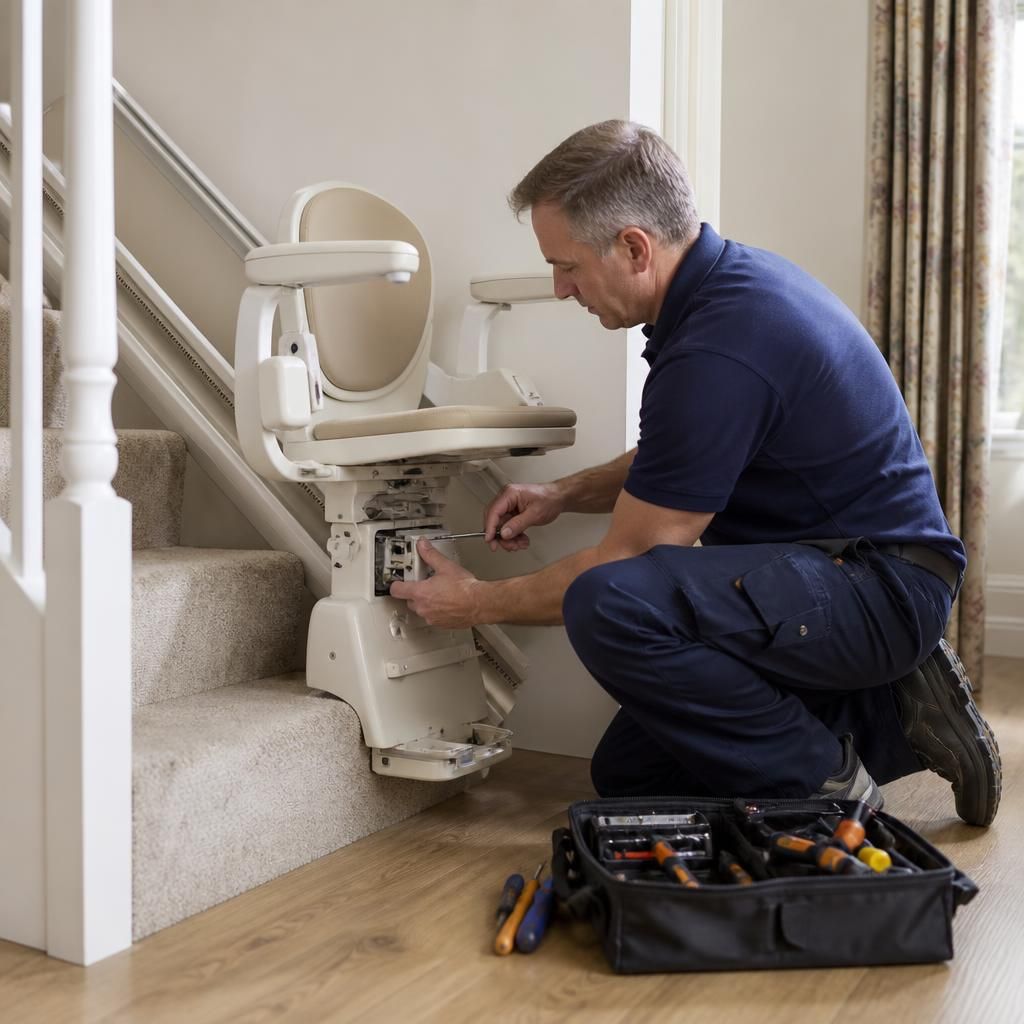
Arrange a stairlift maintenance assessment
If your stairlift is showing any signs of wear, unreliable operation or a recurring fault, contact Independent Stairlifts to arrange a maintenance assessment. A qualified technician can identify the cause and advise whether servicing, adjustment or repair is required.