
Are there specific maintenance tasks that should be prioritised to extend the lifespan of a stairlift?
Prioritise keeping the rails and seat area clean, checking the batteries and charging points, testing the safety features, and arranging professional servicing at the recommended intervals. Promptly report unusual noises, jerky movement, reduced battery performance or repeated fault warnings, as early attention can help prevent avoidable wear and extend the stairlift’s working life.
The maintenance tasks that most help extend a stairlift’s lifespan are keeping the rail and moving parts free from dirt, protecting and checking the batteries, testing the safety features, and arranging professional servicing at the recommended intervals. These tasks reduce avoidable strain on the drive system, help identify wear early and support safe, reliable operation.
Keep the rail, seat and footrest clean. Dust, grit, pet hair and other debris can collect around the rail, carriage, footrest and swivel seat. Wipe accessible surfaces with a soft, slightly damp cloth and keep them dry. Do not pour cleaning products onto the lift or use abrasive products. Avoid applying oil or grease unless the manufacturer’s instructions specifically require it, as unsuitable lubrication can attract dirt or affect the drive mechanism.
Pay particular attention to the area around the rail and the points where the carriage travels. Furniture, rugs, storage items and trailing cables should not obstruct the stairlift or its charging points. If the stairlift is used by someone with pets, regular removal of hair and debris is especially important.
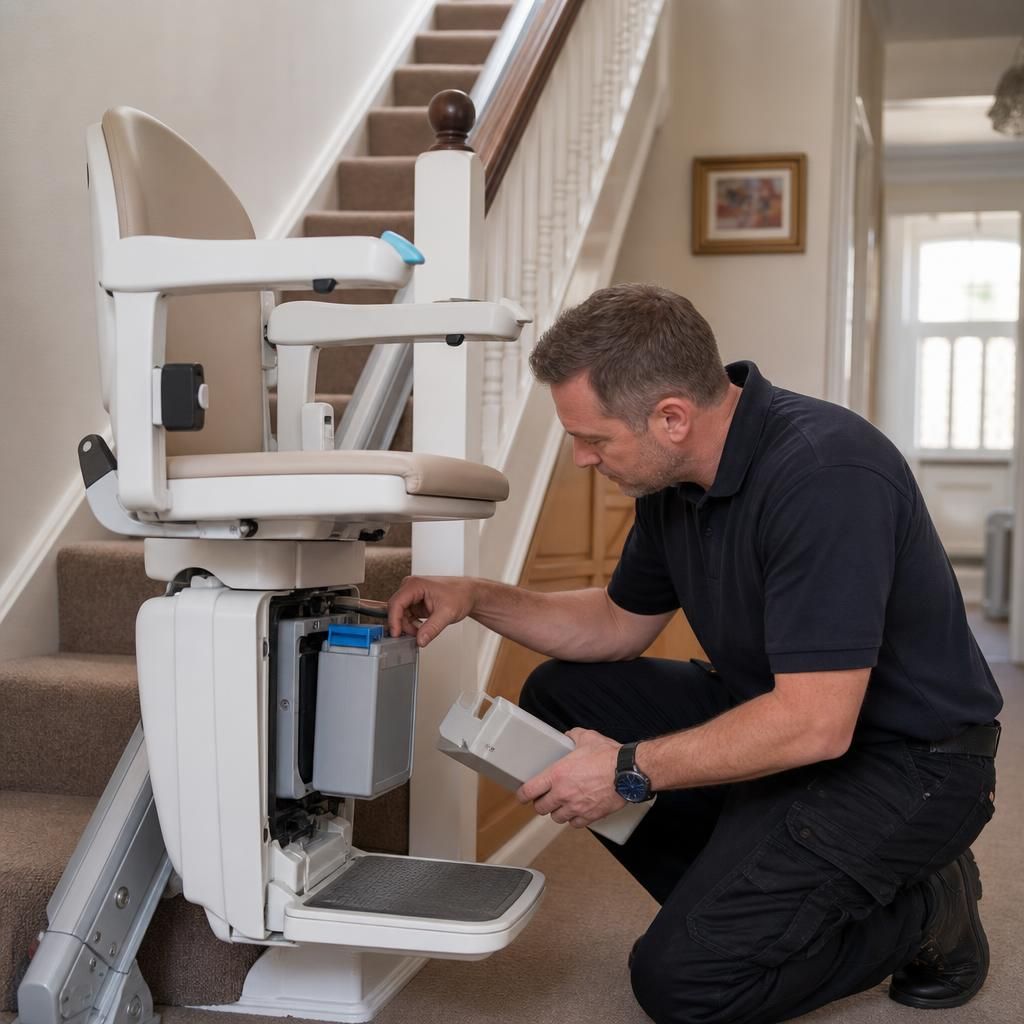
Look after the batteries and charging points. Park the stairlift at its designated charging position when it is not in use, where applicable, so the batteries can recharge properly. Check that the charging contacts are clean and that the charger is connected securely. A lift that becomes slow, stops before completing the journey, needs frequent recharging or displays repeated battery warnings may need battery testing or replacement.
Battery performance can decline gradually, but it can also be affected by a charger fault, poor contact or a problem elsewhere in the electrical system. Do not dismantle the battery compartment or attempt electrical repairs yourself. Report persistent charging problems to a qualified stairlift technician, particularly if the lift stops away from a charging point.
Test the safety features during normal use. Check that the seat belt latches securely, the swivel seat returns and locks correctly, and the arms, footrest and controls work as expected. Keep pressure-sensitive safety edges and other sensors free from obstructions. The stairlift should stop when the controls are released and should respond consistently to its directional controls. If a safety feature does not operate correctly, stop using the lift and arrange an inspection rather than repeatedly testing or bypassing it.
Pay attention to changes in movement and sound. Jerky travel, unusual grinding or clicking, increased vibration, hesitation, a burning smell or repeated fault warnings can indicate wear, contamination, a battery issue or an electrical or mechanical fault. Early reporting may prevent a minor problem from placing additional strain on the motor, gearbox, rail or carriage. Do not continue using the stairlift if it behaves unpredictably or makes a significant new noise.
Arrange professional servicing as recommended. A trained technician can inspect components that are not safely accessible to the user, including the drive system, rail fixings, wiring, charging system, batteries, limit switches, safety sensors and operating controls. They can also check for loose fasteners, wear or alignment issues and confirm that the stairlift is operating within the manufacturer’s requirements. The appropriate service interval depends on the model, age, usage and environment, so follow the manufacturer’s guidance and any schedule agreed during your assessment.
Between services, keep a simple record of fault messages, battery changes, unusual sounds and occasions when the lift stops unexpectedly. This information helps the technician identify intermittent problems more efficiently. If the stairlift is used heavily, exposed to damp or dust, or has previously needed repairs, ask whether additional inspections are appropriate.
Routine user checks should be limited to cleaning, keeping the route clear, confirming that visible controls and safety features appear to work, and reporting changes. Covers should remain in place, and electrical, battery or mechanical work should be carried out only by a suitably qualified technician. Consistent attention to these priority tasks will not prevent every component from wearing out, but it can help detect problems sooner, reduce unnecessary strain and maximise the reliable working life of the stairlift.
Protecting the batteries and charging points is one of the most important maintenance tasks for extending a stairlift’s reliable working life. Park the lift in its designated charging position when it is not being used, keep the charging contacts clean and check that the charger is connected securely.
A stairlift that travels slowly, stops before completing the journey, needs frequent recharging or displays repeated battery warnings may have worn batteries, poor charging contact or an electrical fault. Do not dismantle the battery compartment or attempt repairs yourself; report persistent charging problems to a qualified technician, particularly if the lift stops away from its charging point.
Arrange your stairlift maintenance service
Arrange your stairlift maintenance service with Independent Stairlifts to have its batteries, charging system, safety features and mechanical components checked by a qualified technician. Contact us to book a service or discuss any changes in performance.