
Are there specific maintenance requirements for outdoor stairlifts compared to indoor models?
Yes. Outdoor stairlifts need the same core safety and mechanical checks as indoor models, plus additional attention to weatherproofing, corrosion, drainage, covers, batteries and exposed electrical components.
Outdoor stairlifts require the same essential safety, electrical and mechanical checks as indoor models, but they also need additional maintenance to protect against rain, damp, frost, sunlight, dirt, leaves and temperature changes. Weatherproof construction reduces exposure, but an outdoor stairlift is not maintenance-free or completely waterproof. Its condition, installation environment and the manufacturer’s instructions should determine the servicing routine.
Weatherproofing and corrosion checks
A technician should inspect exposed metalwork, fixings, brackets, the seat, footrest and moving parts for rust, deterioration or damage. Small areas of corrosion can affect movement and become more serious if left untreated. Particular attention is needed around joints, fasteners, charging contacts and areas where water may collect. Protective finishes, seals and covers should be checked to make sure they remain intact.
Outdoor stairlift components are designed for external use, but protective seals can deteriorate over time. A technician should not assume that a component remains weather-resistant simply because it was originally suitable for outdoor installation. Any damaged cover, seal or casing should be assessed and replaced with the correct part.
Track, drainage and debris
The rail or track should be kept clear of leaves, mud, grit, ice and other debris that could interfere with the carriage or create unusual resistance. Outdoor tracks may be exposed to water running down steps or pooling on landings, so the installation should be checked for effective drainage. Water should not be allowed to remain around the carriage, charging points or electrical connections.
Cleaning should be carried out with a soft, damp cloth and the method recommended by the manufacturer. Avoid directing a hose or pressure washer at the stairlift. Excess water can enter electrical housings, switches or charging equipment, even where the lift is intended for outdoor use. Lubrication should also be limited to the parts and products specified by the manufacturer; applying the wrong lubricant can attract grit or affect sensors and moving components.
Electrical connections, controls and batteries
Outdoor maintenance includes checking the charger, charging points, wiring, control switches, remote controls and exposed electrical housings for moisture ingress, damage or corrosion. The stairlift should charge correctly when parked at its designated charging position. Intermittent charging, warning tones, reduced travel or a battery that loses power quickly should be reported rather than ignored.
Cold weather can reduce battery performance, while damp conditions may affect electrical contacts. Batteries are wearing components and may need replacement when they no longer hold sufficient charge. Do not open electrical covers or attempt to test wiring yourself. A qualified stairlift technician should carry out electrical diagnostics and replace parts using compatible components.
Seat, arms, footrest and safety features
The seat, armrests, swivel mechanism, seat belt, footrest and safety sensors need the same inspection as they would on an indoor stairlift. The technician should check that the seat locks correctly, the arms and footrest operate securely, the belt fastens properly and the controls respond as expected. Obstruction sensors and safety edges should be tested to confirm that the stairlift stops as intended when an obstruction is detected.
Outdoor dirt and moisture can affect switches and moving mechanisms. If the lift starts stopping unexpectedly, moves unevenly, makes a new noise or fails to respond consistently, stop using it if it appears unsafe and arrange an inspection. Do not bypass a sensor or continue operating the lift with a warning or fault condition.
Protection between uses
When the stairlift is not being used, park it in the position recommended for that model so that it remains on charge and does not obstruct the steps. Use the manufacturer-approved cover where one is supplied. A cover can reduce exposure to rain, frost, dirt and sunlight, but it must be fitted correctly and should not trap moisture against the lift. The stairlift should be dry before covering it, where practical.
Keep nearby plants, stored items and household cleaning products away from the track and charging equipment. During freezing conditions, check that ice has not formed on the steps, rail or footrest before use. Never force the stairlift through ice or operate it if water has visibly entered an electrical component.
How outdoor servicing differs from indoor servicing
Indoor stairlifts are usually protected from direct weather, so their maintenance focuses mainly on mechanical wear, charging, batteries, safety systems, the rail and general operation. Outdoor servicing includes these checks but places greater emphasis on:
- corrosion, damaged paintwork, seals and weatherproof covers;
- water ingress, drainage and the condition of exposed electrical connections;
- debris, mud, leaves, frost and other environmental contamination;
- the condition and correct use of the outdoor cover;
- battery performance during colder or changeable weather; and
- the effect of the installation environment on the rail, carriage and charging points.
An outdoor stairlift may need closer attention if it is installed in a particularly exposed location, beside the sea, beneath trees, in an area prone to flooding or where it receives heavy daily use. Coastal air, salt, persistent damp and accumulated organic debris can accelerate deterioration. The appropriate servicing interval should be based on the manufacturer’s guidance, the lift’s condition and how it is used, rather than applying the same assumption to every installation.
Checks you can make between professional services
- Keep the steps, track and charging area free from leaves, dirt and other obstructions.
- Look for visible rust, cracked covers, loose fixings, damaged wiring or signs of water ingress.
- Check that the stairlift parks and charges correctly.
- Clean accessible surfaces as instructed, without soaking the lift or using a pressure washer.
- Use the approved outdoor cover and remove it if it becomes wet inside.
- Listen for unusual noises and note any change in speed, stopping behaviour or battery performance.
These checks are visual and practical observations, not a substitute for professional servicing. Do not dismantle the stairlift, spray lubricant into electrical or moving parts, alter safety settings or use non-approved covers and replacement components.
A professional service should follow the manufacturer’s procedures and include a functional test after any adjustment or repair. Keep a note of warning messages, charging problems and changes in operation so they can be explained to the technician. Prompt attention to corrosion, charging faults or water-related damage can help prevent a minor issue from affecting the stairlift’s safety or reliability.
Outdoor stairlifts need additional weatherproofing checks because rain, frost, sunlight, salt air and debris can affect covers, seals, metalwork and electrical connections. Weather-resistant does not mean maintenance-free or completely waterproof.
Keep the track and charging points clear of leaves, mud and standing water, and use the manufacturer-approved cover when the lift is not in use. The lift should be dry before covering it, where practical, and a wet cover should not be left in place if it is trapping moisture. A technician should inspect for corrosion, damaged seals, water ingress and battery or charging problems during professional servicing.
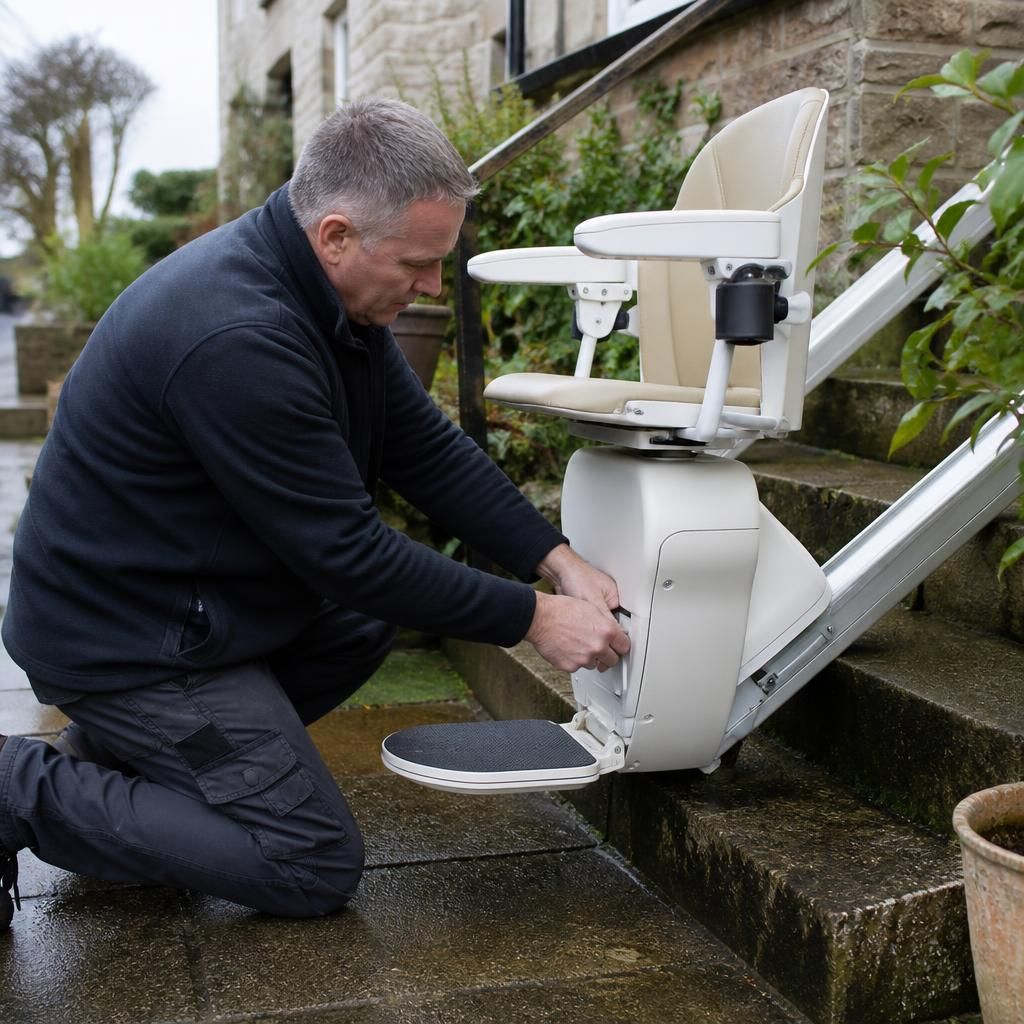
Arrange Outdoor Stairlift Servicing
If your outdoor stairlift needs servicing, contact Independent Stairlifts to arrange a professional inspection of its weatherproofing, safety systems, charging points and mechanical components.