
What types of regular maintenance does a mobility bed or bath lift require?
Regular maintenance for a mobility bed or bath lift includes visual, mechanical and electrical safety checks, along with cleaning, battery care and inspection of moving parts, cables, controls and fixings. A qualified technician should carry out scheduled servicing and address any unusual noise, movement, damage or loss of performance promptly.
Regular maintenance of a mobility bed or bath lift involves cleaning, visual inspection, functional testing and examination of the mechanical, electrical and safety components. The user can carry out basic checks and routine cleaning, but scheduled servicing, electrical testing, repairs and any work on lifting mechanisms should be completed by a suitably qualified technician in line with the manufacturer’s instructions.
Good maintenance helps identify wear before it affects safe operation. It also supports reliable movement, comfortable positioning and dependable transfers in and out of bed or the bath. The exact checks vary according to the equipment, its age, how often it is used and the environment in which it operates.
Routine cleaning and hygiene checks
Keep the bed frame, mattress cover, bath lift seat, backrest, side supports, hand control and other accessible surfaces clean and dry. Use cleaning products suitable for the materials and follow the manufacturer’s guidance. Avoid allowing water or cleaning fluid into hand controls, motors, batteries, plugs or other electrical connections.
- Remove spills, body fluids, hair and other debris promptly.
- Check seams, cushions and covers for damage, moisture retention or signs of deterioration.
- Inspect bath lift surfaces for soap residue or deposits that could make transfers less secure.
- Make sure drainage holes, removable covers and contact points are not blocked.
- Do not use abrasive products or excessive water unless the equipment is specifically designed for this method of cleaning.
Visual inspection of the structure
Look over the frame, base, mattress platform, bath lift seat and supporting components for cracks, distortion, corrosion, loose parts or sharp edges. Check that removable sections are correctly fitted and that fixings, brackets and locking points appear secure. A mobility bed should stand level and remain stable during adjustment. A bath lift should sit securely in the bath and should not shift unexpectedly when loaded within its specified capacity.
Any change in stability, visible damage or difficulty securing the equipment should be treated as a reason to stop using it until it has been assessed. Do not compensate for a loose fixing with makeshift parts or attempt to alter the frame.
Testing moving parts and adjustment functions
Mobility beds may have electrically operated height, backrest, leg-rest or profiling functions. Bath lifts may raise and lower the user, adjust the backrest or use powered side flaps. Each movement should be smooth, controlled and consistent, without unusual noise, jerking, sticking or unexpected stopping.
- Operate each control briefly and check that the equipment responds correctly.
- Listen for grinding, clicking, straining or changes in motor noise.
- Check that the bed remains stable while changing position and that the bath lift moves evenly.
- Make sure moving sections do not trap clothing, bedding, cables or skin.
- Keep hands and objects clear of hinges, linkages and lifting mechanisms during operation.
Moving parts may require inspection or lubrication, but lubrication should only be carried out where the manufacturer permits it and with the correct product. Applying oil in the wrong place can attract dirt, damage components or affect braking and locking mechanisms.
Electrical and control checks
Inspect the mains lead, charger, plugs, sockets, hand control and any cable connections for cuts, exposed wires, crushed sections, heat damage or loose connections. Cables should be routed so that they cannot be trapped by the bed frame, caught in a moving section or exposed to water. Keep bath lift charging equipment away from the wet area unless it is specifically intended and approved for that use.
Controls should be clearly labelled and should not require excessive force. Check that stop, emergency-lowering or other safety functions operate as intended. Electrical testing, internal inspections and repairs must be carried out by a competent person. Unplugging the equipment does not make internal electrical work safe for an unqualified user.
Battery and charging maintenance
Many bath lifts and some mobility beds use rechargeable batteries. Keep the battery and charger dry, use the correct charger and follow the recommended charging routine. Check for swelling, leakage, damaged casing, overheating or a noticeable reduction in operating time. A battery that no longer holds charge reliably can affect safe lowering or prevent the equipment from completing a transfer.
Do not mix chargers or batteries between different products unless compatibility has been confirmed. Batteries should be replaced with the correct specification, and damaged or failed batteries should be disposed of through an appropriate route rather than placed in household waste.
Safety features and accessories
Servicing should include the features that help prevent falls, entrapment and unintended movement. Depending on the equipment, these may include bed side rails, castor brakes, bath lift suction feet or fixings, safety belts, emergency lowering systems, limit switches and anti-trap features.
- Check that side rails lock securely and release correctly, without excessive play.
- Confirm that castors or wheels lock and that the brakes hold the bed in position.
- Inspect bath lift attachment points, suction components or other securing systems for wear and correct placement.
- Check safety belts for fraying, damaged buckles or unreliable adjustment.
- Make sure an emergency control or manual lowering method is accessible and understood by the user or carer.
Safety accessories should not be removed, modified or substituted without confirming that the replacement is suitable for the specific model and user.
Mattress, seat and user-support checks
A mobility bed service should also consider the mattress and any positioning supports. Check for sagging, loss of shape, damaged covers, exposed foam or movement on the platform. A mattress that no longer provides suitable support can affect comfort, positioning and pressure management even when the bed mechanism itself is working correctly.
For a bath lift, inspect the seat, backrest, side flaps, handles and non-slip surfaces. Replace components that have become brittle, cracked, slippery or difficult to secure. Equipment should be assessed against the user’s current mobility, weight, transfer method and level of assistance, particularly if their needs have changed.
Professional servicing
A qualified technician will normally examine the complete unit, test its functions under safe conditions and check components that are not accessible during everyday cleaning. This may include the frame, actuators, motors, gears, lifting mechanism, control system, batteries, brakes, fixings, safety devices and electrical connections. The technician should also identify wear, confirm that adjustments are within safe limits and record any parts replaced or further work recommended.
Follow the service intervals in the equipment documentation and any servicing plan agreed for your installation. More frequent checks may be appropriate where equipment is used heavily, exposed to moisture, operated by a carer or showing signs of wear. A service is not a substitute for reporting a fault as soon as it appears.
When to stop using the equipment
Stop using the mobility bed or bath lift and request advice if it gives an electric shock, smells of burning, becomes unusually hot, moves unpredictably, makes a new or worsening noise, fails to hold position, shows visible structural damage or cannot complete a normal movement. The same applies if a battery, cable, safety belt, side rail or bath lift fixing is damaged or unreliable.
Record the symptom, when it occurs and which function is affected. This information can help the technician diagnose the fault efficiently. Do not continue operating the equipment to see whether the problem clears, and do not dismantle the unit or bypass a safety feature. Regular user checks combined with professional servicing provide the most reliable way to keep a mobility bed or bath lift safe, comfortable and ready for use.
Regular maintenance combines simple user checks with professional servicing to keep a mobility bed or bath lift safe and reliable. Clean accessible surfaces, inspect cables and fixings, and test controls and moving parts regularly, but do not attempt to dismantle electrical components or lifting mechanisms.
Stop using the equipment and arrange an assessment if you notice unusual noise, jerky movement, damaged cables, loose fixings, reduced battery performance or a safety feature that does not work correctly. A qualified technician can inspect the motor, actuator, brakes, securing systems and other parts that are not safely accessible during routine cleaning.
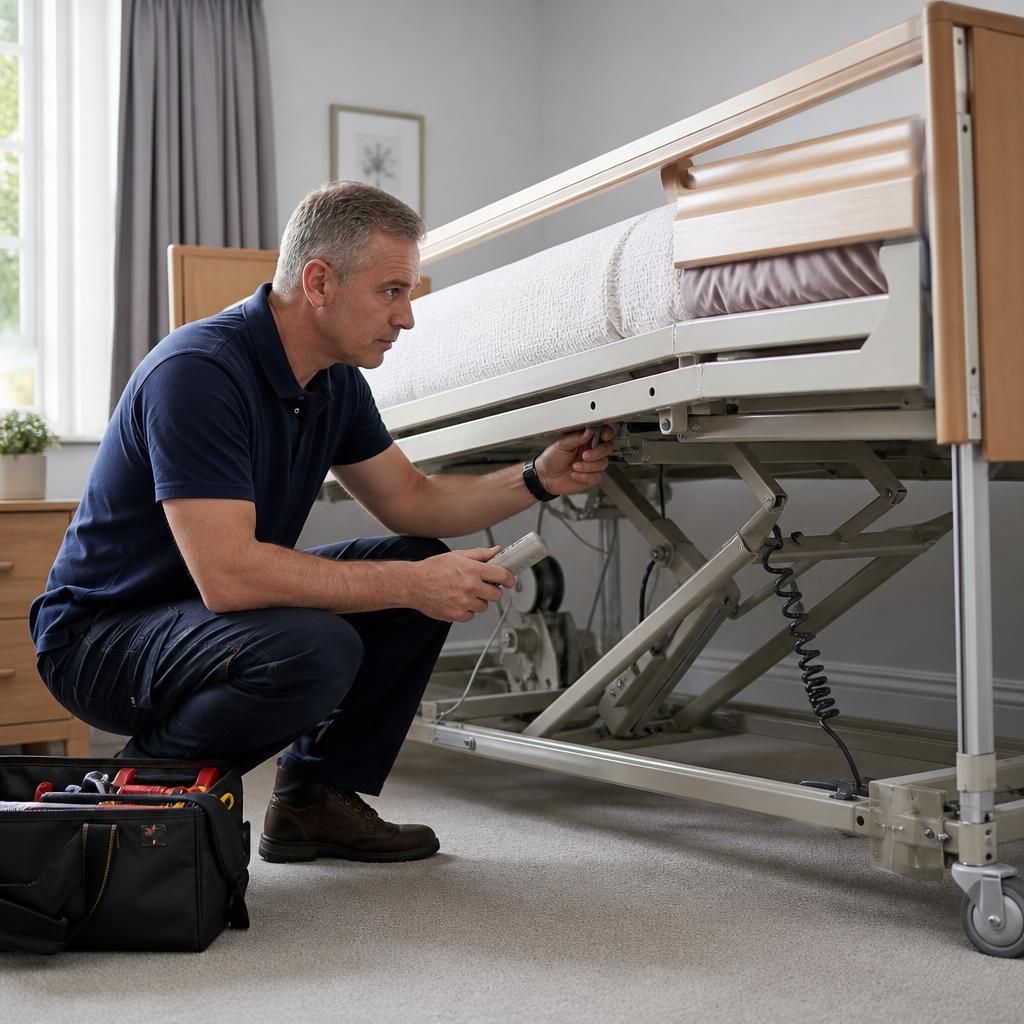
Arrange Mobility Bed or Bath Lift Servicing
Arrange mobility bed or bath lift servicing to have the equipment’s mechanical, electrical and safety components checked by a qualified technician. Contact Independent Stairlifts to discuss your servicing requirements or report a fault.