
What specific features should you consider when choosing a mobility bed or bath lift to ensure it meets your unique needs?
When choosing a mobility bed or bath lift, consider the user’s mobility, comfort, transfer ability and home environment, along with essential safety features, adjustability, weight capacity, ease of operation and compatibility with existing equipment. A professional assessment can help confirm whether the chosen model will provide practical support, reliable access and sufficient room for safe use.
The right mobility bed or bath lift should match the user’s mobility, transfer ability, body size, comfort requirements and home environment. Key features to assess include adjustability, safe weight capacity, ease of operation, transfer support, emergency functions, cleanability, power arrangements and compatibility with the room and any equipment already in use. A professional assessment is important because a feature that is useful in one home may be unsuitable or difficult to use in another.
Start with the user’s needs
Consider what the user can do independently and where assistance is required. For example, can they sit upright, stand briefly, transfer sideways, operate a handset or remain safely positioned without support? Also consider pain, stiffness, balance, grip strength, vision, memory and any condition that affects movement. The equipment should reduce unnecessary lifting and awkward transfers rather than simply provide powered movement.
- Check that the user can understand and operate the controls, or that a carer can do so safely.
- Choose supportive positioning without restricting movement unnecessarily.
- Consider whether the equipment will be used independently, with a partner or with professional care support.
- Allow for likely changes in mobility so the solution remains suitable if the user becomes less steady or needs more assistance.
Features to consider in a mobility bed
A mobility bed should provide controlled adjustment for positioning, transfers and rest. Useful adjustments may include raising the back section, supporting the legs, changing the overall bed height and, where appropriate, adjusting the bed into a more suitable transfer or sleeping position. The correct combination depends on the user’s physical needs and the type of mattress and accessories being used.
- Height adjustment: A suitable working height can make getting into and out of bed easier and help carers avoid bending. It must still be low enough to reduce injury risk if the user moves or rolls towards the edge.
- Back and leg adjustment: Independent or coordinated movement can support sitting up, resting the legs and finding a comfortable position. Check that movement does not create uncomfortable pressure points.
- Safe working load: Confirm the manufacturer’s stated limit, taking account of the user, mattress and any permitted accessories. Do not assume that a domestic bed frame has the same capacity as a profiling or specialist mobility bed.
- Side rails and supports: These may help with positioning or reduce the risk of rolling out, but they are not automatically suitable for every user. They should not create a trapping hazard or be used as a substitute for appropriate supervision and assessment.
- Handset and control layout: Controls should be easy to identify and hold, with buttons that do not require excessive force. A handset holder can prevent the control from being dropped or left out of reach.
- Emergency lowering: Find out how the bed can be returned to a safe position if the power fails or the handset stops working. Battery backup or an alternative lowering procedure may be important for someone who cannot transfer without the bed.
- Clearance and castors: Check that the base can be moved or positioned safely without damaging flooring, trapping feet or obstructing doorways. Lockable castors should hold the bed securely when transfers are taking place.
- Mattress compatibility: The mattress must suit the bed’s movement and dimensions. An unsuitable mattress can restrict articulation, affect pressure distribution or leave unsafe gaps.
Also check the space around the bed. There should be enough room for a safe transfer, walking aid, hoist or carer where required. Measure doorways, corridors and turning areas before delivery, and consider access to sockets, switches and other furniture.
Features to consider in a bath lift
A bath lift lowers the user into the bath and raises them again, so stability during transfers and controlled movement are central considerations. The lift must fit the bath securely and leave enough room for the user to sit comfortably without the controls, side supports or bath shape causing pressure or instability.
- Seat size and back support: Check the seat width, back angle and available lateral support. The user should remain upright and well positioned throughout lowering and raising.
- Transfer height: The raised seat should be suitable for transferring from the side of the bath. A swivel, turn or transfer function may be helpful for someone who cannot safely step over the bath edge.
- Weight capacity: Confirm the safe working load and include clothing or any permitted bathing aids. The lift must not be used beyond its specified limit.
- Bath compatibility: Measure the bath’s length, width, depth, internal shape and side profile. Taps, grab rails, shower screens and curved or unusually shaped ends may affect installation and operation.
- Non-slip surfaces: The seat and back should help maintain a stable position when wet. The bath floor should also be assessed, as the lift does not remove all slip risks during transfers.
- Hand control: A waterproof, floating or tethered control can make operation easier and reduce the risk of losing it in the bath. It should remain within comfortable reach without forcing the user to lean.
- Emergency stop and recovery: Check what happens if the battery becomes low or the control fails. A reliable emergency function or recovery procedure is particularly important if the user cannot stand in the bath.
- Hygiene and drainage: Smooth, sealed surfaces and removable parts make cleaning easier. The design should allow water to drain properly and should not retain soap, moisture or debris in inaccessible areas.
- Battery and charging: Understand how the battery is charged, how low-charge warnings work and where the charger must be kept. Follow the manufacturer’s charging instructions and do not use damaged cables or connectors.
A bath lift may not be appropriate where the user cannot maintain a safe sitting position, cannot control their head or trunk adequately, or cannot transfer over the bath edge without excessive risk. In those circumstances, an alternative bathing arrangement may provide safer access and should be discussed during an assessment.
Prioritise safety and control
Look for clearly stated safety instructions, a suitable safe working load, stable construction, accessible controls and protection against unintended movement. Moving parts should not create avoidable trapping or crushing points, and cables should be positioned so they cannot become a trip hazard or interfere with the mechanism.
Ask how the equipment behaves during a power cut, low battery condition or control failure. Confirm whether manual operation, battery backup or an assisted recovery procedure is available. Anyone who may operate the equipment should know the normal controls, emergency procedure and any restrictions on use.
Check comfort and positioning
Comfort is not limited to padding. Assess the user’s posture, pressure areas, leg support, head position and ability to change position. For a bed, consider whether the mattress, backrest and leg sections work together. For a bath lift, check that the user can remain upright without sliding forwards or leaning beyond the support provided.
Consider noise, vibration and operating speed if these may affect the user’s confidence or ability to remain still. The equipment should move smoothly and predictably, with no sudden changes that could cause discomfort or loss of balance.
Consider cleaning, servicing and long-term use
Choose materials and surfaces that can be cleaned using the manufacturer’s recommended products. Ask whether covers, cushions, handsets, batteries and other removable parts can be replaced, and whether servicing access is straightforward. Keep the instructions, maintenance information and any service records available for future checks.
Before making a decision, confirm that replacement parts, batteries and technical support are available for the model. Arrange servicing at the recommended intervals and report unusual noise, jerky movement, fluid ingress, damaged cables, battery problems or changes in stability promptly. Do not continue using equipment that appears unsafe until it has been checked.
Confirm suitability in the home
A final assessment should consider measurements, access for delivery, electrical sockets, flooring, moisture exposure and the position of other aids such as walking frames, commodes, hoists or grab rails. The installer should also explain operation, charging, cleaning, emergency procedures and any limitations before the equipment is used.
Comparing these features against the user’s actual routine will usually produce a better result than choosing the most highly adjusted model. The most suitable mobility bed or bath lift is one that can be operated safely, supports comfortable transfers, fits the available space and can be maintained reliably over time.
The most important feature of a mobility bed or bath lift is whether it supports the user’s actual transfer and positioning needs. Controls, cushions and powered adjustments are only useful if the person can remain stable, understand the operation and use the equipment without excessive effort or risk.
Before choosing a model, assess sitting balance, leg strength, reach, grip, pain, vision and whether assistance is required. For a mobility bed, check that the height and back or leg adjustments support safe transfers. For a bath lift, confirm that the user can transfer over the bath edge and remain upright while lowering. A professional assessment should also check room measurements, bath compatibility, safe working load, surrounding equipment and emergency operation.
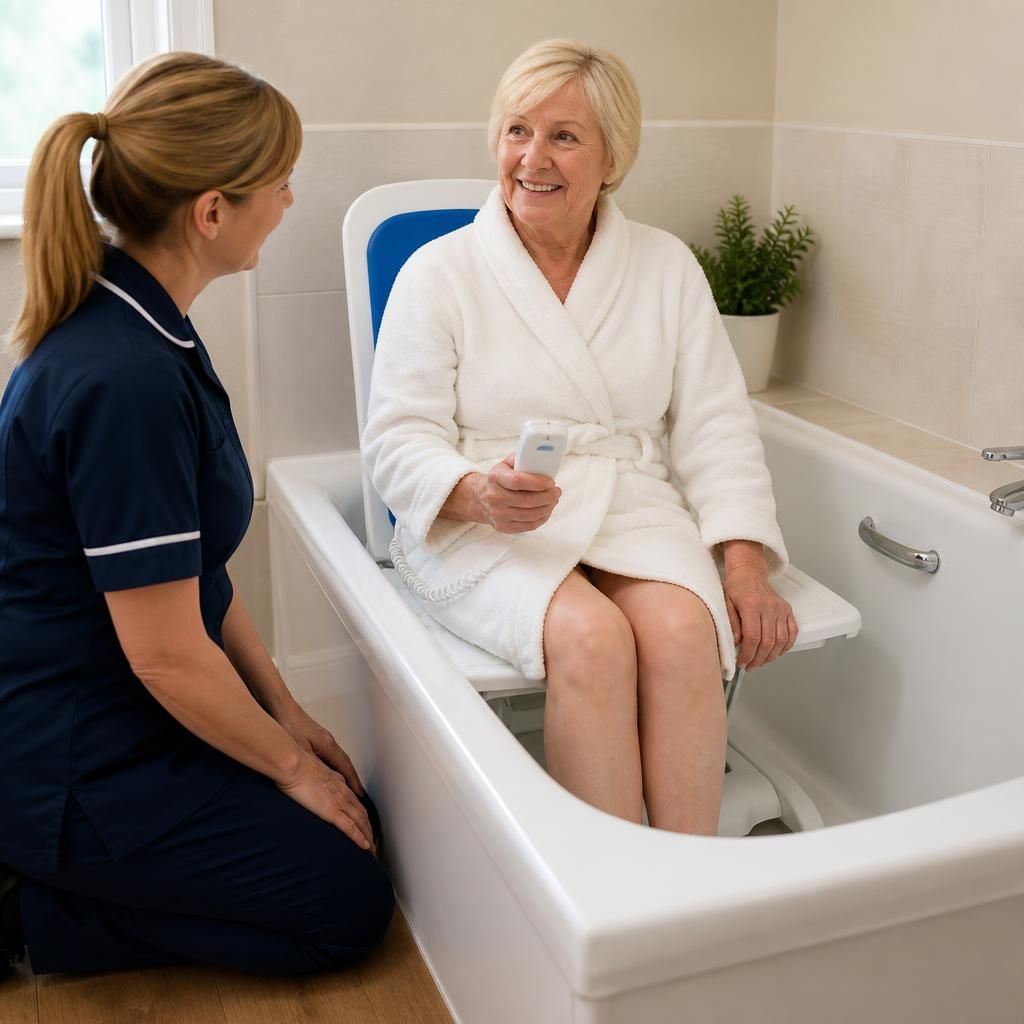
Arrange an assessment for the right mobility bed or bath lift
Arrange a professional assessment with Independent Stairlifts to confirm which mobility bed or bath lift suits your transfer needs, home layout and daily routine. We can help you compare suitable features and explain safe operation, installation and ongoing servicing.