
What should I know about safety features in mobility beds and bath lifts before purchasing?
Before purchasing a mobility bed or bath lift, check for safety features that support stable transfers, controlled movement and straightforward emergency operation. Look for secure locking or braking systems, suitable weight capacity, accessible controls, anti-entrapment protection, battery or power-failure safeguards, and clear instructions for safe use and servicing.
Safety features in mobility beds and bath lifts should prevent falls, entrapment, unintended movement and unsafe transfers while making normal operation and emergency use straightforward. Before purchasing, check the equipment’s stability, locking or braking system, weight capacity, accessible controls, anti-entrapment protection, power-failure arrangements and suitability for the user, bathroom or bedroom.
Start with a proper assessment
A safety feature is only useful if the equipment is suitable for the person and the space. An assessment should consider the user’s height, weight, mobility, balance, strength, reach, cognitive ability and level of assistance required. It should also look at the bed’s position, the bathroom layout, the bath shape, available floor space and whether carers need safe access.
Do not choose solely on appearance or a general weight rating. The stated safe working load must cover the user and any items supported by the equipment, and it should not be exceeded. Ask whether the product is suitable for independent use or requires a carer to operate it.
Important safety features in mobility beds
- Stable castors and effective brakes: Lockable castors should prevent the bed moving during transfers or while the user changes position. Check that the brake controls are easy to identify and operate, and that the bed remains stable on the flooring in the room.
- Adjustable height: Height adjustment can help the user transfer at a safer level and allow carers to work without excessive bending. The lowest position may also reduce the potential consequence of a fall, but the correct setting depends on the user’s transfer ability and care plan.
- Controlled profiling: Back-rest, leg-rest and height movements should be smooth and predictable. Controls should stop movement when released and should not allow unintended operation from a nearby object, bedding or a person leaning on them.
- Guard rails and side supports: These can assist with repositioning and help reduce the risk of rolling from the mattress, but they are not suitable for every user. Gaps between the mattress, rails and bed structure must not create an entrapment risk. A rail should never be treated as a substitute for individual risk assessment.
- Anti-entrapment design: Look for an appropriate mattress, correctly sized moving sections and safe clearances around the back-rest, side rails and frame. The mattress must remain compatible with the bed throughout its range of movement.
- Accessible handset controls: The handset should be easy for the user or carer to hold, understand and reach. A handset lockout or caregiver control can prevent accidental adjustments where this is appropriate. Cables should be routed so they cannot become trapped, stretched or create a trip hazard.
- Emergency lowering or reset functions: Ask how the bed can be returned to a safe position if the handset fails or power is interrupted. Any manual release, battery backup or emergency control should be clearly explained during installation.
- Safe working load and mattress compatibility: Confirm the permitted load and use only a mattress and accessories approved for that bed. An unsuitable mattress can affect profiling, increase gaps and interfere with side rails or pressure-relieving features.
Important safety features in bath lifts
- Secure fixing and stability: The lift should be firmly secured to the bath and remain stable during lowering, bathing and raising. Suction feet, side supports or other fixing methods must suit the bath surface and be checked before use.
- Safe transfer support: A transfer flap, swivel function, side flap or transfer board may make it easier to move between the edge of the bath and the seat. The right arrangement depends on the user’s balance, leg strength and whether assistance is available.
- Supportive seating and back positioning: The seat, back-rest and side supports should provide a stable posture without restricting breathing or causing discomfort. Check that the user can remain correctly positioned throughout the movement.
- Controlled lowering and raising: The mechanism should move smoothly and stop when the control is released. It should not descend or rise unexpectedly, and the user should be able to operate the control without twisting or reaching dangerously.
- Emergency stop and return capability: Find out what happens if the control fails or the battery becomes low. Some lifts have a rechargeable handset, battery warning or emergency return function. The user and carer should know how to use it before the first bath.
- Water-resistant controls and charging arrangements: Controls must be designed for bathroom use, while chargers and electrical connections must be kept in the locations specified by the manufacturer. Do not use damaged cables, wet chargers or unapproved electrical accessories.
- Non-slip surfaces and secure moving parts: The seat and transfer surfaces should help reduce sliding, particularly when wet. Covers, belts, flaps and hinges must be correctly fitted and free from damage.
- Safe working load and bath compatibility: Confirm the permitted load, minimum and maximum bath dimensions, internal bath shape and clearance around taps or fittings. A lift that does not sit correctly in the bath may be unstable or prevent safe transfers.
Controls, alarms and emergency planning
Controls should have clear symbols or instructions and be usable by the person who will operate them. If the user has limited hand strength, poor eyesight or reduced dexterity, check whether the buttons are suitably sized and positioned. Where a carer operates the equipment, the control arrangement should reduce the risk of accidental activation.
Ask the installer to demonstrate a power-failure procedure. This should cover battery condition, charging, warning indicators, manual release arrangements and who to contact if the equipment stops in an unsafe position. Keep the instructions and service details where they can be found quickly, and ensure that everyone involved in using the equipment receives the same guidance.
Standards, documentation and installation
Choose equipment supplied with clear manufacturer instructions, safety information, a declaration of conformity where applicable, and details of its safe working load and intended use. The product should be suitable for the UK market and installed according to the manufacturer’s requirements. Ask what checks are completed at installation and what records will be provided.
Installation quality is part of safety. A mobility bed should be assembled correctly, with cables protected and moving parts checked across their full range. A bath lift should be tested in the actual bath, including its fixings, transfer route, controls and emergency procedure. Report any mismatch between the equipment and the room before using it.
Questions to ask before purchasing
- Is the equipment suitable for the user’s mobility, posture, weight and level of assistance?
- What prevents unintended movement, slipping, rolling or entrapment?
- Can the user or carer reach and understand the controls?
- What happens during a power cut, flat battery or control failure?
- Which mattress, side rails, belts, chargers and other accessories are approved?
- Will the equipment fit the bedroom or bath without obstructing transfers, doors or care access?
- What cleaning, inspection and servicing requirements apply?
- How should a fault be reported, and should the equipment be taken out of use until it is checked?
Before accepting the installation, operate every adjustment, test the brakes or bath fixings, check the emergency arrangements and ask for any unfamiliar feature to be demonstrated again. Never continue using equipment that is unstable, damaged, unusually noisy, difficult to control or showing a fault warning. Switch it off where safe, prevent further use and arrange an assessment or repair through the appropriate servicing provider.
The safest purchase is therefore not necessarily the model with the most features. It is the mobility bed or bath lift whose safety systems, controls and dimensions match the user’s abilities and home, and which can be installed, maintained and serviced correctly over time.
Safety features in a mobility bed or bath lift are effective only when the equipment matches the user’s abilities and the room in which it will be used. Before purchasing, check the user’s balance, strength, reach, weight, posture and need for assistance, alongside the bed position or bath dimensions.
A suitable assessment should confirm that transfers can be completed without excessive stretching or twisting, that controls are easy to reach, and that carers have enough space to assist safely. It should also verify the safe working load, compatible mattress or accessories, secure brakes or fixings, and what happens if the power or handset fails. Do not rely on a general product description alone; ask for the equipment to be checked in the intended bedroom or bathroom before installation.
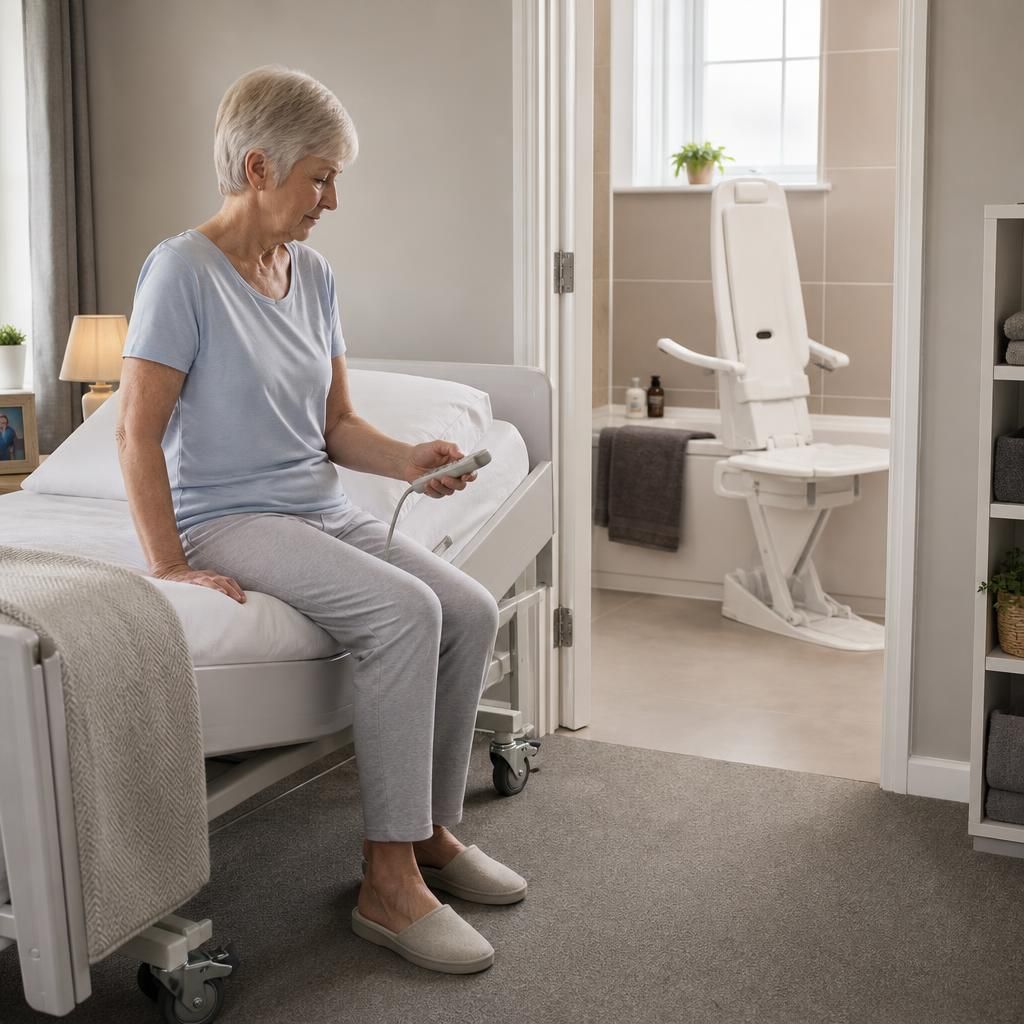
Arrange a mobility bed or bath lift safety assessment
Arrange a mobility bed or bath lift safety assessment to confirm that the equipment, controls and installation suit the user and the available space. Our team can advise on safe operation, servicing requirements and any adjustments needed before purchase or continued use.