
What are the key indicators that my mobility bed or bath lift requires servicing or repair?
A mobility bed or bath lift may require servicing or repair if it moves unevenly, makes unusual noises, struggles to complete its movement, or shows signs of damage, wear or electrical faults. Stop using equipment that appears unsafe and contact a qualified servicing provider for assessment, particularly if safety features, controls or emergency lowering functions are not working correctly.
The main indicators that a mobility bed or bath lift requires servicing or repair are changes in movement, unusual noise, reduced lifting performance, unreliable controls, visible damage, or a failure of an essential safety feature. Stop using the equipment and arrange an assessment if it becomes unstable, does not complete its movement, shows electrical damage, or cannot be lowered safely in an emergency.
Some changes may be caused by a depleted battery, an incorrectly connected charger or an obstruction, but repeated or unexplained faults should not be ignored. Mobility equipment supports transfers and positioning, so a small defect can increase the risk of a fall, entrapment or a failed transfer.
Signs that a mobility bed may need attention
- Uneven or jerky movement: The bed platform should raise, lower and adjust smoothly. Tilting to one side, stopping intermittently or moving in stages can indicate a mechanical, electrical or control fault.
- Unusual sounds: Grinding, clicking, knocking, squeaking or straining from the motors or lifting mechanism may indicate wear, a loose component, an obstruction or excessive load. Do not continue operating the bed to see whether the noise clears.
- Reduced movement or failure to reach position: A bed that will not raise, lower, tilt or adjust fully may have a fault with the actuator, handset, battery, power supply or control system. It may also be affected by an item trapped beneath the frame.
- Unexpected movement: The platform, backrest or leg section should not drift down, move after the control is released or operate without the intended command. This requires prompt attention because it can affect positioning and transfer safety.
- Unresponsive or intermittent controls: A handset that works only when its cable is moved, buttons that stick, or functions that operate inconsistently can indicate damage to the handset, cable, connectors or control box. Inspect the cable for crushing, cuts or exposed wires, but do not attempt electrical repairs yourself.
- Battery or charging problems: Warning signs include a battery that loses charge quickly, a charger that becomes unusually hot, charging that repeatedly cuts out, or a bed that only works when connected to the mains. A damaged plug, cable or charging socket should be treated as an electrical safety concern.
- Visible damage or instability: Cracked components, bent sections, loose fasteners, damaged castors, worn brakes or movement in the frame can compromise the bed. The brakes should hold the bed securely when applied, and the equipment should remain stable during normal use.
- Changes affecting safe positioning: Damaged side rails, loose profiling sections or a mattress that no longer sits correctly can create gaps or alter the user’s position. Any side-rail or entrapment concern should be assessed by a competent technician rather than corrected by improvised padding or fittings.
Signs that a bath lift may need attention
- Failure to lower or raise smoothly: The lift should travel in a controlled manner and stop at the intended positions. Stalling, sudden movement, an uneven platform or incomplete travel may indicate a fault with the motor, battery, controls or lifting mechanism.
- Difficulty operating the handset: Delayed responses, intermittent operation, stuck buttons or a handset that does not remain connected can prevent the user from controlling the lift. This is particularly important if the handset is the means of raising the user out of the bath.
- Emergency lowering not working: If the lift has an emergency lowering function, it must operate as intended. Do not use the bath lift if this feature, the handset or another specified emergency control fails.
- Battery or charger faults: A lift that does not hold charge, gives little warning before stopping, fails to charge or has a damaged charging lead needs checking. Keep charging equipment away from water and use only the charger specified for the lift.
- Damaged seat, backrest or side flaps: Cracks, sharp edges, loose fittings, split upholstery or side flaps that do not support the user correctly can affect comfort and stability. Replace damaged parts with suitable manufacturer-approved components.
- Unreliable suction or fixing: If the lift shifts, rocks or does not remain securely positioned in the bath, stop using it. The bath surface, suction cups, frame and locking points may need inspection. Never rely on a lift that is not firmly secured, even if it appears to operate normally.
- Corrosion, water ingress or damaged cables: Rust, deterioration around joints, moisture in electrical components or cracked cable insulation can reduce reliability and create a safety risk. Do not dismantle a wet or electrically faulty lift.
- Unusual sounds or smells: Grinding, repeated clicking, burning smells or excessive heat from the motor, charger or control unit should be treated as a fault. Disconnect the charger safely if appropriate and seek professional advice.
When to stop using the equipment immediately
Stop using the mobility bed or bath lift if it is unstable, moves unexpectedly, cannot be controlled, has exposed wiring, shows signs of burning or water damage, or has a damaged frame, seat, side rail, fixing or transfer support. You should also stop if the equipment has been involved in an impact or has been overloaded. Do not allow the user to remain in a bath lift that cannot be raised or lowered safely; follow the manufacturer’s emergency procedure and obtain assistance where necessary.
Do not bypass interlocks, tape damaged cables, use makeshift supports, alter the frame or continue using a bath lift with unreliable suction. These actions can conceal the fault and make a later repair less safe. If there is immediate danger, contact the appropriate emergency service; for a non-emergency fault, contact a qualified mobility equipment servicing provider.
Checks you can make before requesting a service visit
- Remove obvious objects that may be obstructing the bed frame or lift mechanism, without reaching into moving parts.
- Check that the mains supply, charger and accessible connections are correctly connected and that any isolation switch is on.
- Check the battery indicator and allow the equipment to charge using its specified charger.
- For a bath lift, check that the seat is positioned as instructed and that the fixing points or suction cups are clean and secure, provided this can be done without placing the user at risk.
- Read the manufacturer’s fault instructions and note any displayed warning lights or error codes.
These checks should not replace a professional inspection. Avoid repeatedly testing a device that is making abnormal noises or behaving unpredictably, and never remove covers or attempt to repair motors, batteries, control boxes or lifting mechanisms unless you are suitably qualified.
What a service assessment should establish
A competent technician should examine the frame, moving parts, fixings, motors or actuators, handset, wiring, battery and charger, as applicable to the equipment. For a bath lift, the assessment should also cover the seat, backrest, side flaps, suction or fixing system and emergency functions. The technician can determine whether the issue is a minor adjustment, a replacement part, a battery fault or a more substantial repair, and should explain any restrictions on use while work is pending.
Record when the problem occurs, which function is affected, whether the equipment was charging, and any warning light, noise or error message. This information can help identify an intermittent fault and ensure the service visit addresses the actual problem. Keep the equipment’s model details and previous service information available where possible.
Even where the equipment still operates, arrange servicing when you notice a gradual deterioration in performance, after a prolonged period without use, or following a move or change in the installation. Regular maintenance helps identify wear before it develops into a loss of support or control, but it does not remove the need to report sudden faults immediately.
A mobility bed or bath lift should be taken out of use immediately if it moves unexpectedly, becomes unstable, has exposed wiring, shows signs of burning or water damage, or cannot be controlled reliably. For a bath lift, do not continue using it if the fixing system is loose or the emergency lowering function does not work.
Do not bypass safety features, tape damaged cables or use makeshift supports. Follow the manufacturer’s emergency instructions, keep the user safe and contact a qualified servicing provider for an assessment. Even if the equipment continues to operate, unusual noises, intermittent controls or gradual loss of movement should be reported before the fault worsens.
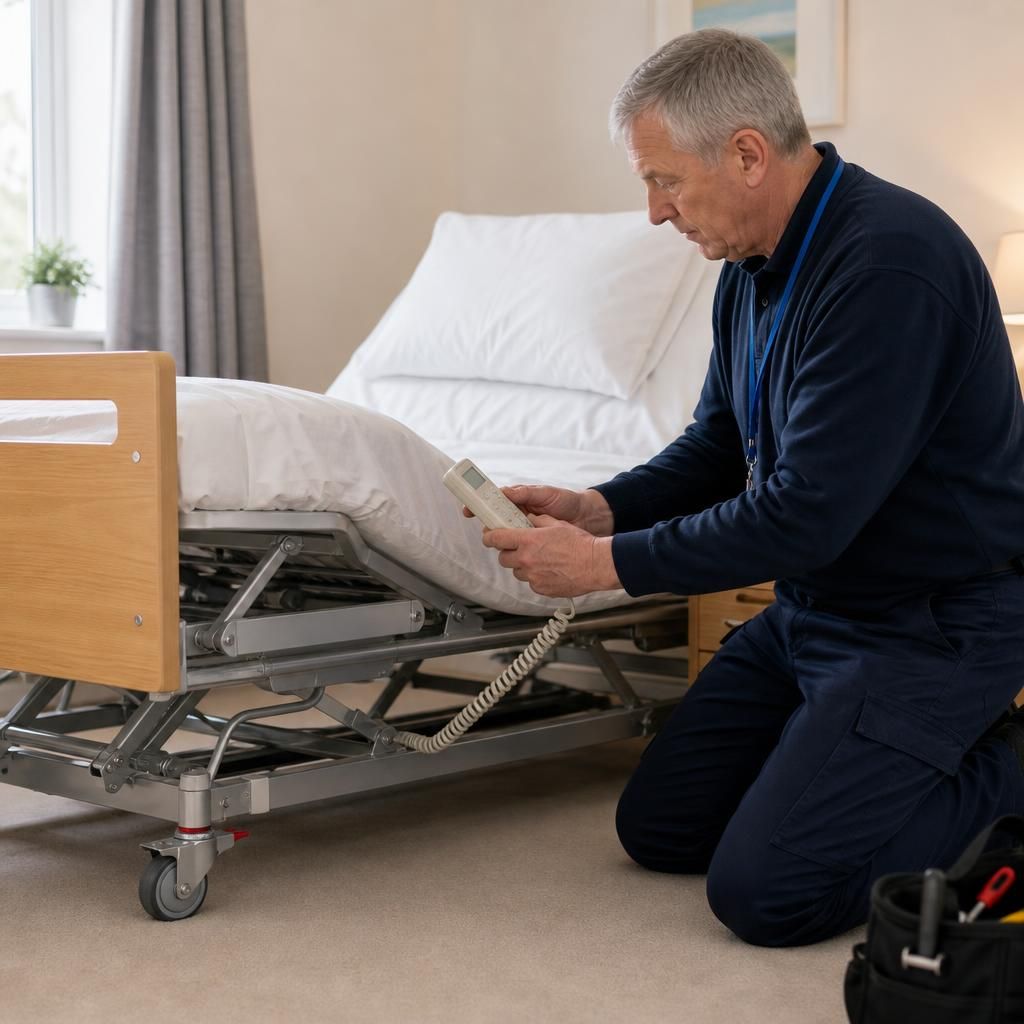
Arrange a Mobility Bed or Bath Lift Service
If your mobility bed or bath lift is showing signs of wear, unreliable operation or a safety fault, arrange a professional service with Independent Stairlifts. Contact us to discuss the issue and book an assessment.