
How often should mobility beds and bath lifts be serviced to maintain optimal performance and safety?
Mobility beds and bath lifts should generally be professionally serviced at least once a year, or as often as the manufacturer recommends. Arrange an earlier inspection if the equipment is used heavily, has been stored for a period, shows signs of wear, or develops any change in movement, charging, controls or safety features.
Mobility beds and bath lifts should normally receive a professional service at least once every 12 months, unless the manufacturer specifies a different interval. Arrange an earlier inspection if the equipment is used frequently, has been moved or stored, has undergone repair, or shows any change in movement, charging, stability, controls or safety performance. Regular servicing should complement, not replace, the basic checks made before each use.
The correct interval depends on the equipment, its age, how often it is used and the conditions in which it operates. A bath lift is exposed to water, cleaning products and repeated charging, while an adjustable bed may be operated several times a day and carry significant loads. The manufacturer’s servicing instructions should therefore be the starting point. If those instructions recommend more frequent checks, they should take priority over a general annual schedule.
Recommended servicing intervals
- At least annually: Arrange a full professional service to assess operation, electrical safety, moving parts and user-safety features.
- More frequently where appropriate: Consider shorter intervals for heavily used equipment, equipment in humid or demanding environments, or products used by someone who needs a high level of assistance.
- After a long period without use: Have the equipment checked before returning it to service. Batteries may have discharged, seals or straps may have deteriorated, and mechanisms may not operate as expected after storage.
- After relocation or installation changes: A service or safety inspection is sensible if the bed or bath lift has been moved, reassembled or installed in a different setting.
- Immediately when a fault appears: Do not wait for the next scheduled appointment if there is unusual noise, jerky movement, loss of power, a control fault, water ingress, instability or any other safety concern.
What is checked during a mobility bed service?
A competent engineer will typically examine the bed’s frame, castors, joints and moving sections, together with the handset, cables, motors and power supply. They may test height adjustment, back and leg elevation, profiling functions, brakes and any emergency or manual-lowering features. The inspection should also consider mattress support, side rails, grab handles and other accessories where these form part of the bed’s safe use.
Servicing is not simply a matter of confirming that the bed moves. The engineer should look for loose fixings, cable damage, worn components, trapped wiring, excessive play in joints and signs that the bed is no longer level or stable. Any adjustments, lubrication or replacement parts should be recorded, along with recommendations for further work.
What is checked during a bath lift service?
A bath lift service should include the seat or platform, backrest, flaps, side guides, fixing points and transfer surfaces. The engineer will normally test the handset, battery condition, charger, charging contacts, drive mechanism, limit controls and emergency lowering or raising functions. They should also inspect belts, covers and other components that help the user remain secure during bathing.
Because bath lifts are used around water, the condition of seals, electrical connections and charging equipment is particularly important. The lift should be clean and free from residue that could affect movement or grip, but cleaning products must be used in accordance with the manufacturer’s instructions. A bath lift should not be used if its battery, charger, control or safety restraint appears damaged.
Checks to make between professional services
Before each use, check that the equipment is stable, the surrounding area is clear and the controls respond normally. Look for damaged cables, frayed straps, loose covers, unusual sounds, fluid leaks, cracks or corrosion. For a mobility bed, confirm that castors or brakes are correctly positioned and that no bedding or objects can become trapped in the mechanism. For a bath lift, check that it is correctly positioned and secured in the bath and that the battery has sufficient charge for the complete cycle.
Keep chargers dry unless they are specifically designed for the relevant environment, and do not continue using equipment that behaves differently from normal. A minor change in speed, noise or control response can indicate wear before a complete failure occurs.
When an earlier service or repair is needed
Contact a servicing provider promptly if the bed or bath lift:
- moves unevenly, slowly, unexpectedly or not at all;
- makes grinding, clicking, buzzing or other unfamiliar noises;
- loses charge quickly or does not charge correctly;
- has a handset, switch, charger or emergency control that works intermittently;
- shows visible damage, corrosion, fraying, cracks or loose fittings;
- does not hold its position or feels unstable;
- has been involved in an impact, overload, spill or electrical incident; or
- no longer provides the support, access or transfer assistance intended.
Stop using the equipment if continuing could put the user at risk. Do not bypass a safety feature, use an improvised part or attempt electrical or mechanical repairs unless you are qualified and authorised to do so. A professional can establish whether the issue requires adjustment, a replacement component or a full repair.
Keeping a service schedule
Record the date of each service, the equipment model, any work completed and the next recommended inspection date. Keep the manufacturer’s instructions and service paperwork together. This is particularly useful when equipment is reconditioned, shared between users or covered by a warranty or service agreement. A personalised schedule can take account of actual usage and the user’s needs rather than relying on a calendar reminder alone.
In practical terms, an annual professional service is a sensible minimum for most mobility beds and bath lifts, with daily or pre-use visual checks and immediate attention to faults in between. Following the manufacturer’s instructions and arranging servicing through a suitably competent provider helps maintain safe operation, reliable performance and the equipment’s intended level of support.
Mobility beds and bath lifts should usually be professionally serviced at least once every twelve months, unless the manufacturer recommends a different interval. This inspection helps identify wear, electrical faults and changes in performance before they affect safe use.
Arrange an earlier service after prolonged storage, relocation, heavy use or any repair. Contact a qualified servicing provider promptly if you notice unusual noise, jerky movement, reduced battery performance, damaged cables, instability or a control that does not respond reliably. Do not continue using equipment if a fault could place the user at risk.
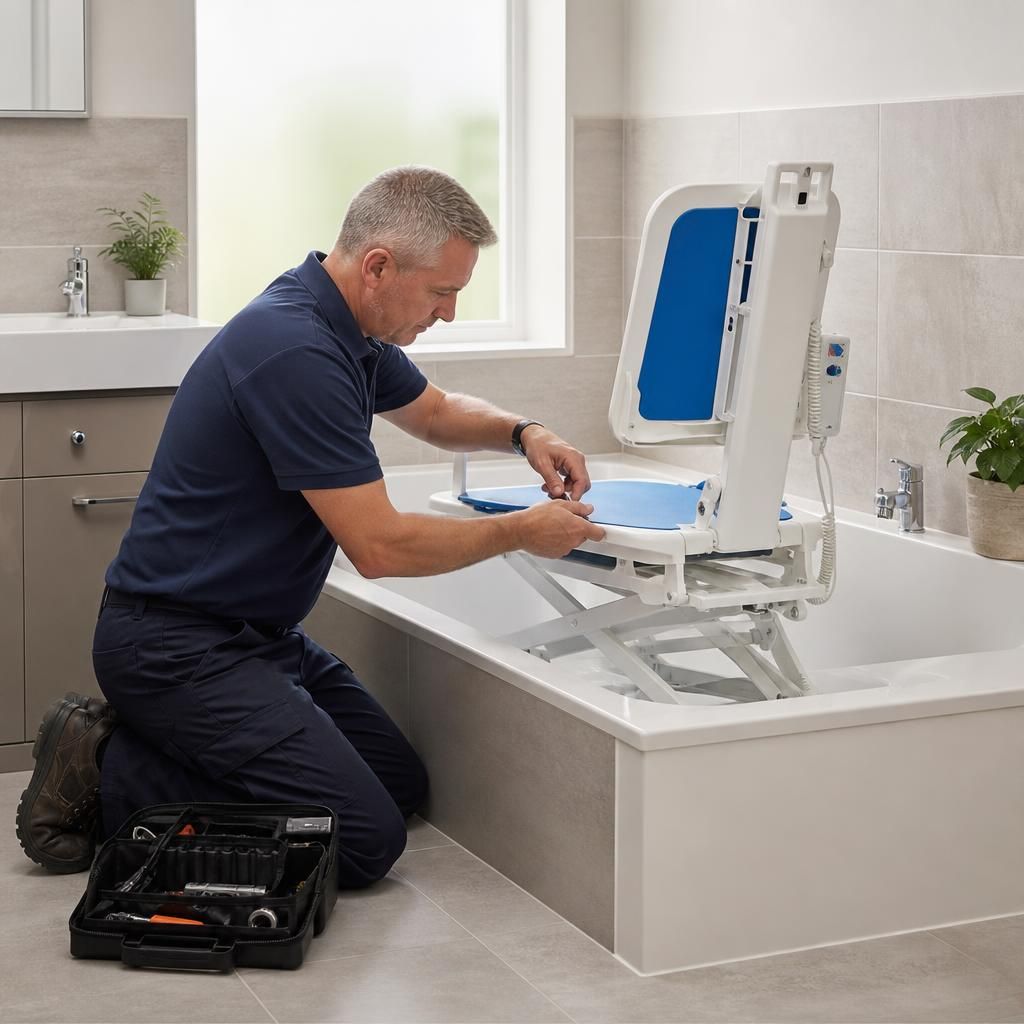
Arrange your mobility bed or bath lift service
If your mobility bed or bath lift is due for its annual service, or you have noticed any change in its operation, contact Independent Stairlifts to arrange an assessment. We can help identify the appropriate servicing or repair required to keep your equipment safe and reliable.