
How often should my stairlift be serviced by a professional?
Most stairlifts should be professionally serviced at least once a year, in line with the manufacturer’s guidance. Arrange an earlier inspection if the lift is heavily used, exposed to outdoor conditions, showing signs of wear, or developing faults.
Most stairlifts should be professionally serviced at least once a year, following the manufacturer’s guidance and any requirements in your warranty or service agreement. A qualified engineer can inspect safety-critical components, identify wear that may not be obvious during everyday use and make adjustments before a minor issue affects reliability. An earlier service may be appropriate if the stairlift is heavily used, installed outdoors, exposed to damp or dust, or showing signs of a developing fault.
Professional servicing is different from routine checks carried out by the user. Everyday care helps you spot problems promptly, but it does not replace an engineer’s inspection. During a service, the engineer will assess the stairlift’s mechanical, electrical and safety systems, clean relevant components, check fixings and charging arrangements, and test the lift through its full operating cycle. Any worn or damaged parts can then be discussed and replaced where necessary.
The recommended interval can vary according to the type of stairlift and its operating conditions. A straight indoor stairlift used occasionally may follow the standard annual schedule, while a lift used several times each day may need closer monitoring. Curved stairlifts have additional moving and programmed components that require careful inspection. Outdoor stairlifts are exposed to changing weather and may need more frequent attention, particularly where moisture, dirt or temperature changes affect the equipment.
You should also arrange a professional inspection sooner if the lift:
- moves more slowly, unevenly or noisily than usual;
- starts or stops abruptly;
- fails to charge correctly or regularly reports a low battery;
- stops before reaching the top or bottom of the stairs;
- has a seat, armrest, footrest or safety belt that feels loose or damaged;
- shows a warning light, error message or repeated fault code; or
- has been affected by a spill, impact, power issue or water ingress.
Do not wait for the annual service if a safety feature is not working properly. Stop using the stairlift if it is unsafe, leave it in a secure position where possible and contact a qualified service team for advice. Avoid removing covers or attempting electrical repairs yourself. If the lift stops unexpectedly, check straightforward items such as whether it is switched on, whether the key is inserted and whether the remote control has working batteries, but arrange professional help if the problem continues.
Regular servicing is particularly important for customers who depend on their stairlift for essential movement around the home. Keeping a service record can help you track inspections, repairs, battery replacement and any recommendations made by the engineer. If you have recently moved into a property with an existing stairlift and do not know when it was last checked, arrange an inspection rather than assuming that its age or appearance indicates its condition.
A service contract may include scheduled inspections, priority support, labour and some replacement parts, but the exact cover depends on the agreement. Batteries, damage caused by misuse, accidental damage and equipment outside the agreed scope may be excluded. Check the terms of your plan so you know when the next service is due and which repairs require separate approval.
In practice, the safest approach is to book a professional service every year unless the manufacturer or engineer recommends a different interval. Combine this with routine cleaning and visual checks, keep the charging points clear, and report changes in performance promptly. This helps maintain safe operation and can reduce the risk of an avoidable breakdown.
An annual professional service is the usual interval for a stairlift, unless the manufacturer, engineer or service agreement recommends more frequent attention. This inspection checks the lift’s safety systems, mechanical components, electrical connections, charging points and operation along the full staircase.
Arrange a service sooner if the stairlift is used heavily, installed outdoors, exposed to damp or dust, or behaving differently. Unusual noise, uneven movement, charging problems, warning lights or sudden stops should not be left until the next scheduled appointment. Routine cleaning and visual checks are useful, but they do not replace a qualified engineer’s inspection.
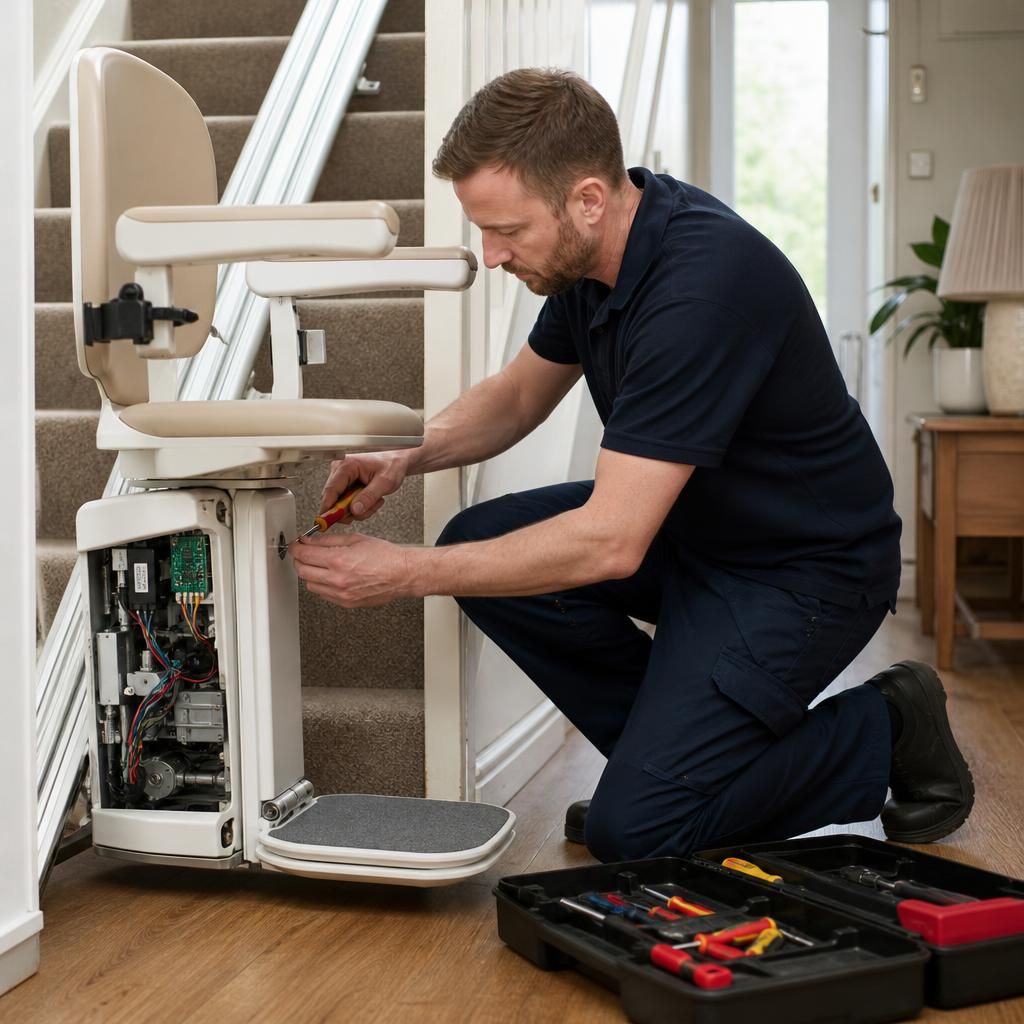
Book Your Professional Stairlift Service
If your stairlift is due for its annual service or is showing signs of wear, contact Independent Stairlifts to arrange a professional inspection. We can advise on the appropriate service interval and any repairs or replacement parts required.