
How can I identify if my stairlift needs professional servicing?
Your stairlift may need professional servicing if it makes unusual noises, moves unevenly, stops unexpectedly, shows warning lights, loses battery power quickly or has difficulty starting and stopping smoothly. If you notice any change in performance, or the stairlift shows visible damage or loose components, stop using it if safe to do so and contact Independent Stairlifts for an assessment.
A stairlift needs professional servicing when its performance, operation or condition changes from normal, or when a user-maintainable check cannot explain a fault. Warning signs include unusual noises, jerky movement, repeated stopping, warning lights, rapid battery loss, difficulty starting or stopping, and visible damage. If any of these occur, stop using the stairlift where it is safe to do so and contact Independent Stairlifts for an assessment.
Changes in movement or control
- The stairlift starts, stops or changes speed abruptly.
- It travels unevenly, judders, hesitates or struggles on part of the staircase.
- The controls respond intermittently, require repeated presses or work only from one control point.
- The stairlift stops before reaching the top or bottom, or fails to complete its journey.
- The seat, armrests, footrest or swivel mechanism feels loose, stiff or difficult to operate.
These symptoms can relate to the drive system, sensors, controls, charging system or a mechanical component. They should not be resolved by repeatedly cycling the stairlift or forcing a control.
Unusual noises, smells or vibration
Contact a service engineer if you hear grinding, scraping, clicking, repeated beeping or a change in the normal motor sound. Excessive vibration or a burning smell also requires prompt attention. Switch the stairlift off at its isolator, if this can be done safely, and keep people away from it until advice has been provided. Do not apply lubricant or remove covers unless this is specifically permitted in the user instructions, as the wrong product or an adjustment in the wrong place can affect braking and safety systems.
Battery and charging warning signs
- The stairlift no longer reaches its usual distance on a full charge.
- It becomes unreliable after standing unused or fails to start despite being left on its charging point.
- A battery or charging warning remains illuminated.
- The charger, charging point or power supply appears damaged, hot or discoloured.
- The stairlift only works when connected to a particular charging point.
Batteries naturally lose capacity over time, but rapid deterioration can also indicate a charging fault or another electrical problem. Keep the charging points clear and check that the stairlift is parked correctly, but arrange professional servicing if charging remains unreliable. Never open the battery compartment or attempt to test electrical components unless qualified to do so.
Visible damage or safety concerns
Arrange an inspection if you find a damaged or loose rail, exposed wiring, cracked casing, missing fixings, a loose seat or armrest, or a footrest that does not fold or support the user correctly. The safety belt should latch securely and release normally. Safety edges and sensors should respond as described in the user instructions. Do not continue using the stairlift if the belt, swivel seat, obstruction sensors, braking system or carriage appears not to work correctly.
Keep the stairs clear while checking the stairlift. Do not lean over the rail, reach beneath the carriage or attempt to move a stranded user manually unless an engineer or the manufacturer’s instructions specifically direct you. If someone is left in an unsafe position, follow the emergency procedure supplied with the stairlift and seek appropriate assistance.
Warning lights, fault codes and repeated resets
A single warning light may result from the stairlift not being fully parked, an obstruction at the footrest or a control being left in use. Check the simple points described in the user manual, including whether the power is switched on, the stairlift is correctly positioned on its charging point and the key or remote control is set correctly. If the warning returns, a fault code is displayed, or resetting becomes necessary more than once, professional diagnosis is appropriate.
Record the light or code, where the stairlift stopped, what it was doing at the time and whether the problem occurs from the arm control, remote control or both. This information can help the engineer identify the fault without encouraging unsafe troubleshooting.
When a routine service is appropriate
A stairlift can appear to work normally while its batteries, fixings, sensors, charging contacts and drive components are gradually wearing. Professional servicing is therefore appropriate when the manufacturer’s recommended service date is due, after a prolonged period out of use, following a move or alteration to the staircase, or whenever routine checks reveal a developing problem. A service normally includes an inspection of the installation, electrical and mechanical components, safety features, controls, charging function and general operation. The engineer should explain any adjustment, replacement part or further repair that is needed.
User checks are useful between services but are not a substitute for an inspection. Keep the rail and charging contacts clean as instructed, remove objects from the staircase, check for obvious damage and report changes promptly. Avoid spraying household cleaners or lubricants onto the rail, carriage or controls unless the operating instructions allow it.
Call for urgent support rather than continuing to use the stairlift if:
- the stairlift moves without the control being operated or does not stop normally;
- the safety belt, swivel lock, seat, armrest or footrest is insecure;
- there is smoke, a burning smell, exposed wiring or significant electrical damage;
- the stairlift has collided with an obstruction or has been involved in an impact;
- it repeatedly stops on the stairs or leaves a user unable to travel safely; or
- any safety sensor, emergency stop or braking function appears unreliable.
When contacting Independent Stairlifts, provide the stairlift model if known, the symptoms, any displayed warning code, the location where it stopped and whether the problem is constant or intermittent. Do not attempt a repair beyond the checks in your user instructions. A professional assessment will establish whether the cause is a minor adjustment, a worn component, a battery or charging issue, or a fault requiring repair before the stairlift is used again.
Professional servicing is needed when your stairlift’s movement, controls, charging or safety features change from their normal operation. Warning signs include jerky travel, unusual grinding or clicking noises, repeated stopping, warning lights, rapid battery loss or difficulty starting and stopping smoothly.
Check only the simple points covered in your user instructions, such as whether the stairlift is correctly positioned on its charging point and whether the track is clear. If the problem returns, a fault code appears or a safety feature seems unreliable, stop using the stairlift where it is safe to do so and contact Independent Stairlifts. Do not remove covers, force controls or attempt electrical repairs.
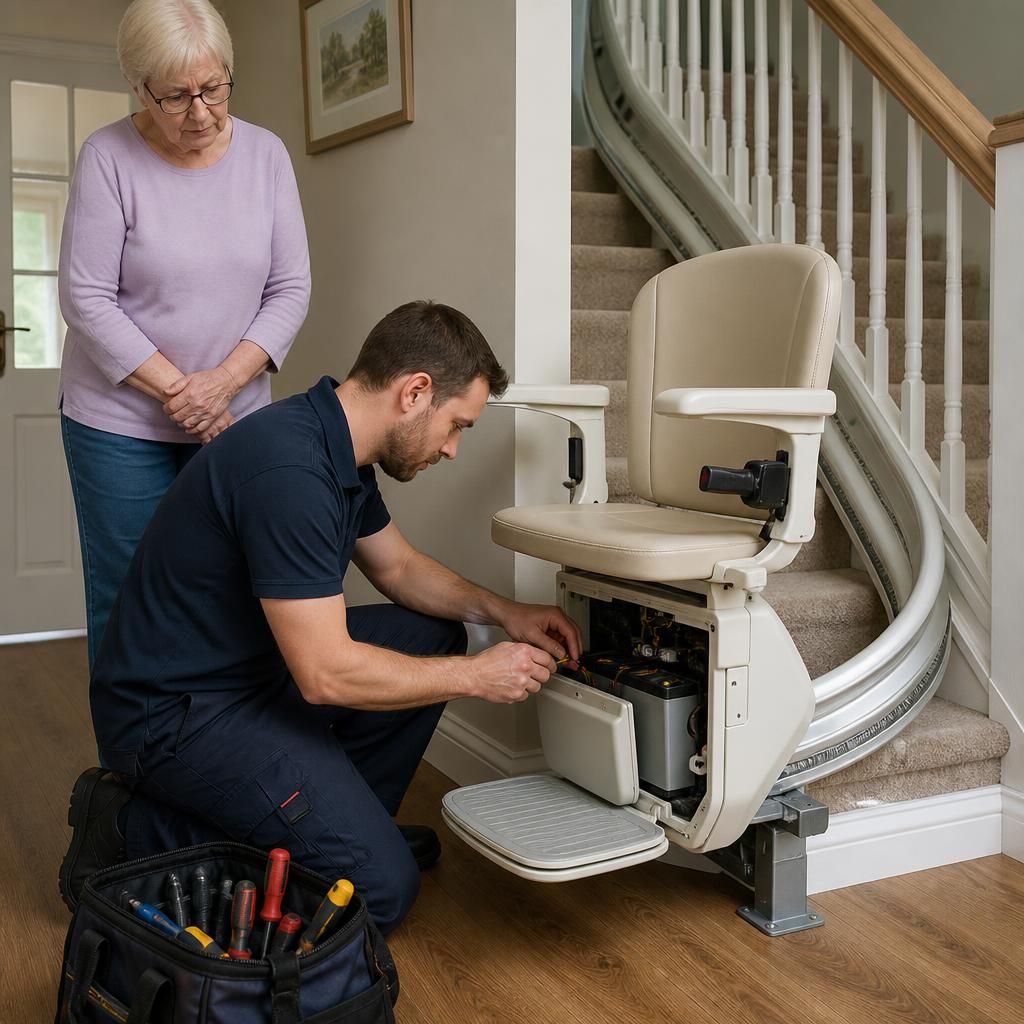
Arrange professional stairlift servicing
If your stairlift is showing unusual movement, warning lights, charging problems or any other change in performance, contact Independent Stairlifts to arrange a professional service assessment. Stop using it if a safety feature appears unreliable and follow the advice in your user instructions.