
What are the signs that my Acorn stairlift needs a repair?
Your Acorn stairlift may need repair if it moves unevenly, makes unusual noises, stops unexpectedly, struggles to charge, or shows warning lights or error messages. Stop using it if it appears unsafe and contact Independent Stairlifts for a professional assessment and suitable repair.
Your Acorn stairlift may need a repair if it moves unevenly, makes unusual noises, stops unexpectedly, struggles to charge, or displays warning lights or error messages. A single isolated issue may be caused by the lift not being correctly parked or charged, but repeated, worsening or safety-related symptoms should be assessed by a qualified stairlift engineer. Stop using the lift if it appears unsafe and contact Independent Stairlifts for advice.
Common signs that an Acorn stairlift needs attention include:
- Jerky, slow or uneven movement: The stairlift should travel smoothly at a consistent speed. Hesitation, surging, slipping, or difficulty starting and stopping can indicate a problem with the drive system, controls, batteries or track.
- Unusual noises: Grinding, knocking, squealing, clicking or repeated scraping sounds should not be ignored, particularly if they occur during every journey or become louder over time. Some operational noise is normal, but a new or changing sound warrants inspection.
- Unexpected stopping: If the lift stops part-way up or down the stairs, stops when changing direction, or only works intermittently, there may be an issue with a safety sensor, power supply, control, battery or another internal component.
- Difficulty charging: Batteries may need attention if the lift repeatedly reports low power, fails to charge when parked correctly, loses charge quickly, or will only complete a short journey after charging. Check that the charging point is switched on and that the lift is positioned at its designated charging point, then seek help if the problem continues.
- Warning lights, alarms or error messages: These indicate that the stairlift has detected a condition requiring attention. Note what is displayed or heard and when it occurs, as this information can help the engineer identify the fault. Do not repeatedly reset the lift or continue using it to see whether the warning disappears.
- Controls that do not respond reliably: A handset, armrest control, key switch or remote control that works intermittently may be affected by a flat battery, damaged control, connection fault or internal electrical problem. If more than one control is affected, the stairlift itself may require investigation.
- Seat or safety features not operating correctly: Do not use the lift if the seat does not swivel or lock as expected, the armrests or footrest are loose, the seat belt will not secure properly, or a safety edge does not respond normally. These features help keep the user safely positioned during travel.
- Visible damage or obstruction: Damaged wiring, loose fixings, a bent component, fluid or debris around the mechanism, or anything caught on the track should be reported. Do not remove covers or try to reach into moving parts.
Some apparent faults have simple causes. Before requesting a repair, and only if it is safe to do so, check that the stairlift is switched on, the key is inserted and turned to the correct position, the armrest control is enabled, and the seat is in its normal travelling position. Make sure the footrest, seat belt and safety arms are correctly positioned, and check that nothing is obstructing the track, steps or safety edges. If the lift is not charging, confirm that the power supply has not been switched off and that the stairlift is parked at its charging point. Use the manufacturer’s instructions for any user-level checks.
Do not dismantle the stairlift, remove its covers, bypass a safety sensor, alter electrical connections or attempt to repair the drive mechanism yourself. These actions can create additional faults and may put the user at risk. If the stairlift has stopped away from a landing, keep the user seated and secure if it is safe, follow the instructions supplied with the lift, and contact Independent Stairlifts for guidance rather than attempting to move it manually.
Arrange prompt professional assistance if the fault is repeated or affects normal operation. A repair is particularly important when the stairlift stops unexpectedly, moves unpredictably, fails to charge, emits a burning smell, shows an electrical warning, or has a problem with its seat belt, swivel seat, safety arms or sensors. Do not use the stairlift until it has been checked if there is any risk of falling, entrapment, electric shock or uncontrolled movement.
When contacting Independent Stairlifts, provide the Acorn model if known, describe exactly what happened, identify any warning light, tone or message, and explain whether the issue occurs travelling up, travelling down, at a charging point or when using a particular control. A photograph of a display or visible damage may also be useful. An engineer can assess the stairlift, identify whether adjustment, replacement parts or a more detailed repair is required, and confirm whether it is safe to return to use.
Regular servicing can identify wear, charging problems and developing faults before they cause a breakdown, but it does not remove the need to report new symptoms. If your Acorn stairlift is behaving differently from normal, arrange an assessment rather than waiting for it to stop completely.
An Acorn stairlift needs prompt professional attention when it stops unexpectedly, moves unpredictably, fails to charge, or shows a warning light, alarm or error message. These symptoms can indicate a fault with the batteries, controls, safety sensors, power supply or drive system, and continuing to use the lift may increase the risk of becoming stranded or losing safe control.
Stop using the stairlift if the seat belt, swivel seat, armrests, footrest or safety edges do not work as expected. If it is safe to do so, keep the user seated and secured, avoid moving the lift manually, and contact Independent Stairlifts for guidance. Do not remove covers, bypass sensors or attempt electrical or mechanical repairs yourself. Tell the engineer exactly what happened and note any warning message, sound or light to help identify the fault.
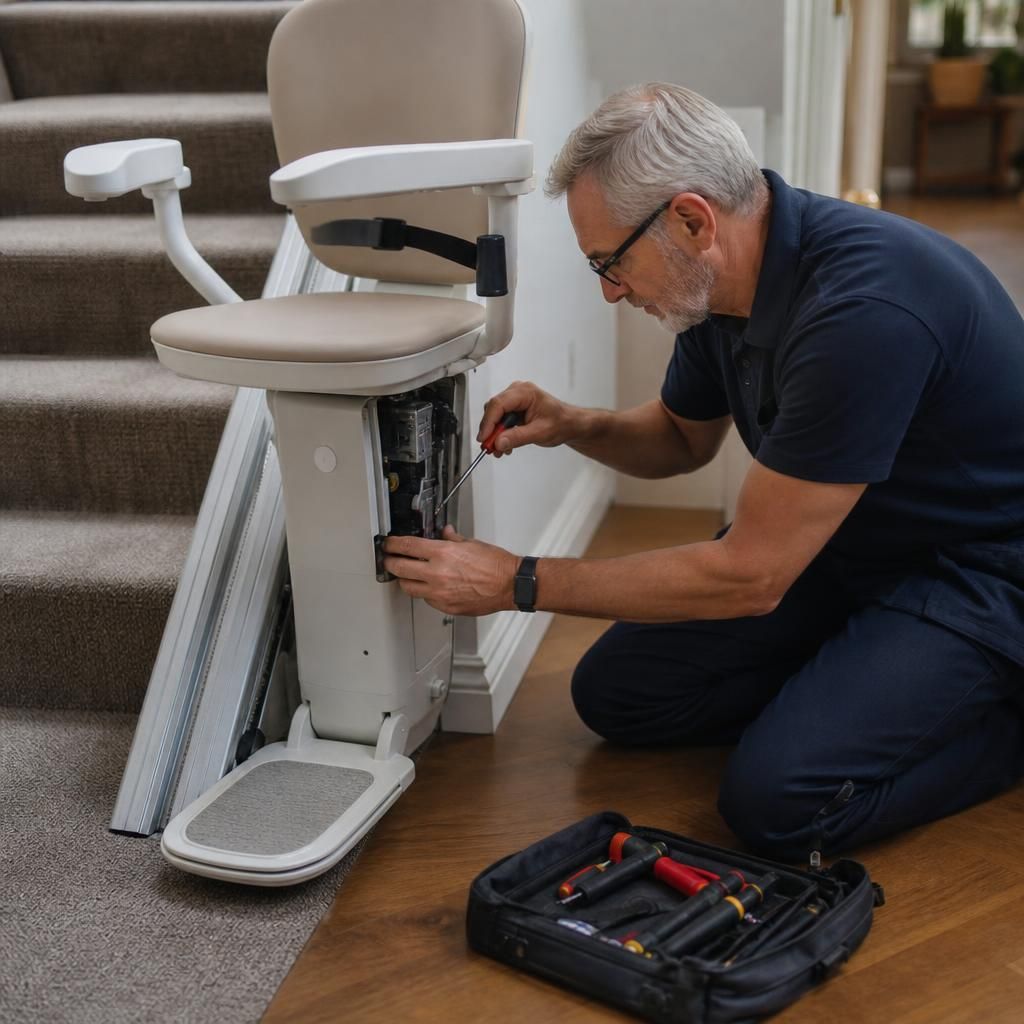
Arrange an Acorn stairlift repair assessment
If your Acorn stairlift is showing signs of a fault, contact Independent Stairlifts to arrange a professional repair assessment. We can help identify the problem and advise whether the stairlift is safe to use.