
What are the signs indicating that my Acorn stairlift requires immediate repair?
Your Acorn stairlift requires immediate repair if it will not start or move, stops unexpectedly, moves jerkily, makes unusual noises, displays warning lights, or has a fault with its seat belt, swivel seat, sensors or controls. Stop using it safely, switch it off if appropriate, and contact a qualified stairlift engineer rather than attempting to diagnose or repair the fault yourself.
An Acorn stairlift requires immediate repair if it will not start or move, stops without warning, travels jerkily, makes unusual noises, shows a fault or warning indication, or has a problem with a safety feature such as the seat belt, swivel seat, sensors or controls. Stop using the lift as soon as you notice any of these signs, leave it in a safe position if possible, and contact a qualified stairlift engineer. Do not continue using it to see whether the problem clears, as a minor fault can develop into a breakdown or create a safety risk.
Stop using the stairlift immediately if:
- It will not move when the control is operated, or it starts and then stops unexpectedly.
- The lift moves in a jerky, hesitant or unusually fast manner.
- You hear grinding, scraping, knocking, clicking or other noises that were not present previously.
- The stairlift stops between floors, particularly if it cannot be returned safely to the top or bottom of the stairs.
- The seat, armrests, footrest or carriage appears loose, damaged or out of alignment.
- The seat does not swivel or lock correctly, or the stairlift moves while the seat is not properly positioned.
- The seat belt will not latch, release or remain securely fastened.
- A safety sensor appears damaged, obstructed or fails to respond.
- The remote control or armrest control behaves erratically, or the lift moves without the expected control input.
- A warning light, audible alert or fault indication remains active after basic checks have been completed.
- There is a burning smell, visible scorching, smoke, fluid leakage or evidence of damaged wiring.
Movement problems are particularly important. A stairlift that stops suddenly, slips, judders or changes speed may have a fault affecting its drive system, power supply, charging circuit, track or safety controls. Avoid trying to compensate by leaning, standing, holding the controls continuously or asking another person to push or pull the lift. These actions can increase the risk of falling or cause further damage.
If the lift stops while you are using it, remain seated with the seat belt fastened if it is safe to do so. Use the normal control only as instructed in your Acorn user guide. Do not attempt to climb off on the stairs unless staying in the seat presents a greater immediate danger. If you cannot leave the stairlift safely, are injured, or there is smoke, burning or another immediate hazard, call the emergency services. Once you are safe, arrange an engineer’s assessment before using the lift again.
Some simple checks are reasonable, but they do not replace a repair. Check that the mains supply has not been switched off, the charger is connected correctly and the stairlift is positioned at its designated charging point. Make sure nothing is blocking the track, footrest or safety sensors, and check that the seat belt is properly fastened. If your model has a removable key or an on/off switch, confirm that it is in the normal operating position. Consult the Acorn instructions for model-specific checks rather than relying on trial and error.
If the stairlift still does not operate, a warning remains on, or the fault returns, stop checking and contact Independent Stairlifts or a suitably qualified Acorn stairlift repair engineer. Do not remove covers, bypass a sensor, bridge a switch, adjust the track or replace electrical components yourself. Stairlifts combine mains electricity, batteries, moving parts and safety circuits; an attempted repair can cause injury, invalidate warranty or service arrangements, and make the underlying fault more difficult to identify.
Tell the engineer exactly what happened, including when the fault began, whether it occurs travelling up or down the stairs, whether the lift was charging, and any light, sound or message displayed. If it is safe to do so, provide the stairlift model information and a clear description or photograph of the indication. This helps the engineer bring appropriate diagnostic equipment and replacement parts.
A stairlift should remain out of use until the cause has been identified and the repair has been completed. After the repair, ask what was found, which parts were adjusted or replaced, and whether any follow-up servicing or battery checks are recommended. Regular servicing can identify wear before it causes a breakdown, but it does not make continued use safe when an active warning, unusual movement or damaged safety feature is present.
An Acorn stairlift that stops unexpectedly, moves erratically or shows a persistent warning indication should be treated as requiring immediate repair. Stop using it rather than repeatedly operating the controls to see whether the fault clears.
If the lift stops while you are travelling, remain seated with the seat belt fastened if it is safe to do so. Use the normal control only as described in your Acorn user guide, and do not attempt to climb off on the stairs, push the lift or bypass a safety feature. Contact Independent Stairlifts or a suitably qualified stairlift engineer for advice and keep the stairlift out of use until it has been assessed.
Do not remove covers or work on the batteries, wiring, motor, track or sensors yourself. A qualified engineer can identify whether the problem relates to the power supply, charging system, drive mechanism or safety controls and complete the repair safely.
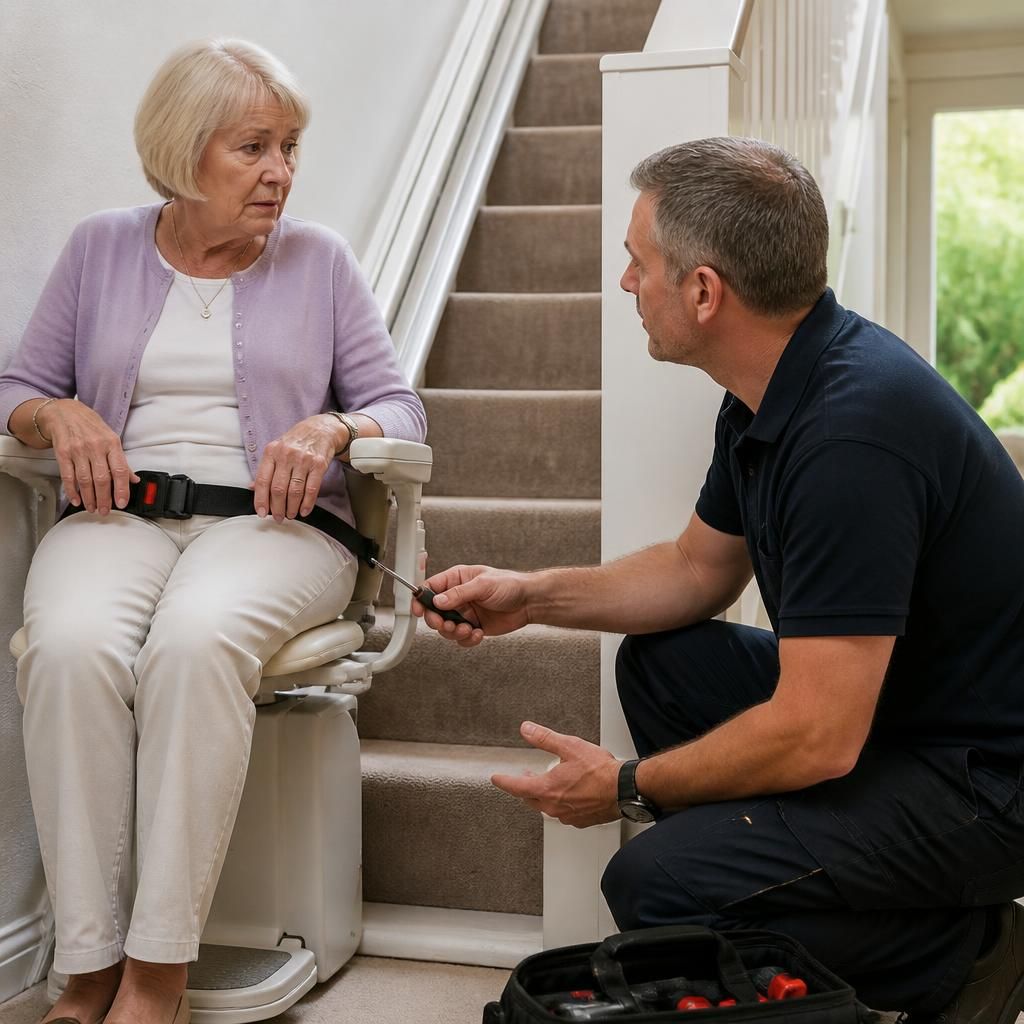
Arrange Your Acorn Stairlift Repair Assessment
If your Acorn stairlift shows any urgent fault signs, stop using it and arrange a repair assessment with Independent Stairlifts. We can help identify the problem and advise on the safest next step.